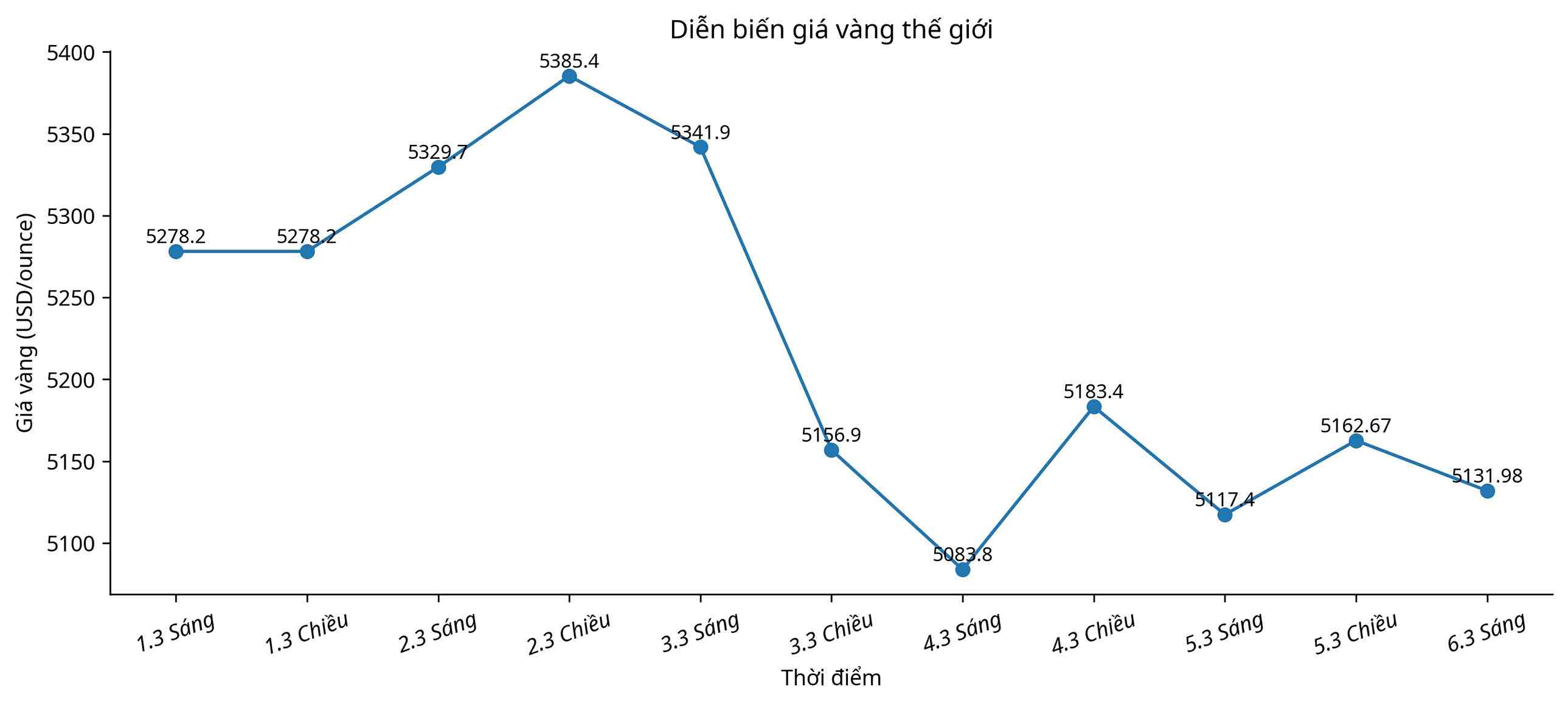
Gold prices are heading for their first week of decline in more than a month as the USD strengthens and inflation risks increase due to the ongoing war in the Middle East.
The precious metal closed the previous session with a decrease of about 3.7% since the beginning of the week, before stabilizing again in the first trading session of Friday. The USD strength index increased by 1.4% this week, the strongest increase since November 2024. Meanwhile, US Treasury bonds fell for the fourth consecutive day, causing yields to rise to their highest level in many weeks.
This development occurred when the war between the US, Israel and Iran caused oil prices to skyrocket, while forcing traders to readjust expectations about the US Federal Reserve (Fed) reducing interest rates. The swap contract market currently only values about 34 basis points of interest rate cuts by the end of the year, a sharp decrease compared to the forecast of about 60 basis points last weekend. The strengthening USD and higher borrowing costs often put pressure on gold, as this precious metal does not bring yields.
Although the upward momentum has stalled in recent days, gold prices have still increased by about 18% since the beginning of the year. Fluctuations in global trade and geopolitical policies under US President Donald Trump, along with concerns about the independence of the Fed, have contributed to maintaining the attractiveness of safe-haven assets.
Global markets remain tense as the war enters its seventh day. Iran launched a series of missiles and drones into the Gulf region on Thursday evening, including an attack targeting a refinery in Bahrain. Meanwhile, Israel continues airstrikes on Tehran and the US suspends operations at its embassy in Kuwait.
President Donald Trump said he will directly participate in Iran's next leadership selection process, while the US administration is considering measures to respond to the sharp increase in oil and gasoline prices. Iran has attacked many energy infrastructures in the region, and the Strait of Hormuz, the world's strategic transportation route, is currently almost interrupted. Crude oil prices are heading towards their strongest weekly increase since 2022.
The sell-off on the global stock market this week also caused some investors to use gold as a source of liquidity to compensate for losses in other assets. This has also dragged traditional safe-haven assets into stock market volatility. In addition, information suggesting that some central banks may sell off gold reserves has also raised concerns that one of the important pillars of the multi-year uptrend cycle of precious metals may weaken.
The head of the central bank of Poland, a country recorded as the world's largest gold buyer recently, has proposed selling part of its gold reserves to mobilize a maximum of 48 billion zlotys (about 13 billion USD) to finance defense spending, according to well-informed sources.
On the precious metals market, spot gold prices increased slightly by 0.2% to $5,131.98/ounce at 8:22 am in Singapore. Silver prices increased by 1.3% to $83.30/ounce, while platinum and palladium also recorded increases.