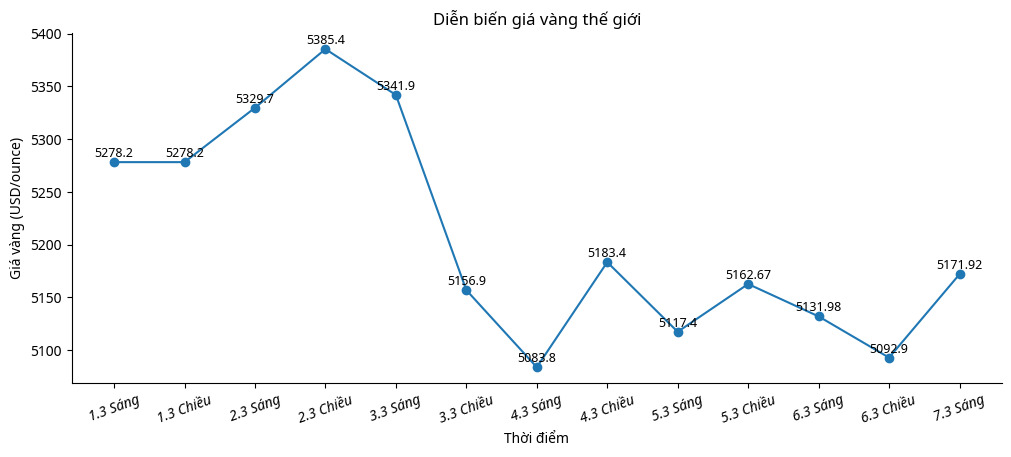
Gold prices rose again, narrowing the week's decline as traders raised expectations of monetary policy easing after a weak US jobs report.
US businesses suddenly cut jobs in February, while the unemployment rate increased, showing that the labor market still shows signs of fragility even though it was previously said to be stable. After this figure, investors slightly increased their bets on the possibility of the US Federal Reserve (Fed) cutting interest rates.
Gold prices at times increased by 1.8% to $5,174.59/ounce, thereby narrowing the weekly decrease to about 2.3%. Low interest rates are often beneficial for gold – an asset that does not yield yields.
This week, the precious metal is under pressure as conflicts in the Middle East caused oil prices to skyrocket and raised concerns about inflation, while the USD also rose sharply. A stronger USD and higher borrowing costs often disadvantage gold. In addition, gold is also used as a source of liquidity as global stock markets plummet.
In a social media post on Friday, US President Donald Trump said he did not want to negotiate to end the war with Iran and asked Tehran to surrender while US and Israeli airstrikes continued. This statement shows that the White House may be preparing for a prolonged conflict, after US officials previously affirmed that the goal of the campaign was not to change the regime in Iran.
Despite strong trading fluctuations and stagnation in recent days, gold prices have still increased by nearly 20% since the beginning of the year. Fluctuations in global trade and geopolitics under President Trump, along with concerns about the independence of the Fed, have contributed to supporting safe-haven assets.
Spot gold price increased by 1.5% to 5,171.92 USD/ounce. Silver price increased by 2.1% to 83.93 USD/ounce. Platinum increased while palladium slightly decreased.