
According to Kitco, the gold market continues to maintain a support zone above 5,000 USD/ounce, but is facing difficulties in attracting sustainable upward momentum, especially as the USD is receiving safe-haven cash flow. However, an economist warned investors not to confuse short-term trading fluctuations with long-term investment trends.
In an interview with Kitco News, Mr. Thorsten Polleit - Honorary Professor of Economics at Bayreuth University and publisher of BOOM & BUST REPORT, said that the USD and US Treasury bonds are benefiting from a wider liquidity wave as investors seek to protect their assets from economic and geopolitical instability.
He explained that the joint military action between the US and Israel against Iran is putting great pressure on the global economy. According to him, this situation may force central banks, led by the Federal Reserve, to ease risks to support the economy.
Investors are quite confident that the central bank will open the liquidity valve to rescue banks in difficulty, hedge funds or any organizations that may pose risks to the financial system," he said.
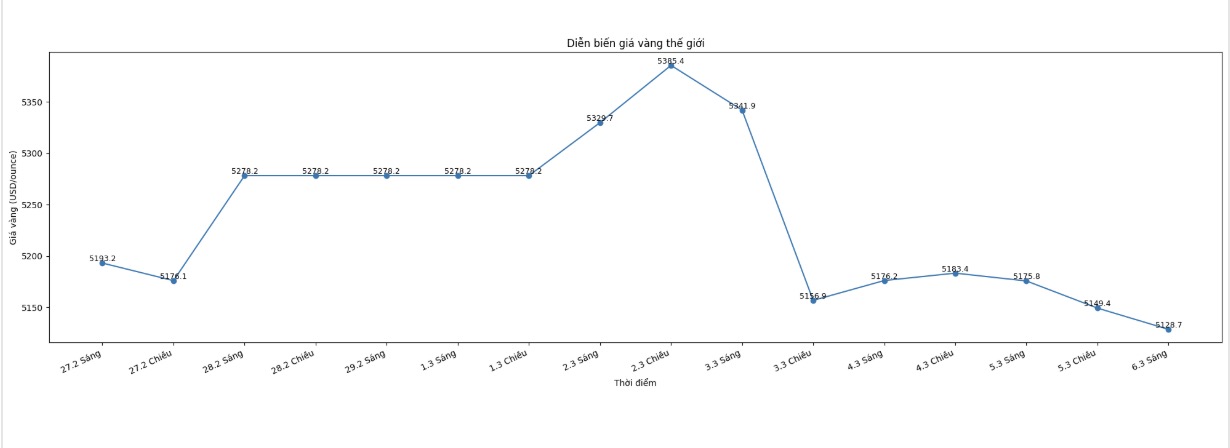
Mr. Polleit said that in periods of market tension, investors often pour money into assets with the highest liquidity. Currently, this is more beneficial for the USD than the precious metal. This liquidity shift may put temporary pressure on gold and silver prices, even as fundamental economic risks are increasing.
In crises, people often run into cash, even sacrificing gold and silver in the short term," he said.
However, Mr. Polleit emphasized that this liquidity momentum should not be misunderstood as a weakening long-term demand for precious metals. According to him, structural investment demand for gold and silver is still increasing as investors seek to protect assets from rising public debt and prolonged inflation.
Currently, a structural demand has formed for gold and silver," he said.
He also noted that although in the short term investors may prioritize holding cash during an instability period, a broader macroeconomic environment is still supporting the precious metal.
According to him, increased government debt, geopolitical conflicts and continued monetary intervention by central banks will weaken the purchasing power of legal currencies over time.
This is an inflationary regime. As government debt increases, energy prices rise, and geopolitical conflicts increase, the purchasing power of all legal currencies is under pressure," he said.
He also warned that central banks have very little room to sharply raise interest rates due to the huge debt burden of the government and businesses. If interest rates rise too high, the financial system could quickly become unstable, forcing policymakers to return to monetary stimulus measures.
The economy is carrying a very heavy debt burden. If interest rates rise even more sharply, the central bank will have to intervene to support the bond market," he said.
Due to these structural pressures, Mr. Polleit believes that the long-term price increase of precious metals remains intact, even when prices may go through periods of volatility.
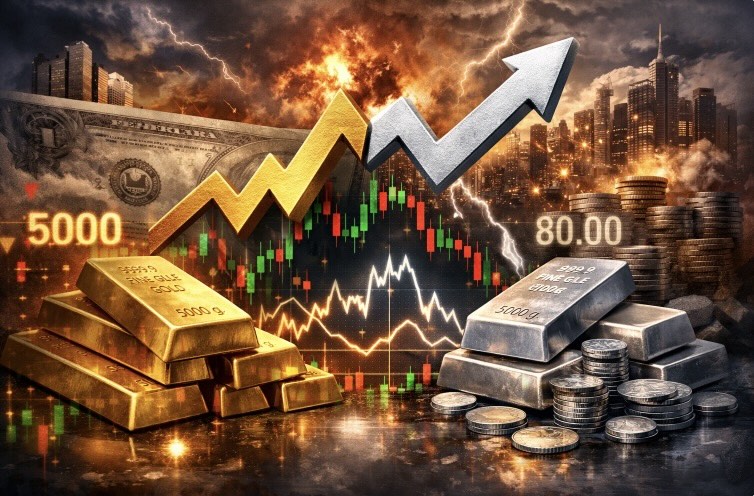
Gold and silver have entered an unprecedented price range," he said. "But that doesn't mean they are in a bubble. That means they have been revalued compared to other types of assets.
In the near future, Mr. Polleit predicts that precious metals will continue the upward trend as governments rely on deficit spending and monetary expansion to cope with economic shocks.
I wouldn't be surprised if gold traded around $8,000/ounce in the next 5 years. That simply reflects the risks accumulating in the global economy," he said.
Although optimistic about the outlook, Mr. Polleit recommends that investors should approach gold and silver from a long-term perspective instead of trying to trade according to short-term fluctuations.
If you already hold gold, keep holding it. And if you are considering buying gold or silver, you can still buy at the current price if you have an investment vision of at least two to three years" - he said.


