It is necessary to place the cryptocurrency asset ecosystem in a specific context
Reviewing the cryptocurrency asset ecosystem in Vietnam, Dr. Tran Quy - Director of the Vietnam Institute for Digital Economy Development shared at the Vietnam Business Administration Forum 2025 on December 10: "The cryptocurrency asset ecosystem in Vietnam is entering a more distinct formation phase, but it still needs to be placed in an appropriate context instead of just looking at prominent numbers".
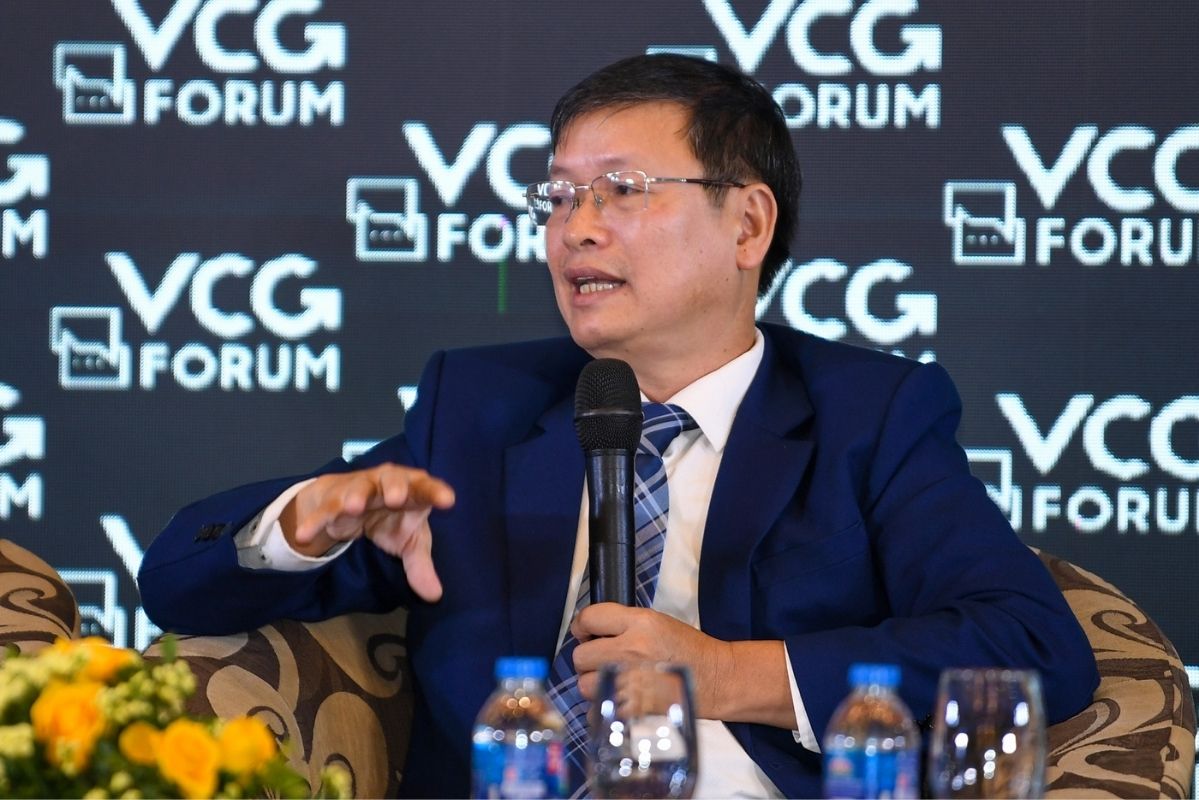
Mr. Quy explained that digital assets are not necessarily a pure "digitization" concept, but are real assets that are reflected in the digital environment.
As we enter the On-chain economy - where every transaction takes place in an invisible space that cannot be "touched" - asset identification and management become even more important. If in real life, people authenticate by seeing each other, then in the On-chain world, everything "runks in four directions", requiring a new legal framework and governance mindset.
According to him, the current digital asset ecosystem includes two core entities: digital assets (VA) and digital asset service providers (VASP), in addition to many supporting organizations such as valuation, records, audits, etc.
Resolution No. 05/2025/NQ-CP on the pilot implementation of the cryptocurrency market in Vietnam only allows 5 testing units that many consider too small, Dr. Quy compared: the Vietnamese stock market has only two exchanges in Hanoi and Ho Chi Minh City, so 5 cryptocurrency exchanges are "a lot". The important thing is not the quantity, but the way of management.
Dr. Quy further analyzed that the market currently has a " Subsidence" - a consequence of the era of digital assets created "with Enter key", operating freely, without rules. According to a press survey, Vietnamese people participate in this part of about 20%. The "floating part" includes the legal framework, regulations and management system.
Resolution 05 aims to create a bridge between the sinking and the floating, through two factors: One is trust, by including the law and the monitoring mechanism. Two is the synchronization of technology, so that the governance of digital assets is transparent and safe.
Hanoi "burns" to find data architects
Specifically referring to the capital Hanoi, Mr. Tran Anh Tuan - Director of the Hanoi Department of Science and Technology affirmed that for a locality or territory, the important factor to enhance competitiveness is policy. Vietnam is making many changes and Hanoi is no exception.
According to Mr. Tuan, the lucky thing for Hanoi is that there is the Capital Law (amended in 2024) with many outstanding provisions. The city has applied this law along with the Politburo's resolutions, such as Resolution 57, Resolution 66, Resolution 68, as well as the Law on Science, Technology and Innovation to improve competitiveness.
Among them are the contents appearing for the first time in Vietnam, the petition is a resolution on sandbox. The city has implemented and identified 4 priority groups, especially digital assets.
Mr. Tuan informed that Hanoi is also the first locality to have a Resolution to establish a risky investment fund. The city immediately spent 600 billion VND in "prey" and attracted nearly 10 strategic investors to participate.

"Hanoi's current viewpoint is not to look back, which means not to compare with other localities in the country but only to compare with the region and the world. Although not officially identified as an international financial center, I affirm that in the near future, Hanoi will become such a center" - Mr. Tuan emphasized.
He expressed his hope that Hanoi's resources and policies will meet investors. Hanoi is "burning" to find engineers in many fields, including the field of digital assets.
Informing at the forum, Mr. Tuan said that Hanoi's goal from 2026-2030 is to increase the proportion of the digital economy in GDP to 40% or more, in parallel with the economic growth target of 11% or more in the coming years.
With the traditional economic model, the traditional growth model, it is very difficult to achieve, or if it is achieved, it is not sustainable. Therefore, there are only paths of science and technology, innovation and especially new growth models such as the digital economy.