
For many years, the Vinh Chau purple onion growing area (Can Tho City) has faced many risky crops. Unpredictable weather dien bien, increased input material costs, while unstable commercial onion prices have made many farmers hesitant to sow, worried about output for traditional crops in the locality.
Faced with this reality, many cooperatives (HTX) and farmers have proactively adjusted production methods, switching to bio-safety farming.
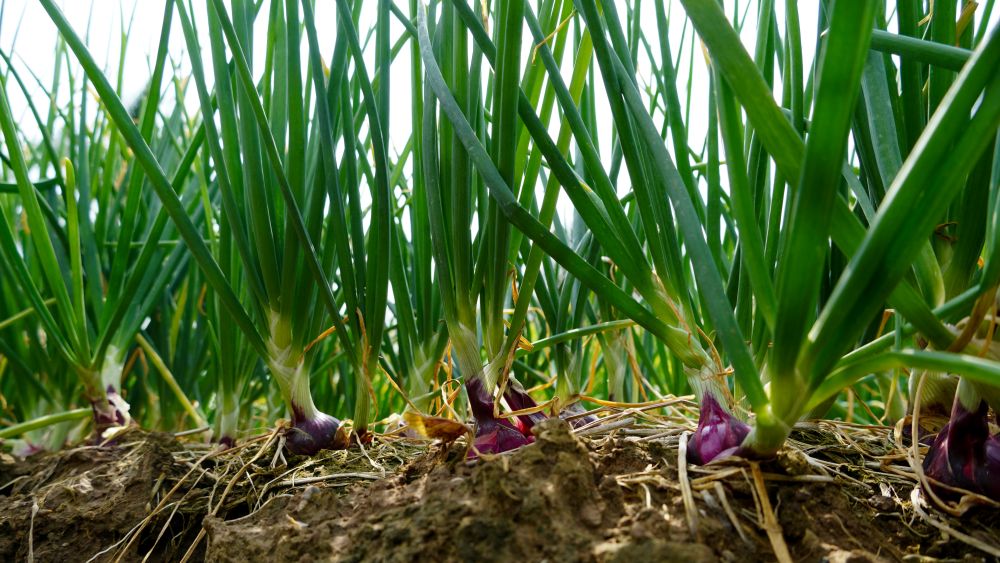
Mr. Thai Van Tung - Director of Samaki Agricultural Cooperative (Vinh Hai commune, Can Tho city) - said that the cooperative currently maintains a cultivated area of about 17ha, of which 3ha are produced in a organic direction. Replacing fertilizers and chemical pesticides with microbial preparations helps farmers significantly reduce input costs, while limiting the number of spraying of pesticides. Products produced in a bio-safe direction are also linked to consumption through supermarket systems at prices 5 - 10% higher than the market.
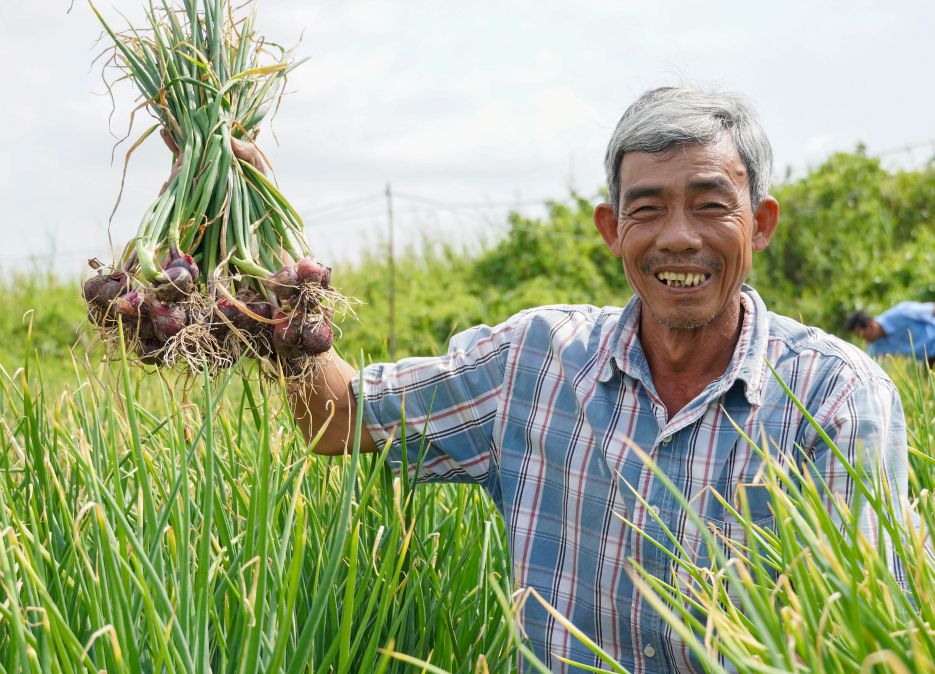
Meanwhile, many farmers have tested new onion varieties that are better adapted to local weather and soil conditions.
In Vinh Chau ward, Mr. Chau Xuan Long is one of the farmers who boldly switched to growing F1 Maserati shallots (Netherlands) in 2 consecutive crops.
On the same area of about 800m2, the previous crop local purple onions only reached about 1.7 - 1.8 tons, while F1 onions reached about 2.5 tons, nearly 30% higher. Especially, in conditions of heavy rain like this year, many local onion fields were damaged, but the F1 onion growing area still gave positive results," Mr. Long calculated.
Mr. Long said that in terms of output, F1 onions are purchased by businesses at a price of about 22,000 VND/kg, higher than local onions (about 18,000 VND/kg). The business also supports seeds and allows farmers to pay late until harvest time, helping people feel secure in production.
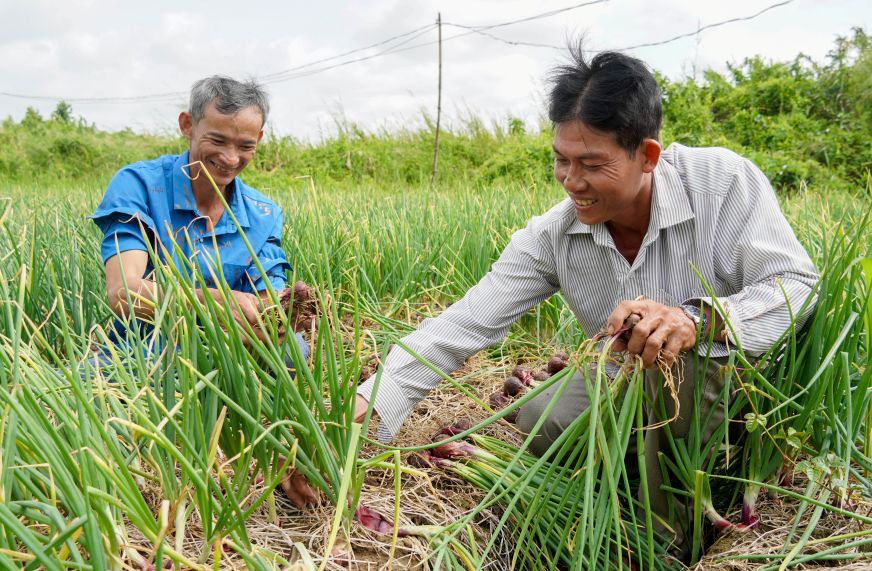
Also in Vinh Chau ward, Mr. Chau Hai Khanh - a farmer participating in F1 onion cultivation for the first time - said that the F1 onion growing technique is not much different from traditional purple onions. The growth time is about 10 days longer, but in return, the care cost is lighter, and fertilizer and pesticide costs are significantly reduced compared to local onions.
Mr. Thach Dil - Director of Vinh Chau Purple Onion Cooperative (Can Tho City) - said that the Cooperative has implemented a linkage model with farmers to develop F1 purple onion varieties in addition to traditional purple onions. Up to now, the area of F1 onions organized for production and consumption has reached about 20ha. In the onion crop serving the Tet market this year, the expected output is from 50–60 tons of F1.
The yield of F1 onions reaches about 30 - 35 tons/ha, while local onions are only about 20 - 25 tons/ha. The cooperative stands out to consume output at a stable price of 15,000 - 20,000 VND/kg, helping people feel secure in production," Mr. Dil said.
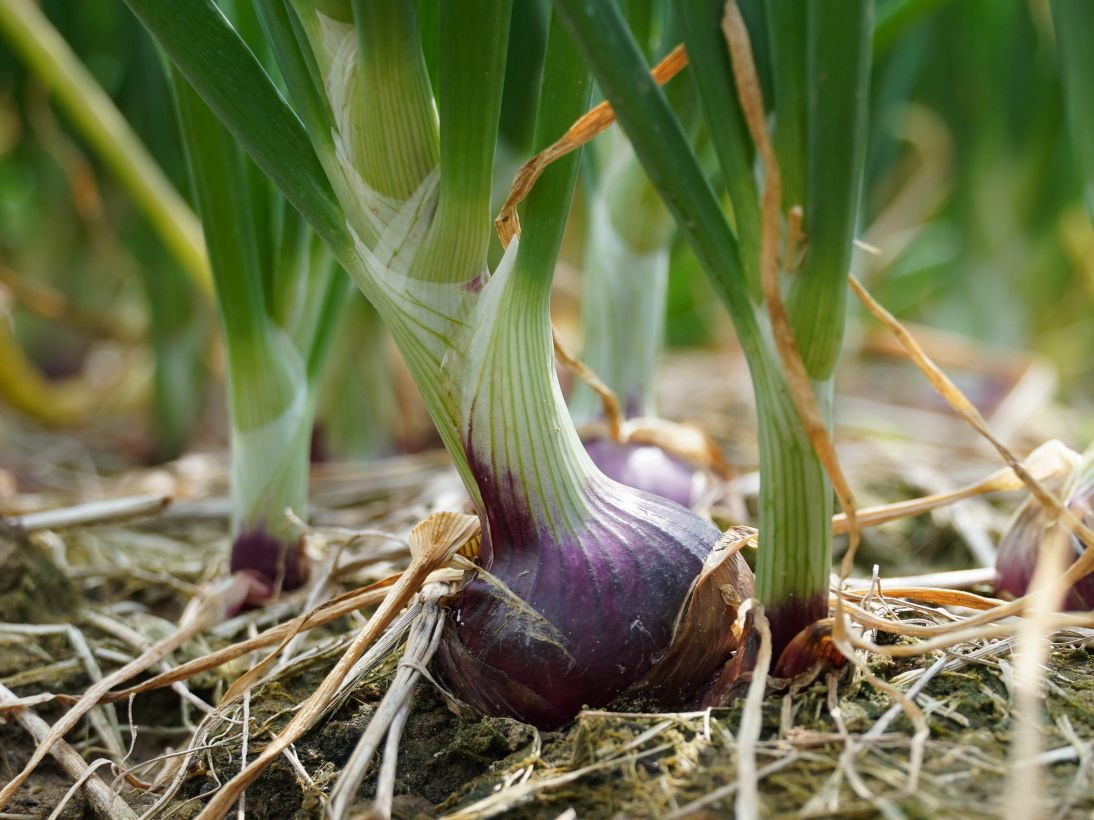
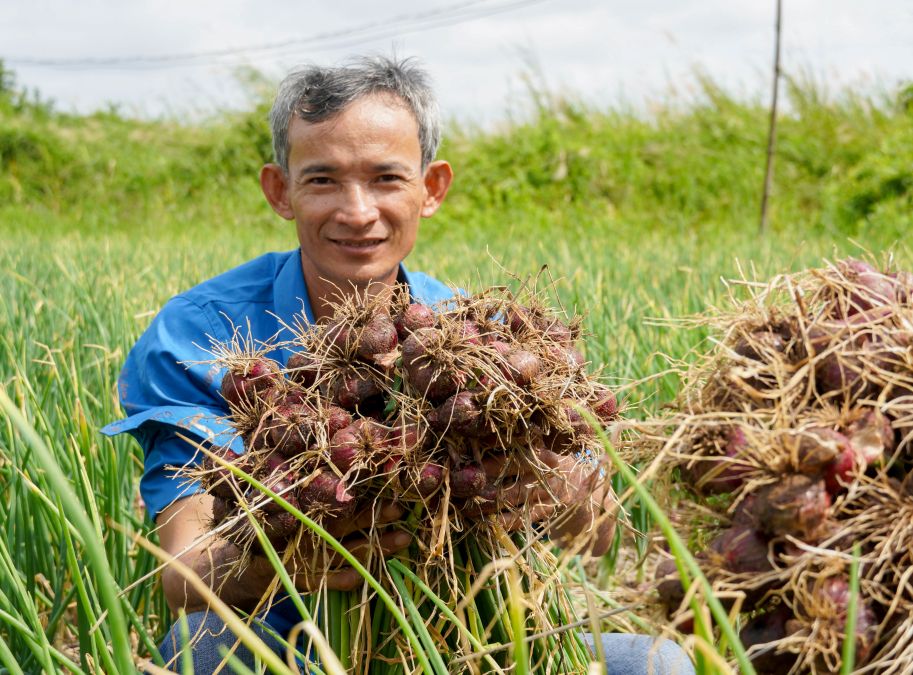
According to representatives of the Cooperative, in the coming time, it will continue to orient production towards safety, increase the use of organic fertilizers, reduce chemicals, and promote traceability and consumption through supermarket systems.
Thanks to its characteristic sandy soil, Vinh Chau purple onions have long been famous for their beautiful, crispy, spicy but not greasy bulbs, which can be preserved for a long time without chemicals. Each year, local farmers produce 3 onion crops, main crops maintaining about 5,000ha. Vinh Chau purple onion products have been granted geographical indications and recognized as typical OCOP.


