
Separating the layer to protect the beehive
Taking us to visit his family's bee farm, Nguyen Minh Tung (born in 1992, in Truong Khanh commune, Can Tho city) said that the entire breeding area was carefully invested in and scientifically arranged. This place is not only a "working place" for diligent bees but also his entrepreneurial journey.
Tung shared that although he graduated from information technology, he decided to switch to agriculture in 2015. With 15 million VND in savings, he bought 10 boxes of bees to try raising, starting a challenging journey, a profession that he had only known before through his childhood memories to find honey in the countryside.
"At first, I almost didn't know where to start: how to raise bees, how to care for them, and I didn't even know how to get honey. being stung by a bee is a common thing, Tung recalled.
Thanks to his passion, he persistently self-study online, experimenting and adapting to the local climate. From a few beehives, he now owns about 1,000 herds and operates the Ong Xanh brand, the unit that won second prize in the Soc Trang Province Startup Creative Ideas Contest (2017).
Tung said that in 2017, during the process of researching organic beekeeping, he found that traditional one- strata farming methods easily damaged the beehives: when feeding, many young larvae died, and the reproductive process was affected. From there, he learned about the model of separated bee levels and new bee farming techniques in the Mekong Delta.
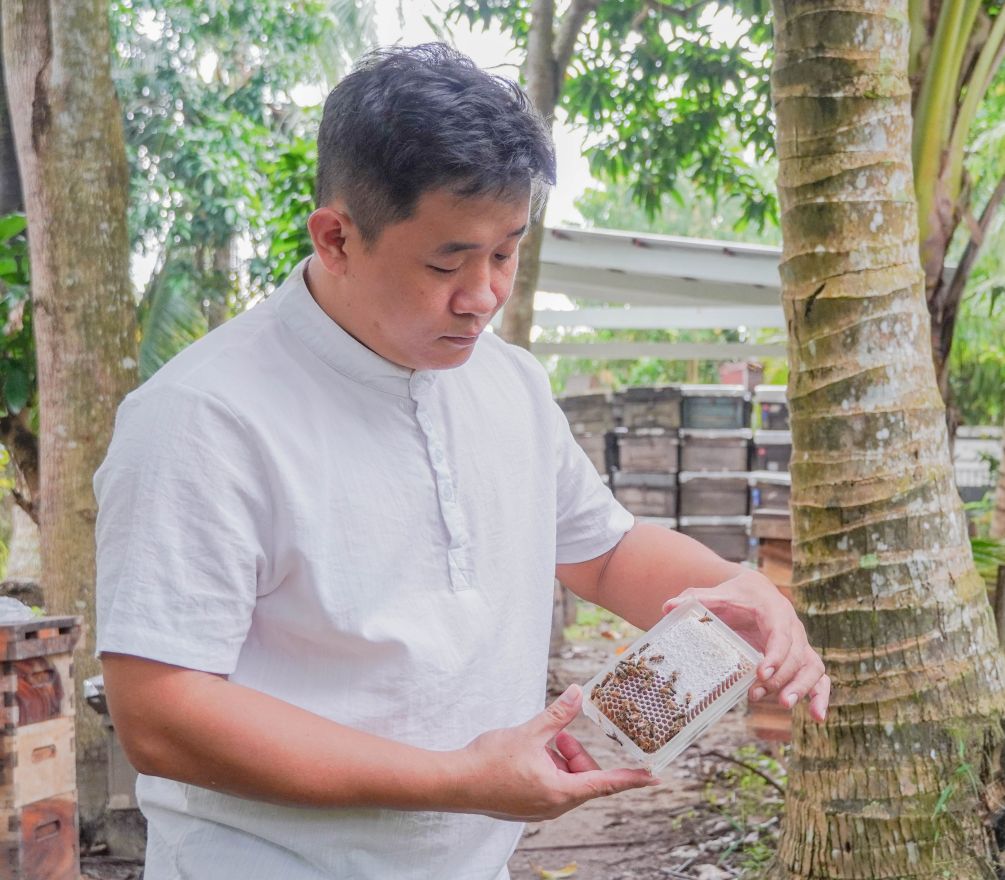
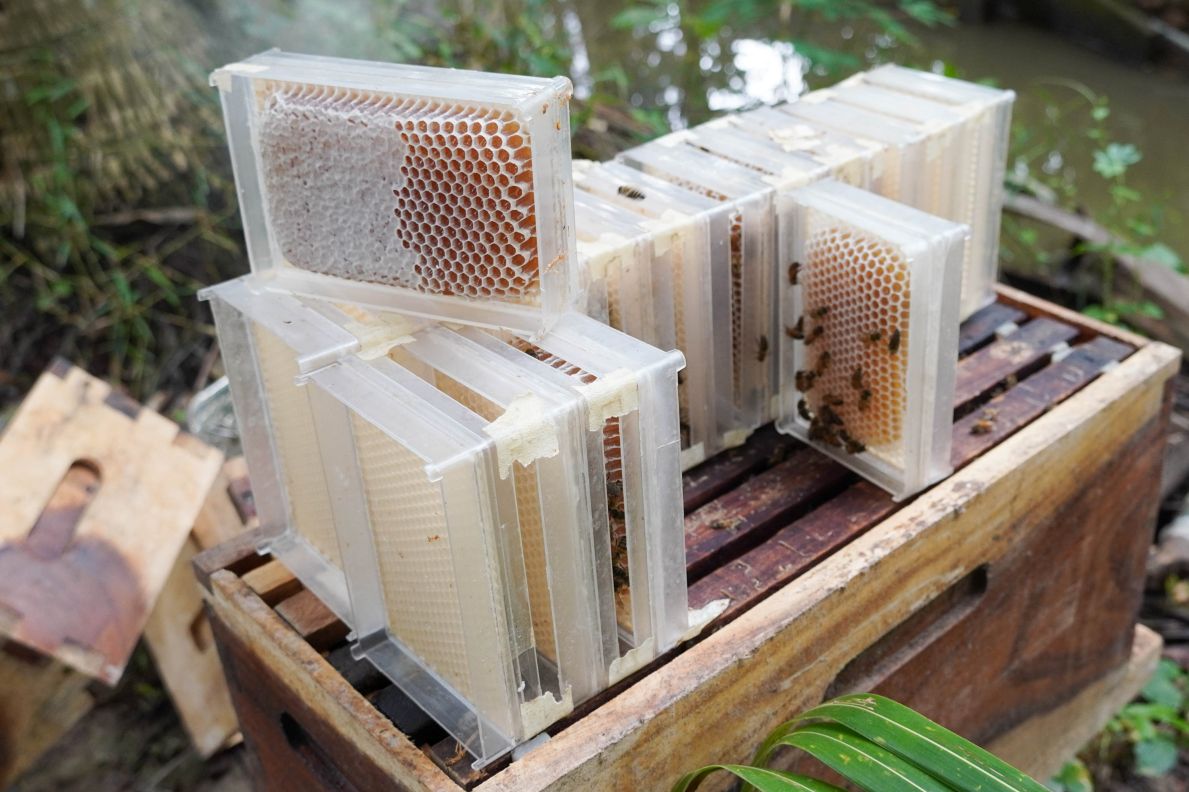
Holding a layer of honey in his hand, Tung explained the model of separating the layer of bee farming, including a separate breeding layer and a separate honey collection layer. The reproductive layer is below, the bile layer is above. When harvesting, the farmer only affects the upper floors, so it does not affect the development of the bee colony. The harvested grain also reaches high ripeness and can be harvested in stages, regardless of the season.
"Thanks to this method, each bee box produces 7 - 10 kg of honey per month. The output is about 2 tons of honey/month with a selling price of 440,000 VND/liter," Tung informed.
Native bees open a new direction
During the process of researching bee glue to develop the product, Tung found that the source of bee glue in the water was quite limited. Therefore, he turned to learning about the finches, native bees without biting droppings, and gave them honey and honey with high antibacterial active ingredients.
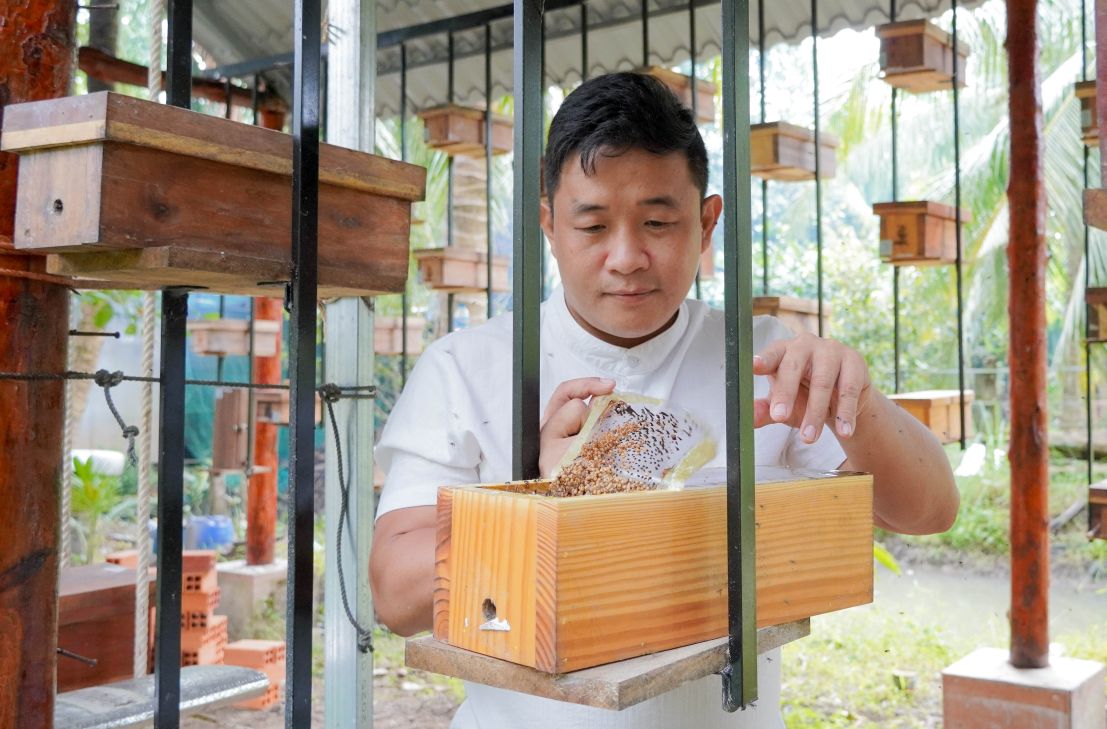
"The bamboo rat is gentle and easy to raise. Just place the bee box in a cool place and observe through the mica glass, without having to open the lid to check like traditional honey bees. Panh mice produce honey, bee glue, pollen; in which panh honey costs up to 3 million VND/liter. Each flock produces 1 - 1.5 liters of honey per year, harvested 3 - 4 months/time, Tung shared.
Mr. Tran Van Quoc - Permanent Vice Chairman of the Vietnam Fatherland Front Committee, Chairman of the Farmers' Association of Truong Khanh Commune (Can Tho City) - said that Mr. Nguyen Minh Tung's beekeeping model is one of the typical models of the locality. Honey products have been recognized as meeting 3-star OCOP standards. The model not only brings economic efficiency but also contributes to job creation, vocational training and labor settlement in the locality.


