
Lang Son Provincial People's Committee approved the Project to build Tan Thanh (Vietnam) - Po Chai (China) Trade and Tourism Cooperative Area, under the technical support project for building a trade and tourism cooperative area on both sides of the border.
The research area is located in Hoang Van Thu commune, including areas B1, B2 and Tan Thanh pagoda area, with an area of about 70.67 ha. This is an area under the detailed construction plan of Tan Thanh border gate at a scale of 1/500 that has been approved.
According to the project, Tan Thanh has a great advantage in terms of location when directly connected to Po Chai, located in the space of Dong Dang - Lang Son border gate economic zone.
The Tan Thanh - Po Chai specialized freight transport route through landmark 1088/2-1089 has been put into operation, creating favorable conditions for import and export customs clearance.
For many years, Tan Thanh has been known as a gateway for exporting agricultural products to China, especially dragon fruit, mangoes, longans, and lychees.
However, this region is still mainly developing in the direction of traditional border trade, largely dependent on the volume of goods and policies of the other side.
The project to assess commercial, service and tourism infrastructure in Tan Thanh is not commensurate with its potential. Some markets and business areas have been built for a long time and are degraded, many kiosks are empty. Tourism activities are mainly border shopping, lacking specialized products; accommodation, entertainment and tourism information center services are still limited.
Logistics infrastructure is also a bottleneck. The border gate area still lacks cold storage, dry storage, parking lots and modern management systems to meet the needs of preservation, inspection, and customs clearance of fresh agricultural products.
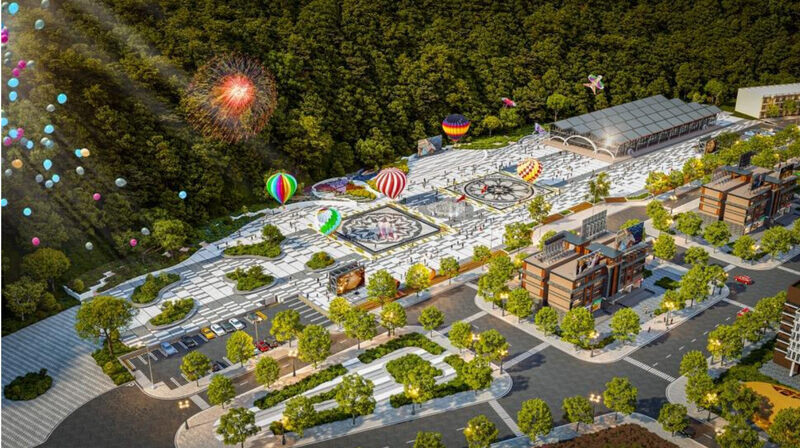
According to the new direction, Tan Thanh will be developed into a multi-functional economic complex, combining import and export, wholesale, logistics, trade promotion, fairs and exhibitions, shopping tourism, accommodation, cuisine and Vietnam - China cultural exchange.
Some proposed models include border markets, agricultural product trading floors, fair centers, cold storage, dry storage, parking lots, eco-resorts, night streets of commerce - cuisine, border cultural parks and event squares.
The project also considers developing a model of tax-free or quick tax refund shopping, attracting retail chains, outlet centers and international brands. The goal is to turn Tan Thanh into a consumer destination, instead of just a place for tourists to visit for short-term shopping.
The estimated total cost for some key project groups is about 1,450 billion VND, mobilized from the state budget, socialization, Vietnam - China business cooperation, private capital and public-private partnerships.
The implementation roadmap is divided into three phases. From 2026 to 2028, Lang Son will focus on completing planning, investing in basic infrastructure and preparing land funds.
In the 2029-2031 period, key functional areas will be built and put into operation. By 2035, Tan Thanh aims to complete the smart border gate model, increase connectivity with China and expand the tourism space of the border region.
When completed, the Tan Thanh - Po Chai cooperation area is expected to create more momentum for the Lang Son border gate economy, expand livelihoods for local people and enhance Tan Thanh's role on the Vietnam - China trade corridor.


