
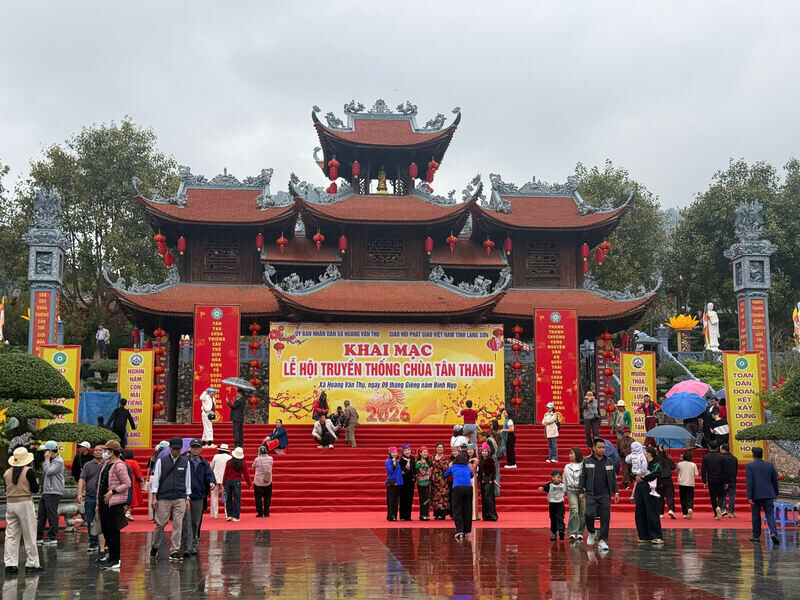
On the morning of February 25th (the 9th day of the first lunar month of Binh Ngo year), spring rain stretched thinly throughout the Tan Thanh border gate area.
From early morning, streams of people still quietly wear raincoats, raise offering trays, and follow each other through Tam Quan Tan Thanh Pagoda to attend the traditional opening ceremony.
The sound of the pagoda bell echoes in the cold mist. The pagoda yard is crowded with people, but not chaotic.
Orderly rows of people offer incense in front of the Three Jewels Palace, praying for a peaceful and harmonious new year.
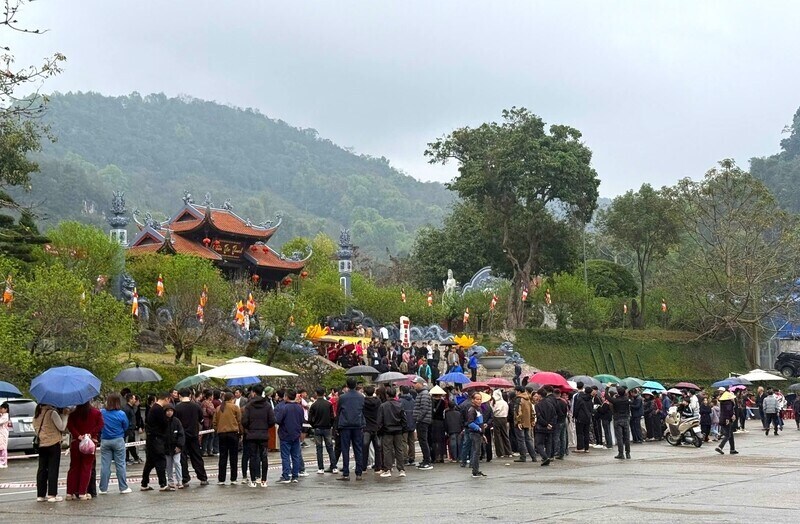
The scent of agarwood mixed with rain creates an atmosphere that is both sacred and contemplative, very unique to a pagoda at the forefront of the Fatherland.
Ms. Hoang Thi Ly (Ky Lua ward, Lang Son province) said that every year her family goes to the pagoda festival early.
“It's raining, but this is spring rain, the elderly still say it's heaven's blessing. Going to temples near the border at the beginning of the year like this is very sacred.
I pray for my family to be healthy, to trade smoothly, and also for the border to be peaceful," Ms. Ly shared.
Standing huddled under the eaves, Mr. Nguyen Van Hung (a tourist from Bac Giang) took the opportunity to dry the bundle of incense before entering the ceremony.
He said that he had been to Lang Son for spring travel many times, but this was the first time attending the festival at Tan Thanh Pagoda.
“I am most impressed with the location of the pagoda. Standing in the yard and looking out at the border gate, it feels very special. Going to worship here is not only to pray for good luck at the beginning of the year but also to clearly see pride in the country's sovereignty,” Mr. Hung said.
Venerable Thich Quang Truyen - Head of the Executive Board of the Vietnam Buddhist Sangha of Lang Son province shared that Tan Thanh Pagoda is built on a "dragon worshiping, tiger obeying" land, close to the Vietnam - China border, possessing a pure and sacred natural landscape, attracting tens of thousands of visitors every Spring.
Started in 2015, the pagoda includes three main areas: Tam Bao shrine, Duc Thanh Tran shrine, Duc Thanh Mau shrine and Tam Quan.
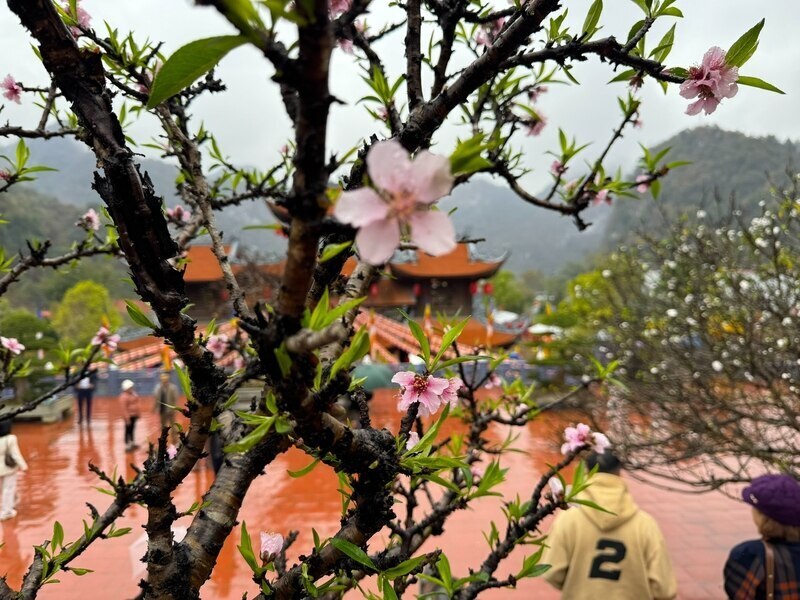
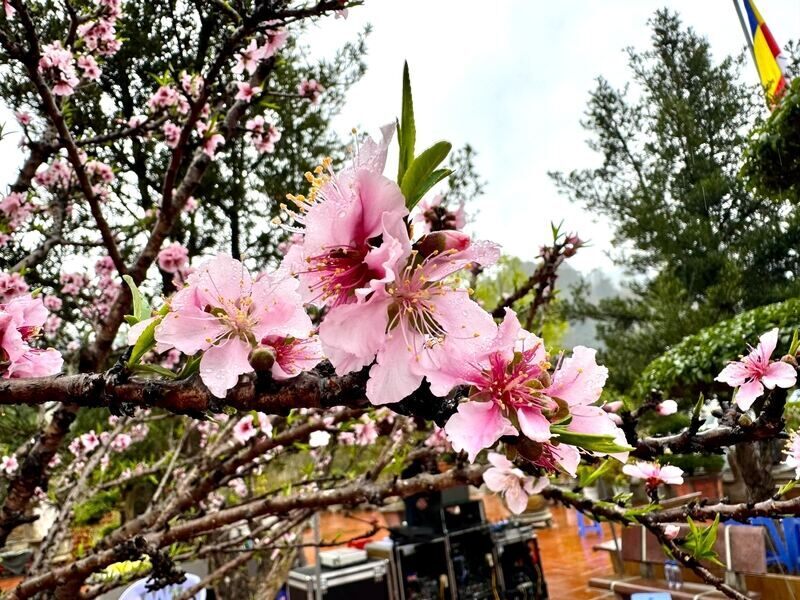
In the campus there are more than 100 statues and about 1,000 green trees, nearly half of which are brilliant spring peach blossoms.
Every Tet holiday, the color of peach blossoms dyeing up mountains and hills further highlights the majestic and contemplative beauty of the pagoda at the forefront of the Fatherland.
In particular, the pagoda is located in the Northeast - Southwest direction, the pagoda is located in a highland overlooking Tan Thanh border gate, about 300 meters from the border and is considered one of the pagodas closest to the border in our country.
From afar, Tam quan chồng diêm roofed with hài mũi tiles, the dragon-headed sword roof characteristic of Vietnamese pagoda architecture stands majestically in the gray sky on rainy days.
Passing the pagoda gate, on the right hand side is Quan Tran Ai Temple - a place to commemorate the heroes who sacrificed themselves to protect territorial sovereignty.
In the main hall, the large horizontal lacquered board carries two verses: "Tran Ai Tan Thanh trung nghia luou su sac, Non song Dai Viet truong thuong ngan thu" as a reminder of the sacred territorial sovereignty of the Fatherland.
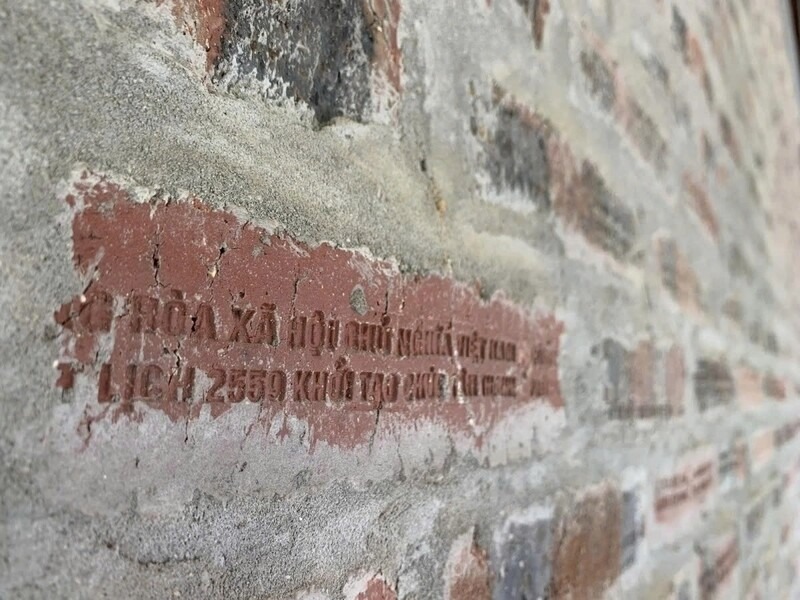
The special feature of Tan Thanh Pagoda lies in each brick built.
Venerable Thich Quang Truyen said that each brick is embossed with the words "Socialist Republic of Vietnam - Buddhist calendar 2555 initiating Tan Thanh Pagoda".
In the lingering spring rain, incense sticks blend with the pink peach blossoms, creating a space that is both sacred and warm.
In the remote border, the flow of people still quietly returns to the pagoda, as a way to send faith in the peace of family, homeland and beautiful rivers and mountains.


