
These days, on the rice fields of the 30/4 Cooperative Group, Ho Dac Kien commune (Can Tho City), the early Winter-Spring rice harvest atmosphere is bustling. The sound of harvesters is bustling throughout the fields, interspersed with the joy of farmers when the rice is both in season and at good prices.
According to members of the Cooperative Group, this year's rice crop achieved a yield of more than 900 kg/cong (1,300m2). In particular, the entire output is consumed by the enterprise at a price of 9,100 VND/kg, 800 - 1,000 VND/kg higher than the market price outside.
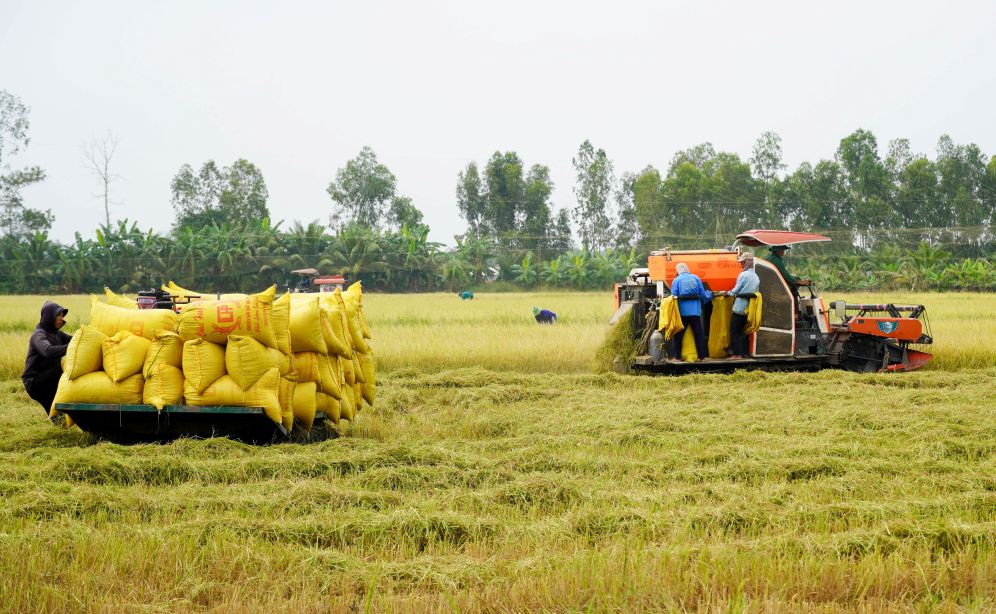
Mr. Le Minh Chi - Head of the 30/4 Cooperative Group - said that when the Cooperative Group was first established, there were about 70 households participating in production. To date, the number of members has increased to 120 households, with a total cultivated area of about 125 hectares. According to him, before, when there was no production linkage and no businesses to guarantee consumption, farmers mainly made rice by traditional methods, dependent on traders, so they encountered many risks.
Traders often finalize prices first, but when the market fluctuates and rice prices decrease, they ask to lower prices or abandon the deposit, causing farmers to fall into a passive position. If they abandon the deposit, farmers have to wait to find another buyer, rice left for too long will reduce yield and cause great damage. Without consumption guarantees, the risk is very high," Mr. Chi shared.
Mr. Chi said that with those inadequacies, the Cooperative Group has proactively sought outlets, signed contracts with ST25 rice planting enterprises, and so far there have been 3 crops.
Currently, the price of ST25 rice outside the market is about 8,000 - 8,200 VND/kg. But thanks to signing consumption contracts, businesses still buy at the correct price of 9,100 VND/kg, people are very excited," Mr. Chi said.
According to Mr. Chi, compared to previous rice varieties, ST25 rice has many outstanding advantages. Rice plants are strong, have standing leaves, and have less deposition of dew, so they are better resistant to diotrophic diseases and leaf burns, reducing the number of spraying times, thereby reducing production costs but higher yields.
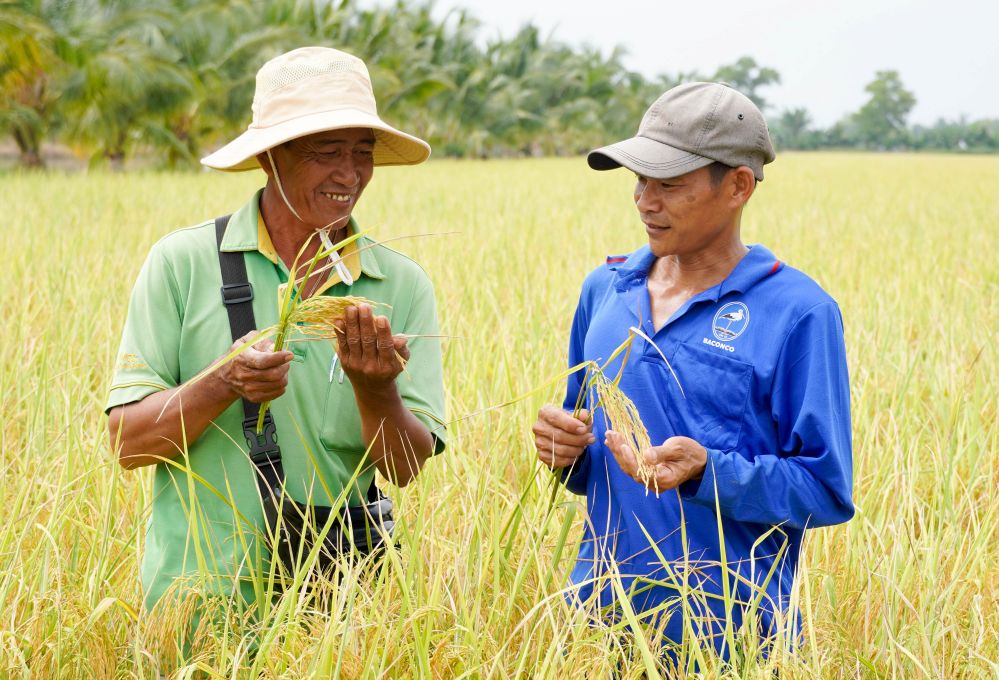
Sharing the same joy, Mr. Nguyen Van Tinh - a member of the 30/4 Cooperative - said that in the past, his family planted traditional rice varieties with unstable prices, and businesses or traders easily abandoned deposits when the market price dropped.
Now planting ST25 varieties, businesses sign contracts to guarantee consumption, and prices are finalized in advance, so farmers are very reassured. Whether the market price increases or decreases, businesses still purchase according to the contract," Mr. Tinh shared.
Mr. Do Van Dang, a farmer in Dak The hamlet, Ho Dac Kien commune (Can Tho City) - said that this is the first time the locality has simultaneously produced the early Winter-Spring crop because there is a water pumping station supported by the State, helping to reduce irrigation pumping costs. Thanks to that, farmers are even more excited. According to his calculations, the profit per cong of rice is currently about 1.8 - 2 million VND higher than before. After deducting expenses, the profit reaches about 5.2 million VND/cong.
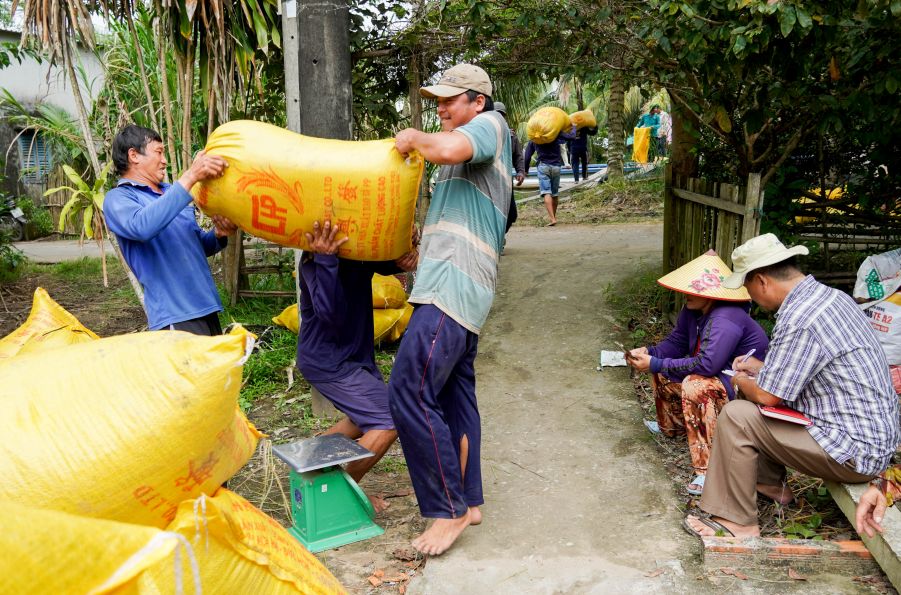
According to the Department of Agriculture and Environment of Can Tho City, the total cultivated area in 2025 is 721,073 ha, with a yield of about 4,7 million tons. Seasonally, maintaining and implementing a large field model with an area of 84,819 ha, of which over 30% of the area is consumed by companies, businesses, cooperatives, and linked cooperative groups in the year.
Up to now, 12 pilot models have been implemented according to the Project criteria "Sustainable development of 1 million hectares of specialized high-quality and low-emission rice associated with green growth in the Mekong Delta region to 2030", with a scale of 50 hectares/model. The results show that the total production cost at the models has decreased by an average of about 1.1 million VND/ha; profits are higher than the control model by 1.3 - 6.5 million VND/ha. In addition, the construction and implementation of the rotating economic model from straw has contributed to helping farmers increase income by about 33 million VND/ha in 3 production crops.
It's a bit of a bit of a bit of a bit of a bit of a bit.


