
Information from the Hanoi Market Management Department (QLTT) shows that the goods market in the city in August 2026 is generally stable, and the supply of essential goods is guaranteed. However, the situation of counterfeit goods, smuggled goods, goods of unknown origin and violations in the e-commerce environment is still complicated.
Basically stable commodity market
According to the Hanoi Market Management Department, in August, goods circulation activities in the area took place normally, meeting the production, business and consumption needs of people. Prices of some groups of food, foodstuffs, and livestock and poultry meat tended to increase slightly compared to the previous month.
The increase mainly focused on green vegetables, fresh food and some seafood items. The cause was identified as hot weather interspersed with heavy rain disrupting local supply, increased transportation and preservation costs, while consumption demand during the summer peak was high.
Some vegetable items have had localized price increases at times, but the increase is not large, fluctuating according to each time and region, and has not significantly affected the general price level.
For gasoline and oil, prices continue to be affected by the upward trend from mid-July 2026, increasing transportation, production, business and goods circulation costs. In August 2026, gasoline and oil prices shifted to a downward trend through operating periods, contributing to reducing cost pressure.
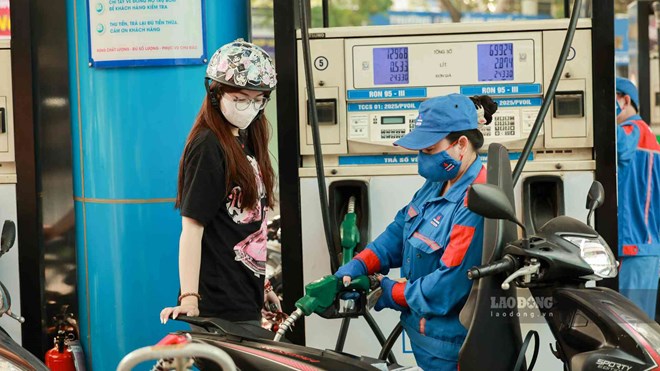
According to the Hanoi Market Management Department, gasoline and oil price movements during the period were affected by the political situation in the Middle East, affecting supply and import time. In about a week between reports, many private gasoline and oil stores in the area recorded a situation of slow arrival of goods, at times local shortages and having to wait for additional supply from distribution points.
However, this situation only lasted for a short time and the market quickly recovered, and business operations returned to normal.
Fake LPG detected, a series of violations
According to the assessment of the Market Management force, the production, business and circulation of goods in the area still have many potential violations. The main acts are related to smuggled goods, goods of unknown origin, counterfeit goods, counterfeit trademarks, infringement of intellectual property rights, violations of food safety and business in the e-commerce environment.
Notably, on August 6, Market Management Team No. 14 coordinated with the Economic Security Department, Hanoi City Police to inspect 5 establishments producing and trading in liquefied petroleum gas (LPG) in Nam Phu, Tam Hung and Thuong Tin communes.
Through inspection, functional forces discovered many fake LPG bottles, LPG with signs of being fake goods, along with 1,645 anti-counterfeit stamps and 257 film films carrying information of gas businesses.
At the LPG filling facility in Dong Trach village (Nam Phu commune), functional forces determined that 1,124.4kg of LPG gas was fake, worth more than 31.4 million VND.
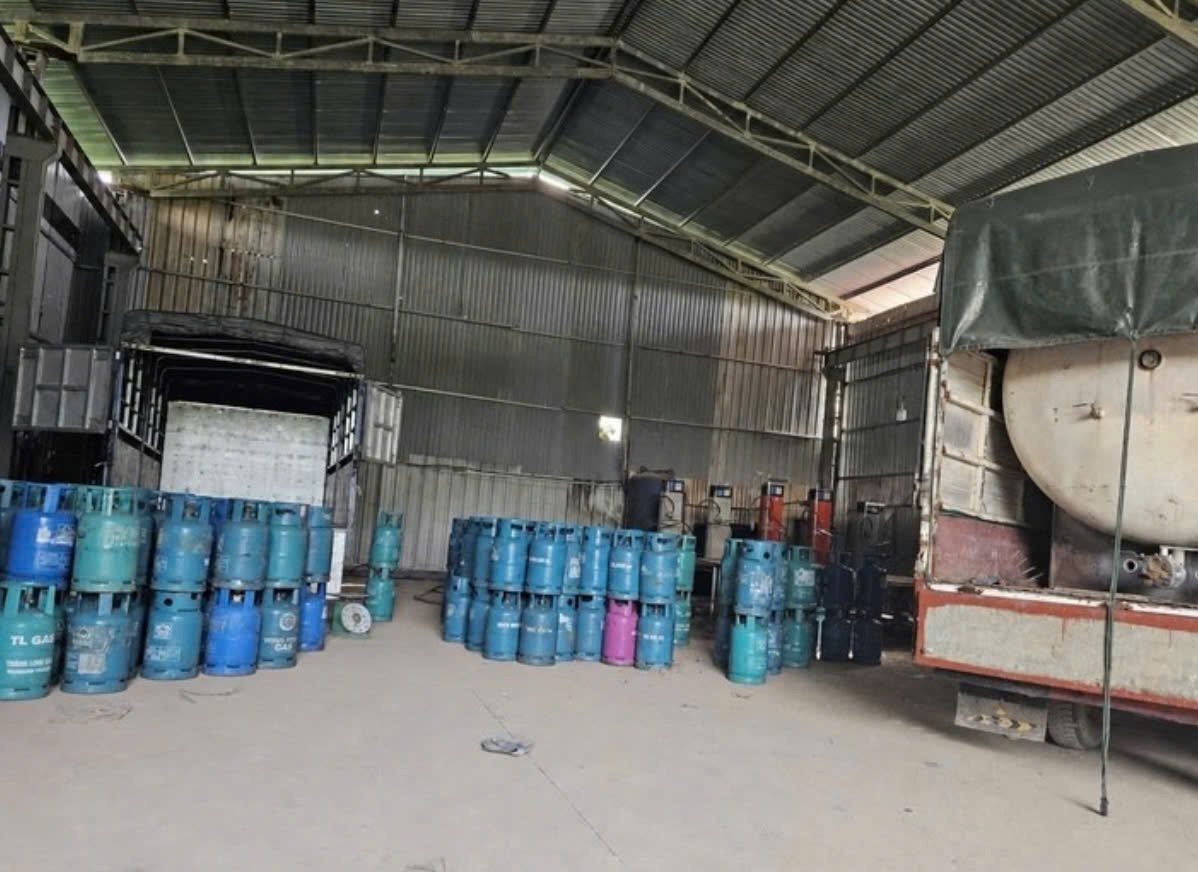
The verification results showed that the establishments had links in the process of transferring, transporting, distributing and consuming LPG, forming a chain from gas filling, distribution hub to retail. Because the case showed signs of crime, the entire file and related goods have been transferred to the Police agency for further investigation and handling according to regulations.
The case shows that the production and trading of counterfeit goods shows signs of organization and linkage between many stages. In particular, for LPG, counterfeiting acts pose a direct risk to the safety, life and property of consumers," the report of the Hanoi Market Management Sub-Department stated.
In addition to LPG, violations of smuggled goods, goods of unknown origin and food safety continue to appear in many commodity groups such as food, household goods, fashion, cosmetics, electronic equipment, processed foods, frozen foods, confectionery, beverages and goods serving the Mid-Autumn Festival.
Common violations are not being able to present legal invoices and documents; goods do not meet regulations on labels and circulation conditions. Some subjects divide goods into smaller portions and gather them at warehouses before putting them on the market, causing difficulties for traceability and quality control.
Increase e-commerce surveillance
E-commerce continues to be identified by the Market Management force as one of the environments that generates many violations. Subjects use e-commerce platforms, websites, social networks and livestreaming to advertise and sell goods, while information about business locations, warehouses and actual subjects is unclear or frequently changes.
Violating goods are stored at individual gathering points, causing difficulties for functional forces in inspection, verification and collection of evidence.
Faced with this reality, the Hanoi Market Management Department will continue to strengthen online supervision, combined with receiving feedback from people and businesses to promptly detect and handle violations.
In the coming time, the Market Management force will focus on managing the area, collecting information and inspecting groups of goods and business methods at high risk of violations, focusing on counterfeit goods, goods infringing intellectual property rights, food, confectionery serving Mid-Autumn Festival, cosmetics, fashion, electronic equipment and imported goods.
Functional forces also continue to monitor business activities on e-commerce platforms, websites and social networks; coordinate with the Police, local authorities, specialized agencies and rights holders to verify the origin of goods and clarify violations.
For cases with signs of crime, the file will be transferred to the investigating agency for handling according to regulations, thereby contributing to protecting consumer rights and building a transparent and healthy business environment in Hanoi.


