
Speaking at the seminar "Ensuring electricity supply in the dry season in 2026", Mr. Bui Quoc Hung, Deputy Director of the Electricity Department, Ministry of Industry and Trade, said that in the past 5 months, the weather has had unusual changes, especially the hot sun came very early in April and especially around the end of May (May 24-28), the temperature increased suddenly, so the demand for electricity and load increased very high. Especially for the power system on May 28, the load increased the most, electricity output reached 1.2 billion kWh/day and peak capacity reached more than 57,000 MW.
In terms of electricity output, it has increased by 9.3% compared to the same period in 2025. Compared to the scenarios set out by the Ministry of Industry and Trade, the load increase is higher than the basic scenario. However, it is still lower than the operating scenario, meaning it is still proactive," Mr. Hung informed.
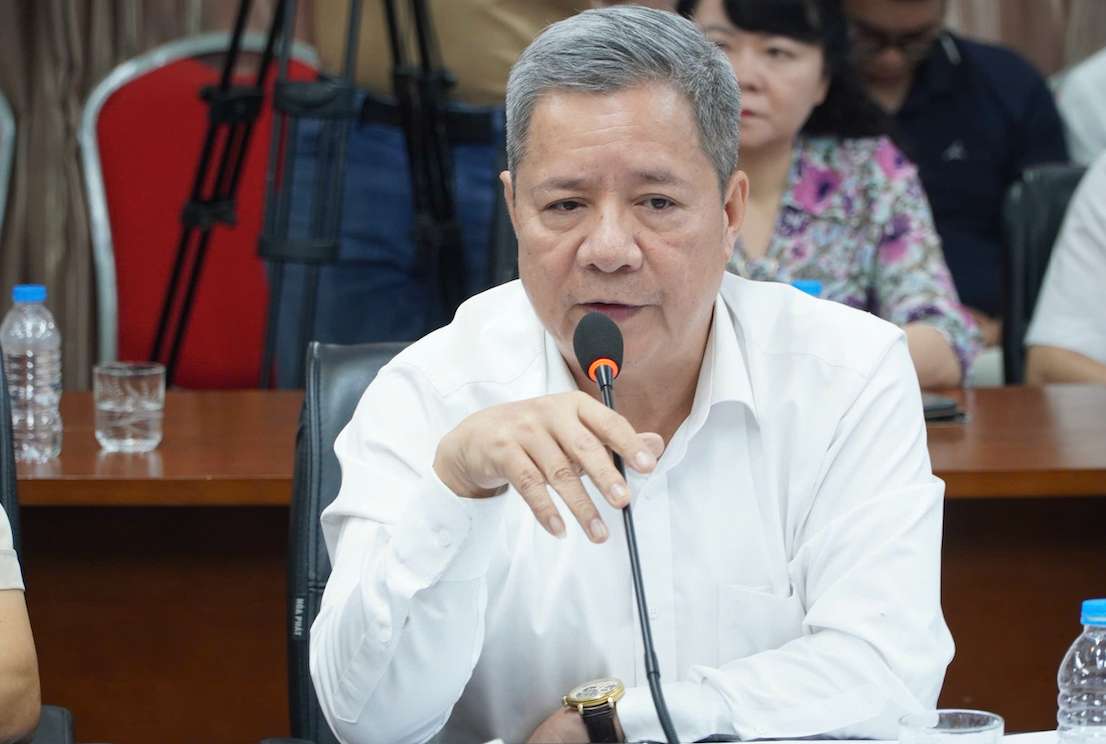
According to Mr. Hung, based on the actual operation of the first 5 months of the year, the Ministry of Industry and Trade has directed NSMO as well as EVN to have an operating scenario for the remaining 6 months of 2026. It is expected that the whole year will reach about 352.4 billion kWh, an increase of 9.1% compared to 2025 and higher than the basic scenario.
It can be said that the reality of 2026 is relatively close to the scenarios of the Ministry of Industry and Trade. But there are still many factors, challenges, and pressures for the operation of the power system in the remaining 6 months of 2026," Mr. Hung said.

Providing more detailed information about electricity output, Mr. Nguyen Anh Tuan, Managing Board of the National Power System and Electricity Market Operation Company (NSMO) said that recently we have experienced 2 heat waves, especially the heat wave at the end of May (from about May 23 - 28) with record high temperatures in recent years, breaking many records in electricity output and consumption capacity of the national power system as well as the Northern power system compared to 2025.
Accordingly, in the first 5 months of 2026, the total electricity output of the entire system recorded 138.9 billion kWh, equivalent to a growth rate of about 8.9% compared to 2025. This is a relatively high figure, 2 billion kWh higher than the operating method calculated in the last year of 2025. However, in this period, electricity supply is still ensured to meet the requirements for socio-economic development of the country.

According to Mr. Tuan, at the end of May, the peak capacity of the entire national power system was recorded at about 58,000 MW, an increase of 5.6% compared to the record of 2025, with an output of up to 1.2 billion kWh/day, an increase equivalent to about 9.5% compared to the record of 2025.
In which, the North consumes up to 630 million kWh, accounting for more than half of the country's electricity consumption. Peak capacity reached 30,000 MW, an increase of 6.3% compared to the 2025 record, an increase equivalent to 1 Hoa Binh hydropower plant. This means that each year the North needs to supplement electricity equivalent to the capacity of a Hoa Binh hydropower plant to meet growth demand.
Another noteworthy point is that if the record for electricity consumption in 2025 falls in August, this year, although only in May, it has broken the record of 2025. Thus, the summer has just begun, not to mention, it is expected that El Nino this year will last from mid-year to 2027, showing that there are still many difficulties ahead," Mr. Tuan informed.
To ensure electricity supply according to the proposed scenarios, Mr. Ngo Son Hai, Deputy General Director of Vietnam Electricity Group (EVN) said that EVN always identifies maintaining the readiness of power generating units and requiring hydropower plants to strictly comply with the reservoir regulation order of NSMO as key factors to help maintain the supply-demand balance of the system.

Mr. Ngo Son Hai said that EVN regularly exchanges and coordinates with NSMO to find solutions to ensure the best supply, from things such as regulating and operating water levels in reservoirs in the dry season, coal power plants... Before the peak heat season, power generation units have reviewed, inspected and overcome defects, adjusted and not repaired according to plan in peak months, and stored water in hydropower reservoirs at appropriate levels according to NSMO's requirements.
In the past months of May, many operating records have been surpassed, but EVN's power plants are still operating basically stably, making an important contribution to ensuring electricity supply. Therefore, the most important thing is the coordination between relevant units to maintain and ensure supply," Mr. Hai shared.


