
Cu Lao Dung commune (Can Tho City) is bordered by the sea, often directly affected by saltwater intrusion. These harsh conditions make it difficult for many crops to grow.
However, reality shows that local farmers are gradually adapting effectively, not only maintaining productivity but also improving the quality of agricultural products, giving delicious and high selling prices.
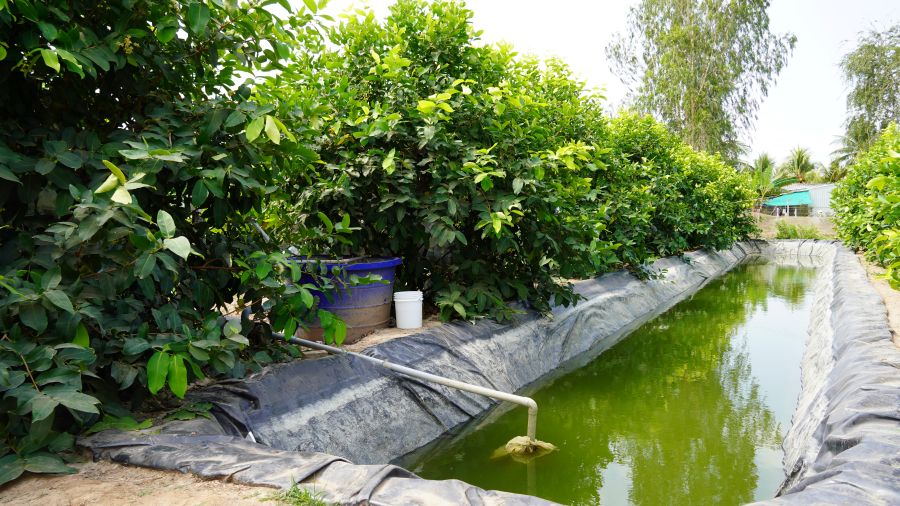
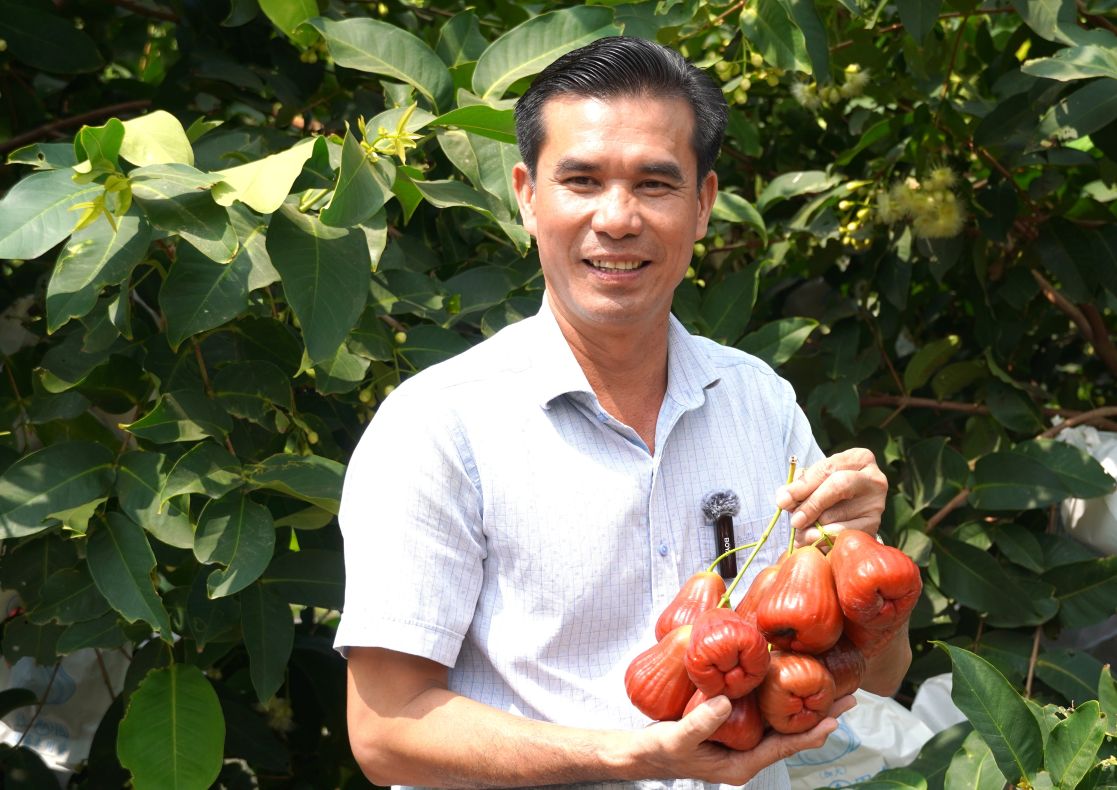
Present at the gardens in the middle of the dry season, reporters recorded many flexible farming models that have been effective. Mr. Tran Van Phuc - a farmer said that the decisive factor is still choosing crops suitable for the soil. After many years of experimentation, he has successfully bred Son Tien pink plum variety that is capable of adapting to salt-contaminated soil conditions.
This plum tree is quite salt-tolerant. If the salt water rises to about 10‰ and then recedes quickly, the tree will still be less affected. In soil conditions with a salinity of about 2-3‰, the tree will still develop normally," Mr. Phuc shared.
Mr. Phuc also invested methodically in infrastructure to proactively "live with salt". On the production area, he dug 4 water storage ponds with a total area of about 4ha. The water source is stored from rivers and rainwater in September - October of the lunar calendar, then put into a water-saving irrigation system, serving about 50ha of cultivation. Thanks to that, the garden still maintains stable growth throughout the drought and salinity season.
According to practical experience, the "naturally slightly salty" element of the soil in Cu Lao Dung is not entirely disadvantageous. This environment helps form natural potassium content, contributing to creating crispy fruit quality, rich sweetness without needing to supplement too much fertilizer.
If fertilized insufficiently, the fruit will not be delicious, but fertilizing in excess can easily weaken the tree. While the soil already has minerals, the tree develops very balancedly," Mr. Phuc said.
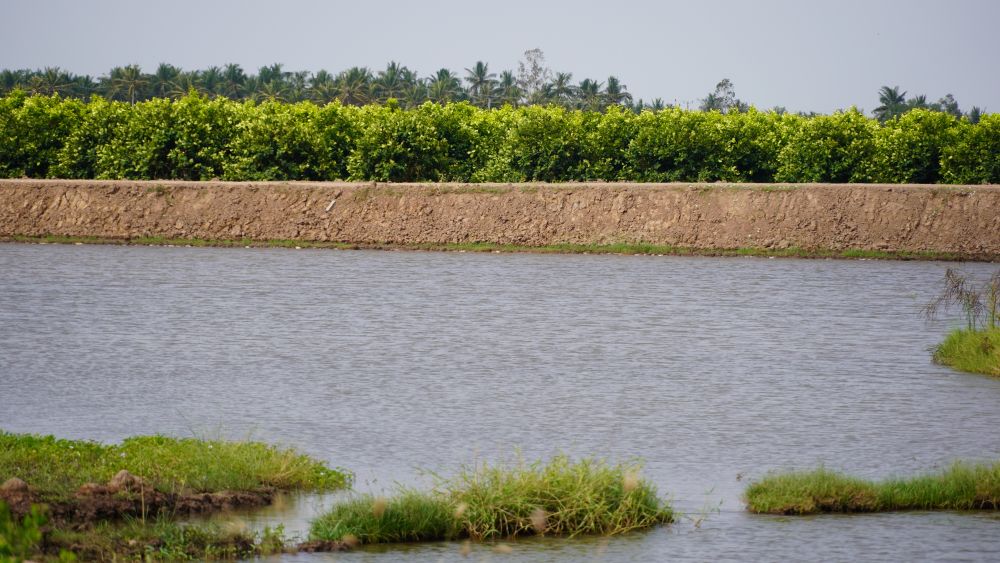
Records at many other gardens show that proactive water sources are becoming the "key" in production. Mr. Nguyen Van Tan - a local farmer - currently has more than 3ha of jackfruit and longan planting still maintaining stable yields despite prolonged hot weather.
According to Mr. Tan, right after the rainy season ended, the family planned to store water. The water storage ditch is invested methodically with a width of 4m, length of about 90m, with material lining to limit loss. In the dry season, watering is carefully calculated: watering half of the area in the morning, watering the rest in the afternoon, prioritizing cool weather to reduce evaporation.
Sometimes I rotate watering between plants to save water while still ensuring sufficient moisture. Thanks to that, the plants are still green and produce good yields despite the harsh hot weather," Mr. Tan said.
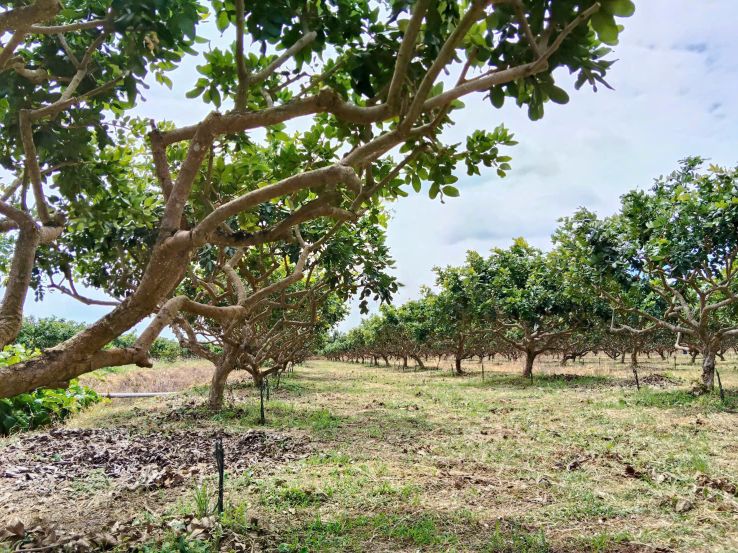
In Vam Ho A hamlet, Mr. Tran Van Thien's model also shows clear effectiveness. On an area of 4ha, the longan garden is still green and lush in the dry season thanks to the combination of pumping wells and water storage ponds. When the reserve water source decreases, he proactively pumps additional water from the well to ensure continuous irrigation. Currently, this area is being nurtured to enter the fruit harvesting phase in February of the lunar calendar, serving the Ho Chi Minh City market.
Mr. Nguyen Van Dac - Vice Chairman of Cu Lao Dung Commune People's Committee (Can Tho City) - said that the 2026 dry season lasts from December to about May of the following year. The whole commune currently has about 4,900 hectares of agricultural land, of which most depend on natural water sources. Faced with this reality, the locality has promoted propaganda and guided people to replicate models of adapting to drought and salinity such as building freshwater storage ponds and applying water-saving irrigation systems for fruit trees.


