
Sweet bamboo shoots revive hilly land
In the socio-economic development orientation for the period 2025 - 2030, Quang Tri identifies green agriculture as one of the strategic pillars. The province aims for ecological - circulating - environmentally friendly production, putting farmers at the center and science and technology as the driving force.
This is a long-term choice, aimed at building a sustainable agriculture, adapting to climate change and preserving the natural ecosystem in the land of "Lao wind, white sand".
From that policy, many green agriculture and circular agriculture models have been implemented, bringing clear economic efficiency, gradually changing farmers' production thinking towards sustainability.
In hilly areas that used to cultivate ineffective traditional crops, many households have boldly switched to models suitable for harsh soil and climate conditions.
Typically, the model of growing bamboo for bamboo shoots of Ms. Le Thi Lan Huong, Chairwoman of the Board of Directors of Duc Thanh Investment Trading and Construction Joint Stock Company. Her family's nearly 2 hectares of bamboo garden currently yields stable harvests through many crops, becoming a bright spot in crop restructuring on hilly land.
From the beginning, the model was cultivated in an organic direction, using manure instead of inorganic manure. After about two years, each bamboo bush yields dozens of bamboo shoots. Bamboo shoots are harvested when they are still in the soil, 12 - 20 cm long, ensuring tenderness and natural sweetness.
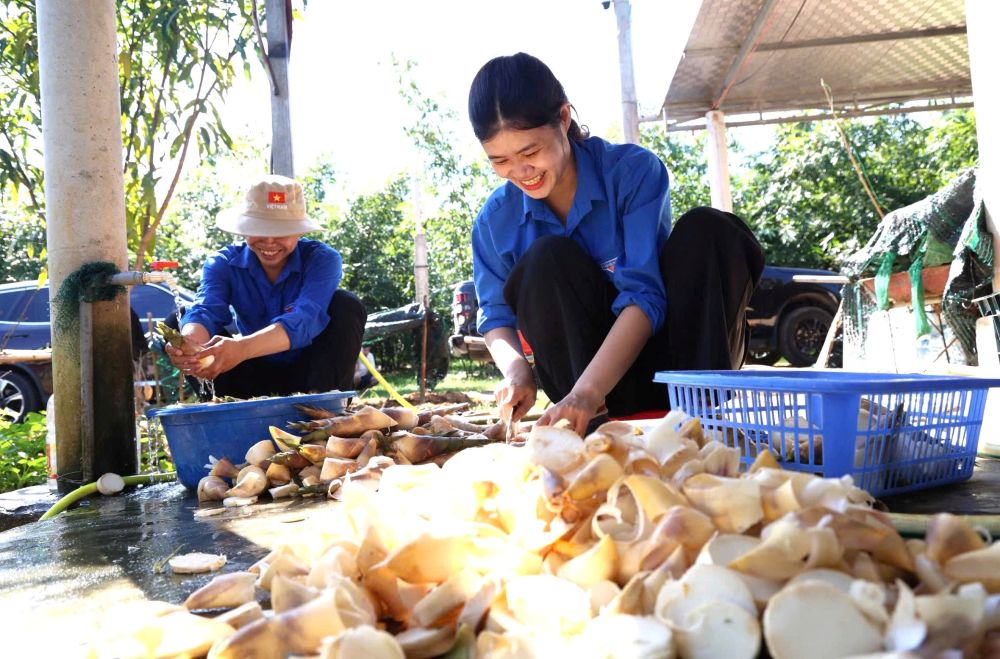
Thanks to its crispy, non-bitter, and easy-to-process quality, bamboo shoots are favored by the market. On average, each hectare of bamboo yields revenue of over 400 million VND per year, much higher than traditional crops.
Duc Thanh Company owns 29 hectares of bamboo in Nam Trach and Hoan Lao communes, with a yield of over 15 tons of fresh bamboo shoots/ha. According to the plan, in the period 2026 - 2027, the enterprise will link up to expand the area to 100 hectares, reaching 500 hectares by 2030, forming a closed production, processing, and consumption chain, creating stable jobs for dozens of local workers.
Circular livestock creates dual value
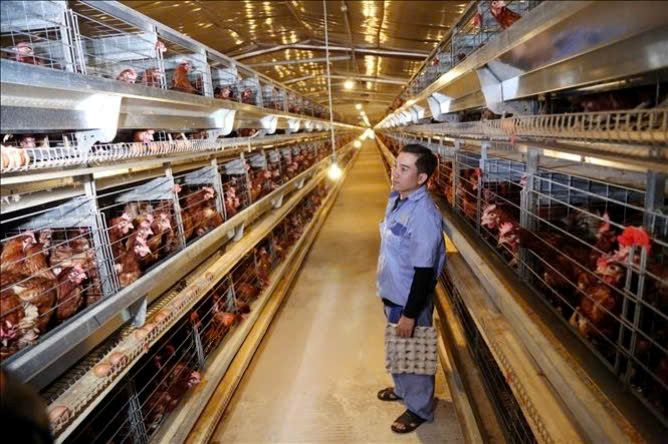
Not only in cultivation, green agriculture in Quang Tri is also clearly realized in the field of animal husbandry. In Le Ninh commune, Hoang Van Company has invested 80 billion VND to build a high-tech laying hen farming model on an area of 10 hectares.
The farm operates automatically according to Dutch standards, from providing food and drinking water to lighting systems and disease control. With a scale of 70,000 chickens, the model generates revenue of over 100 million VND per day, creating regular jobs for 25 workers.
Mr. Hoang Van Hoa, Director of Hoang Van Company, said that waste in livestock is treated in a closed manner, used as fertilizer for crops, contributing to reducing environmental pollution. According to him, the province's green agriculture development policy is an important foundation for businesses to feel secure in expanding production.
Quang Tri currently has more than 1.1 million hectares of agricultural - forestry - fishery production land, accounting for about 86% of the natural area. Diverse terrain and unique climate create advantages for green agriculture development associated with rural economy and ecotourism.
According to Mr. Tran Quoc Tuan, Director of the Department of Agriculture and Environment of Quang Tri province, to build green agriculture into one of the 4 pillars of the province's economy, the goal by 2030 is that over 70% of key agricultural products meet organic or VietGAP standards, 100% of products have traceability, making green agriculture the main color in sustainable development.


