
Reviewing and putting risky businesses under inspection
The Tax Department has just issued Official Dispatch No. 1927/CT-KTr requesting affiliated units to strengthen management and promote specialized inspections in 2026 for the group of businesses with prolonged losses and small profits, in order to promptly detect acts of fraud and tax evasion and ensure correct and sufficient revenue collection for the state budget.
According to the Tax Department, in 2025, the tax industry has implemented many management solutions for businesses, including groups that declared long-term losses, slight profits and achieved some positive results. However, this situation is still common.
To continue to strengthen tax management in 2026, the Tax Department requests the Tax Departments of provinces and cities, the Large Enterprise Tax Sub-Department and the E-commerce Tax Sub-Department to promote propaganda and require taxpayers to declare truthfully, accurately, and fully their tax obligations according to regulations. At the same time, warn of legal consequences and sanctions for cases where businesses continuously declare losses for many years, do not pay taxes but still invest in expansion and capital increase.
The tax authority emphasized that this is a key risk factor to include in the key inspection plan, thereby identifying and strictly handling acts of tax law violations, fraud, and tax evasion; contributing to strengthening discipline and order in tax management and raising taxpayers' awareness of law compliance.
Along with that, units are required to promote the review of tax declaration and tax payment of enterprises; in case errors are detected, enterprises must be guided to declare and adjust promptly, and at the same time strengthen inspection at the headquarters of the tax authority.
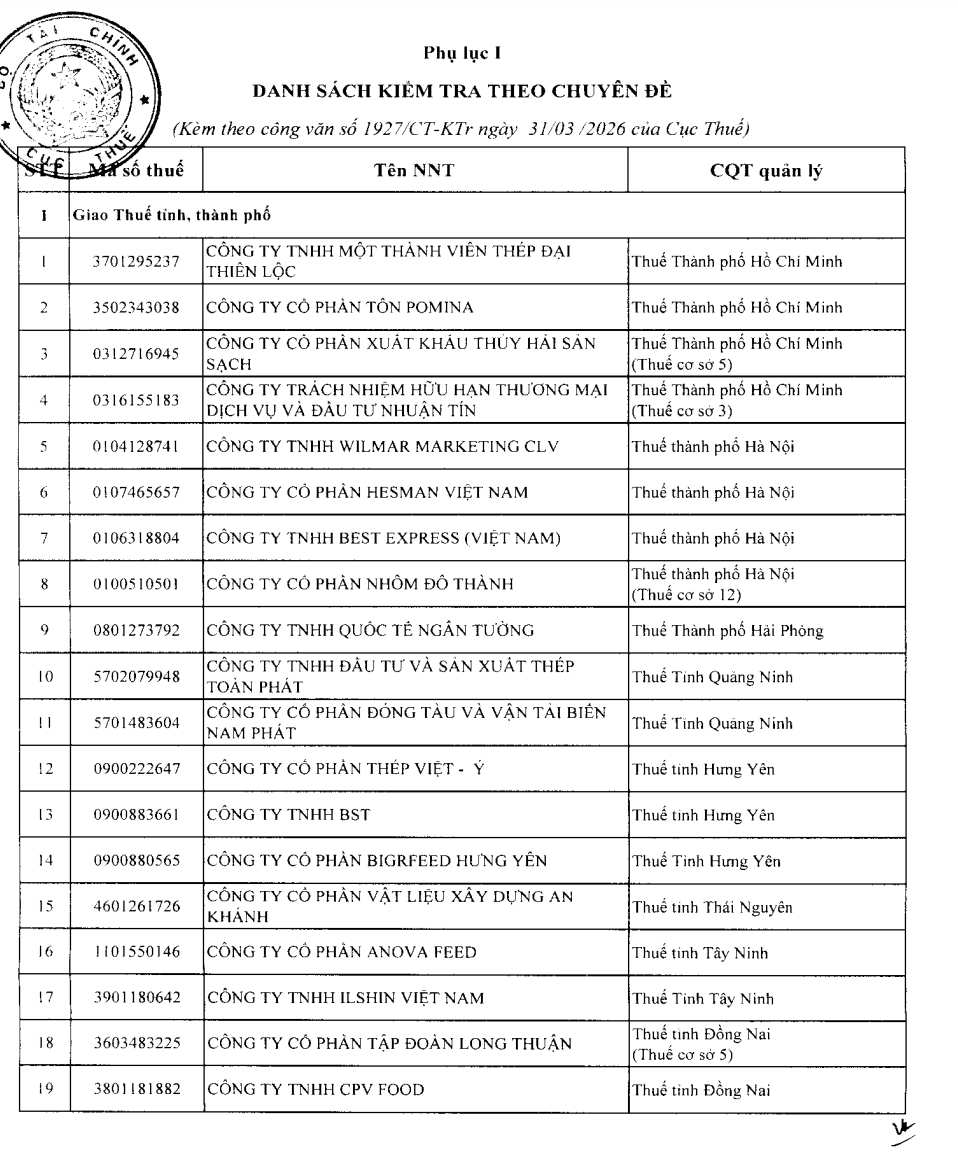
Notably, for the 19 enterprises mentioned in the list attached to the Official Dispatch, the Tax Department requests the Large Enterprise Tax Sub-Department and Tax Departments of provinces/cities directly managing to develop a specialized inspection topic at the headquarters of taxpayers for businesses that have suffered losses for many years and have small profits for tax inspection according to regulations. In case inspection cannot be carried out, the reasons must be clearly reported.
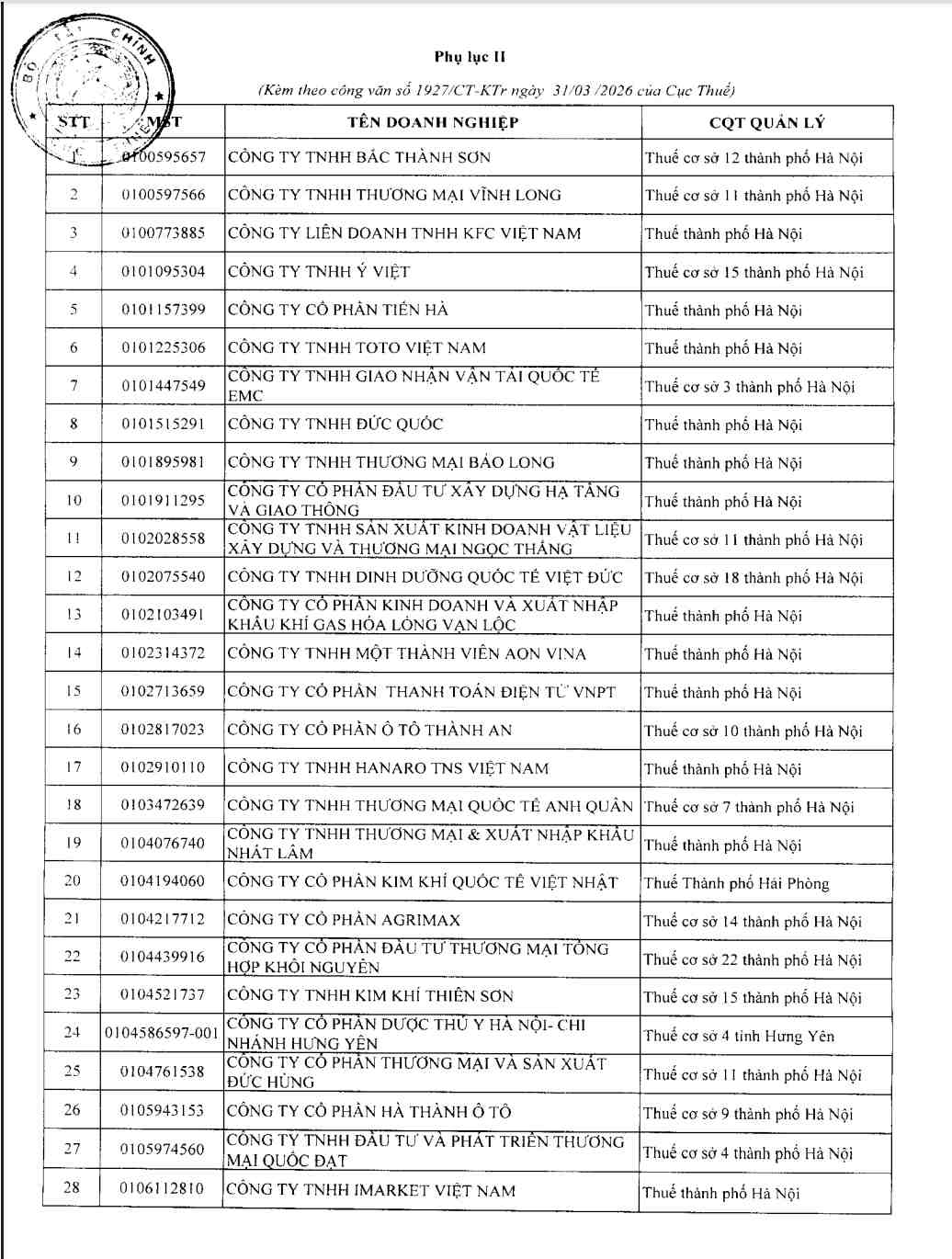
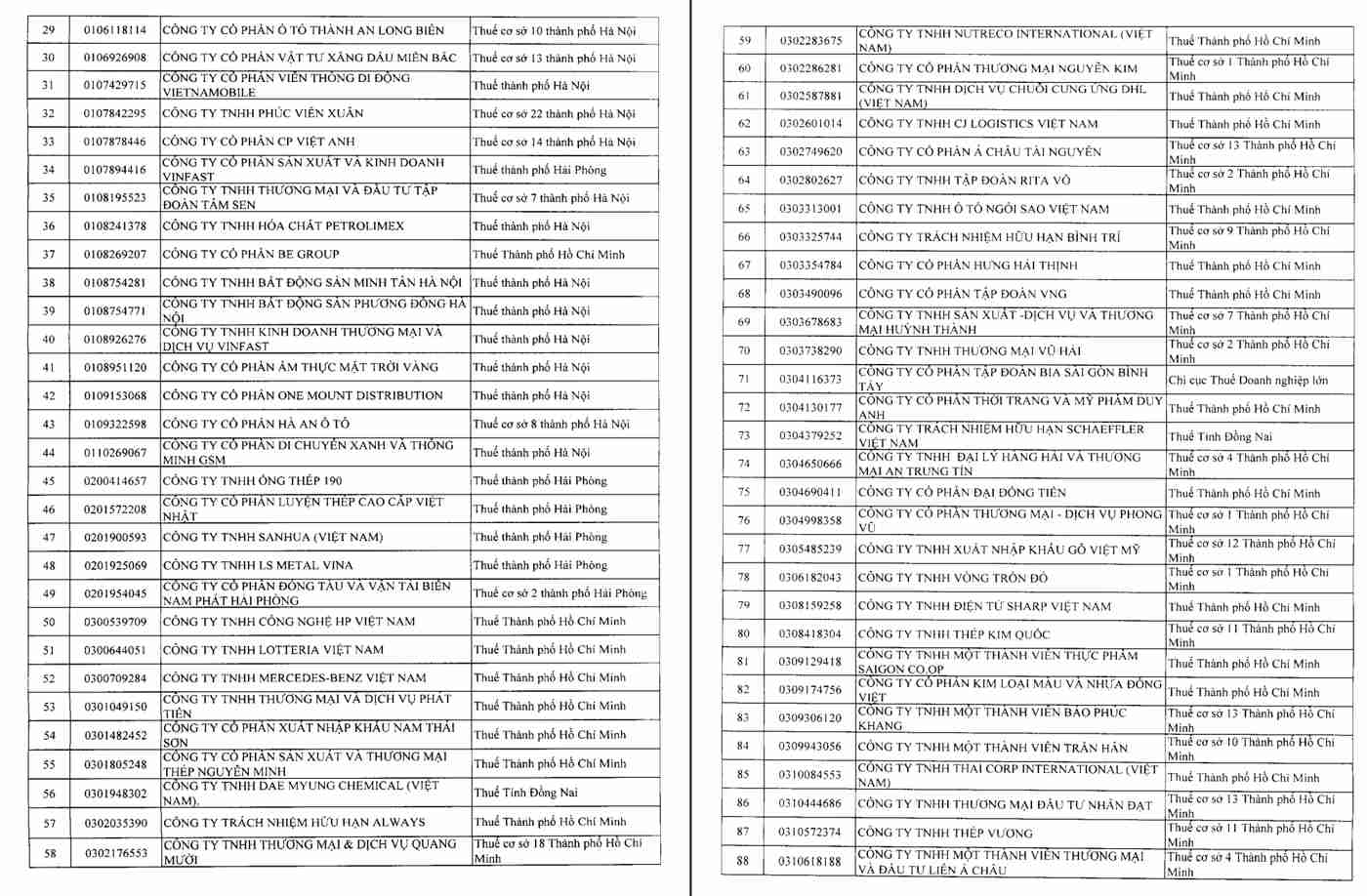
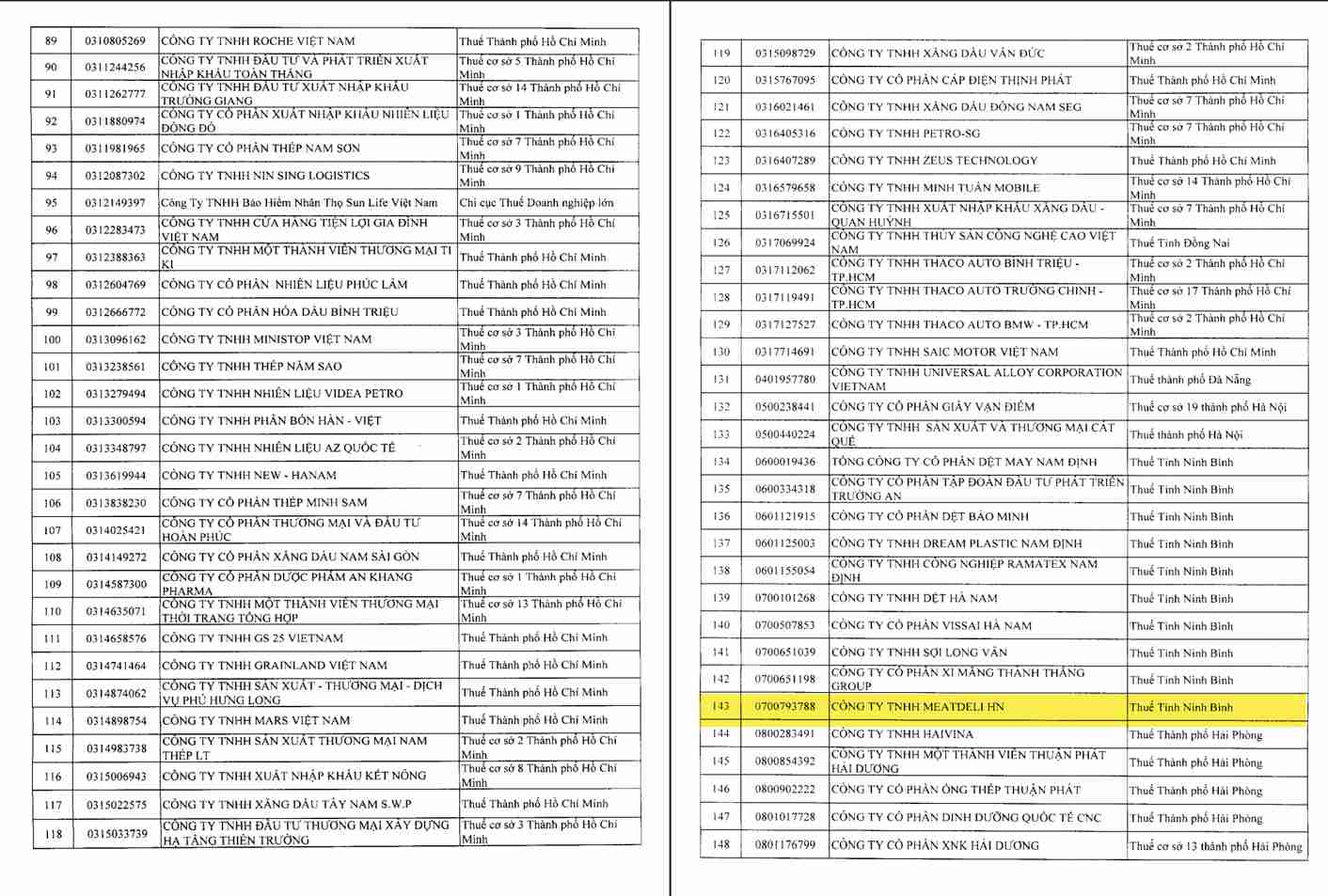
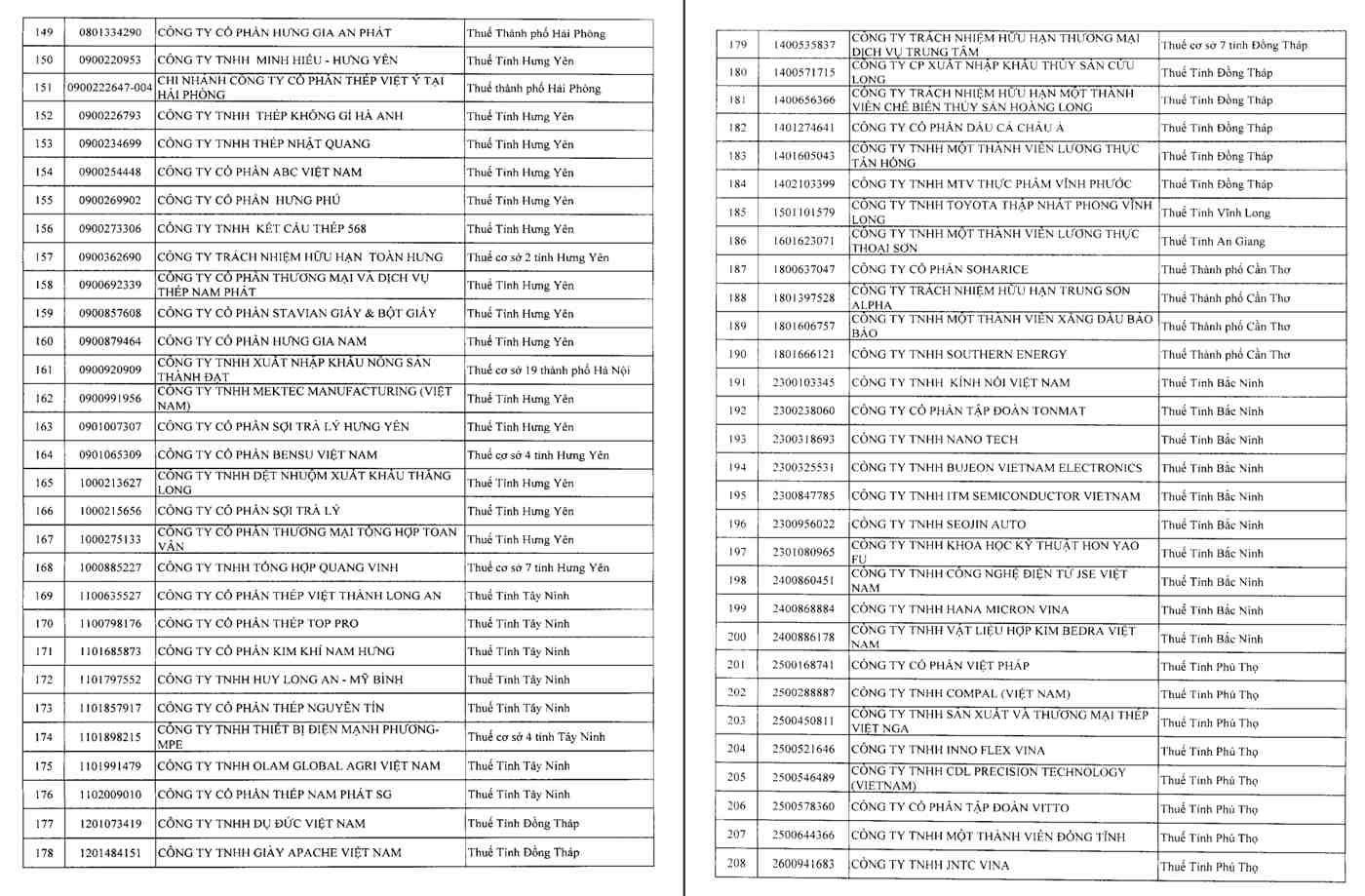
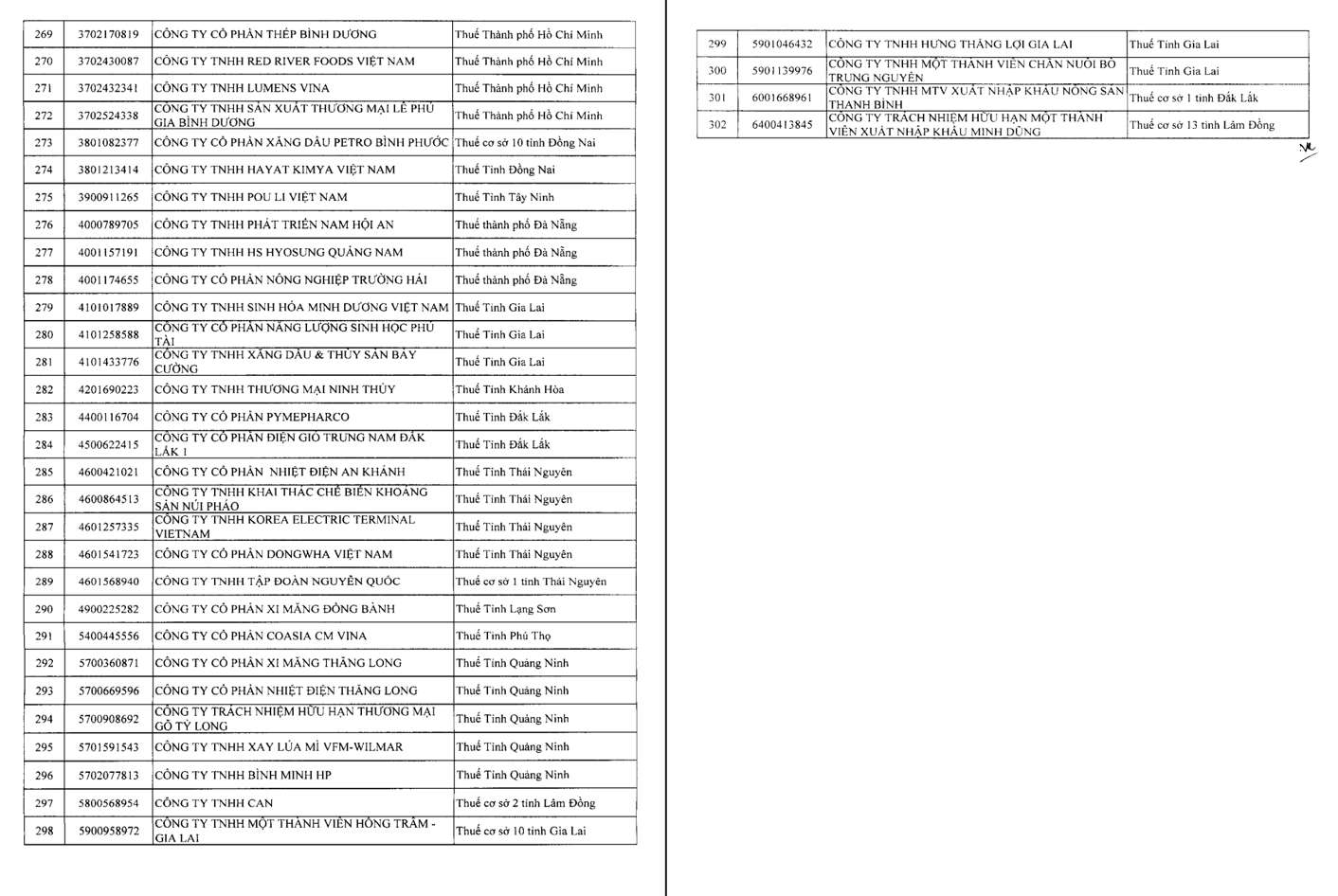
The Tax Department has reviewed and summarized the list of a number of enterprises with revenue from selling goods and services of over 1,000 billion VND but incurring consecutive losses in 2023 and 2024, including 302 enterprises according to the attached list.
It is proposed that Provincial/City Tax Departments, Large Enterprise Tax Sub-Departments, and E-commerce Tax Sub-Departments review the list and update data on production and business performance according to the corporate income tax finalization declaration data for 2025 of directly managed enterprises to analyze and identify enterprises with high tax risks and include them in the thematic inspection plan of 2026.
Tighten inspection of costs and related party transactions
In the process of inspecting businesses with many years of losses and small profits, the Tax Department requested units to focus on a number of key contents.
It is necessary to check the rationality of revenue, expenses, profits, especially large and unusual expenses; compare revenue fluctuations with corresponding input costs and compare them with relevant dossiers and documents.
Check the time of recording revenue and output value-added tax, ensuring the correct accounting and declaration period; avoid the situation of missing or false declaration.
Review the declaration of input - output value-added tax, check invoices and documents to ensure they are valid and in accordance with the declaration period; check cost of goods sold incurred in the period, ensuring service for production and business activities.
The Tax Department notes internal loan interest expenses, internal service expenses in the group such as central services, technical, management support, copyright, franchising... to ensure compliance with the nature of independent transactions and related to generating revenue and income.
Carefully review goods purchase and sale contracts with related parties, ensuring compliance with the principle of independence in determining purchase and sale prices.
According to the plan, the Large Enterprise Tax Sub-Department, the E-commerce Tax Sub-Department and the Provincial and City Tax Department must deploy immediately in April 2026 and complete thematic inspections no later than December 2026.
Responsible units are responsible for reporting to the Tax Department the plan to deploy inspections of each enterprise in April 2026; periodically report monthly on progress and summarize the results of the thematic implementation in December 2026.
In the results report, it is necessary to clearly state the amount of tax recovered, the amount of fines; assess the common violations of businesses that have been losing money for many years and have low profit margins; and at the same time comment and evaluate tax management, difficulties and obstacles and propose appropriate solutions and policies.
List of 302 businesses with revenue over 1,000 billion VND reporting losses for 2 consecutive years to be reviewed and risk-analyzed to be included in the tax inspection plan:
At the end of 2025 - the beginning of 2026, Lao Dong Newspaper has produced a 3-part series of articles "Exposing tax evasion tricks, need to soon close loopholes to avoid revenue loss", reflecting the reality that the rate of businesses reporting losses is high and continuously for many years.
Through practical records, surveys and data analysis, the author group has pointed out unusual signs, along with many loopholes for tax evasion, tax avoidance, and even tax evasion. Some common tricks used by businesses such as "prolonged loss reports but still expanding scale", "revenue increases but profits are slim", "linked transaction costs and financial costs increase sharply"...
The article also analyzes the "loopholes" in tax policies and management, and proposes solutions to combat budget revenue loss, enhance transparency and financial discipline.
The series of articles received the attention of management agencies, experts and the business community, contributing to promoting the review and improvement of tax management mechanisms, linking investment attraction with the requirements of fairness and sustainability.
After the article was published, the Ministry of Finance and local tax management agencies issued written responses, directing relevant units to review, inspect, and handle violations if detected. At the same time, review and evaluate the current tax management mechanism for businesses, not only in the legal framework but also in the implementation capacity and monitoring tools, thereby proposing solutions to combat budget revenue loss.


