
Growth in control, prioritizing quality over quantity
In the context of the global economy continuing to face many unpredictable fluctuations, from inflationary pressure, interest rates to geopolitical risks, TPBank sets a business plan for 2026 with a pre-tax profit target of VND 10,300 billion, equivalent to a growth rate of 12% compared to the previous year. This is not only an ambitious target figure, but also clearly reflects strategic orientation and confidence in internal growth drivers.
According to the SBV's 2026 operating orientation, credit growth continues to be tightly controlled, with a focus on low-risk sectors, especially limiting credit to real estate. This shows that the bank is clearly shifting from a fast growth model to selective growth. In the context that the State Bank of Vietnam maintains the goal of economic growth accompanied by macroeconomic stability, this cautious approach helps TPBank minimize cyclical risks, while creating a foundation for more sustainable growth in the medium and long term.
A noteworthy point in the 2026 plan is not the high growth rate, but the structure that creates growth. TPBank is gradually completing the financial ecosystem model, with the contribution of member units such as funds, securities and asset processing. The synergy from these "pieces" helps the bank: Expand customer portfolios in many segments, increase off-interest revenue, Optimize customer life cycles and exploitation efficiency. This is considered a "double engine" to help TPBank not only depend on credit, but also on capital factors that are heavily bound by policies in the current period.
In addition, TPBank is researching a plan to establish a member bank with a charter capital of about 3,000 billion VND within the framework of the International Financial Center (VIFC) in Ho Chi Minh City. This orientation is expected to help the bank take advantage of the center's specific mechanism to test new financial models, expand operations in the field of international finance, fintech and cross-border services, thereby creating more room for long-term growth.
In parallel with the profit target, TPBank sets a plan for total assets to reach 600,000 billion VND (up 19%), capital mobilization to increase by 16% and outstanding loans to increase by 15%. These indicators show that the bank still maintains the momentum of scale expansion, but within a reasonable and controlled range. At the same time, the bad debt ratio is controlled below 2.5%, equivalent to the industry average in 2026, showing that TPBank chooses to maintain a reasonable buffer zone to both ensure growth and proactively respond to risks in the context of a still volatile market.
Positive signals from policy and market
One of the important supports for the 2026 plan comes from the expectation of a more stable macroeconomic environment, along with the flexible management orientation of the State Bank of Vietnam. When monetary and credit policies are reasonably regulated, the growth potential of the banking system in general and TPBank in particular will be significantly improved.
In that context, the profit target of VND 10,300 billion is not simply a planned figure, but reflects a clear shift in growth thinking: from cyclical dependence to strengthening internal capacity. This motivation is supported by cost optimization, promoting technology application, AI acceleration and improving operating efficiency. As the market becomes increasingly differentiated, the advantage will belong to banks with flexible models, diverse revenue sources and good risk control capabilities. With a foundation that is gradually being completed, TPBank shows its ambition to enter a new growth cycle – more stable, more sustainable and more in-depth.
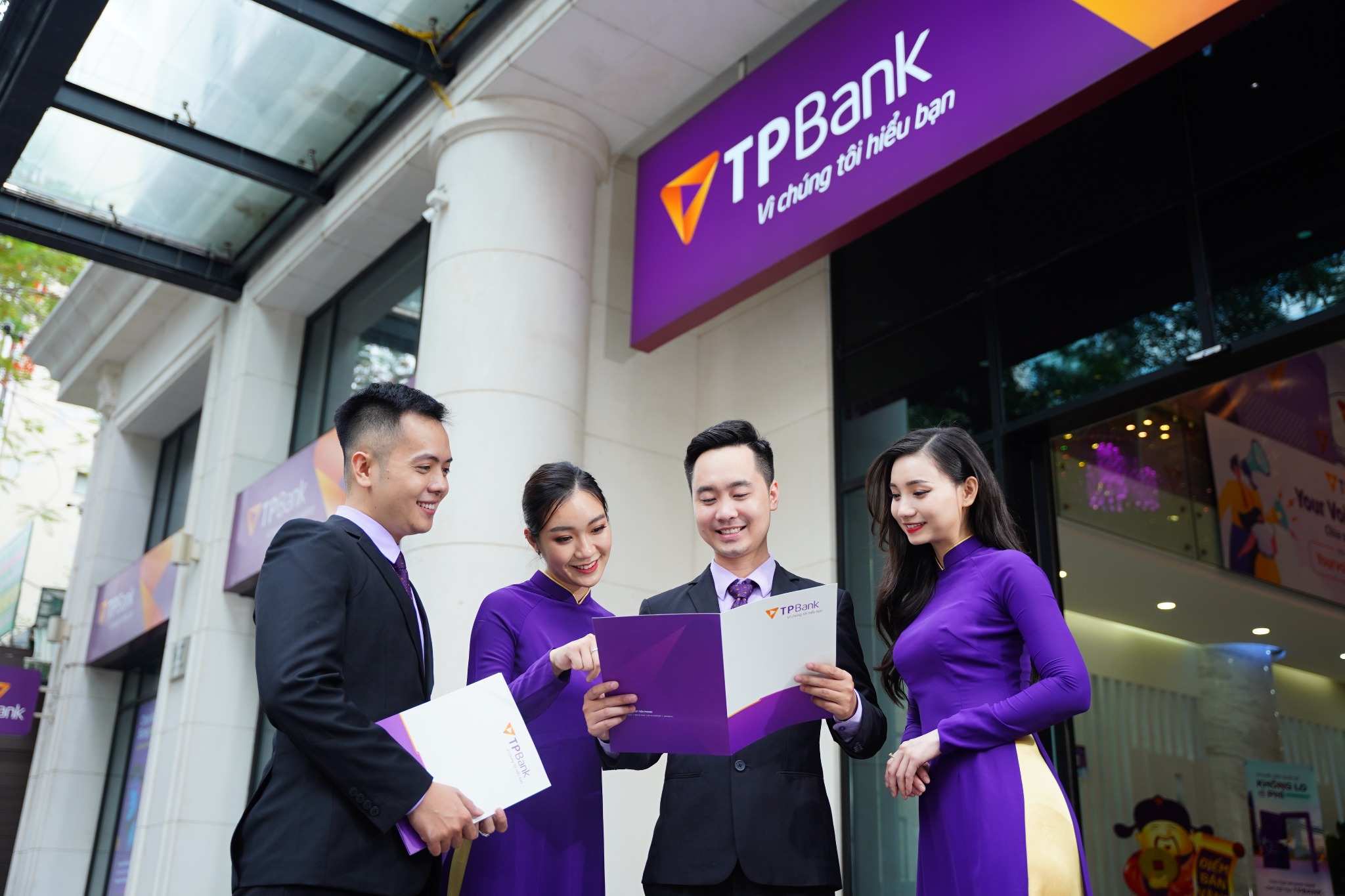
These orientations are expected to be more clearly concretized at the upcoming Annual General Meeting of Shareholders (AGM), where TPBank will not only present the 2026 plan but also issue a series of important policies, creating momentum to complete the development strategy for the 2023–2028 period. This is considered a pivotal step for the bank to upgrade its growth model, towards an efficient and better adaptive operating structure in the new period.


