
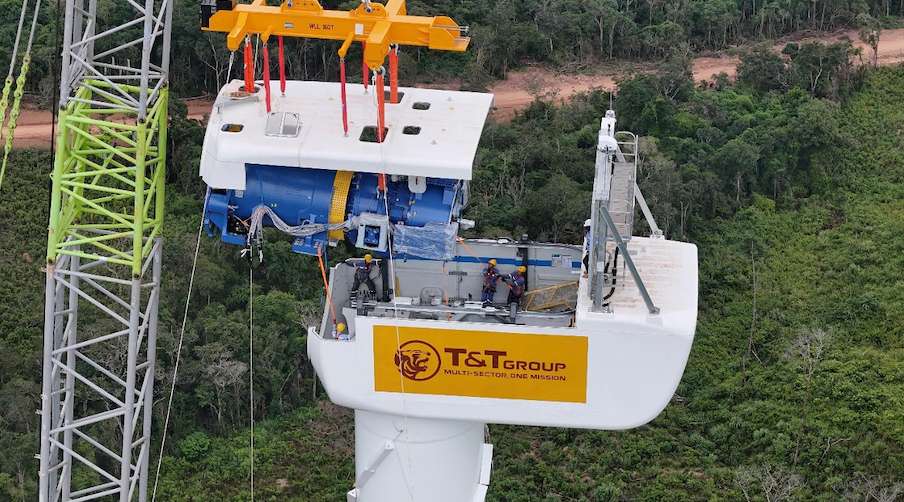
Two decades from hydropower to... wind power
In the early 2000s, when Vietnam's electricity demand began to increase rapidly along with the industrialization process, Vietnamese businesses looked at Laos as a natural complementary development space. At that time, hydropower was almost the only option. Large rivers in Laos, with abundant water reserves and suitable terrain, quickly became destinations for energy investment projects from Vietnam.
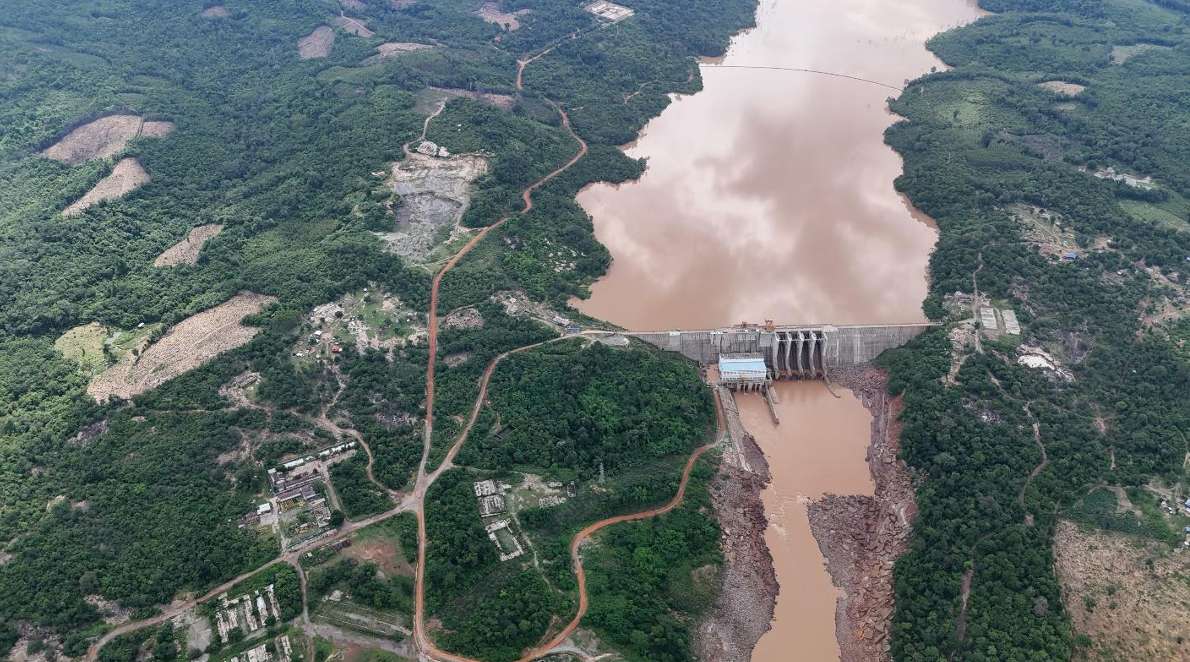
Stepping into the 2010s, hydropower potential was no longer as abundant as before, while Vietnam's electricity demand continued to increase along with urbanization and production expansion. Many Vietnamese businesses began to research and propose renewable energy projects in the Land of the Million Elephants. Wind power is seen as a potential direction, in line with the energy transition trend of the region. However, wind power is not just a story of building factories, the bigger problem lies in transmission infrastructure and connectivity.
It is in that context that the ability to organize the simultaneous implementation of project stages, instead of sequential processing, is starting to become a factor in differentiating investors. Projects that can control the progress of the entire chain and go to operation in a short time are no longer an exception, but are becoming a measure of implementation capacity. Bau Hien's Savan 1 in Laos is one of the typical cases showing this trend clearly.
Savan 1 and the transition to the green energy corridor
In terms of scale, Savan 1 is not the largest energy project invested by Vietnamese enterprises in Laos, nor is it the earliest mentioned project in energy cooperation plans. But this is a project that was "drawn" a clear roadmap from the beginning, with the specific goal of reaching commercial operation in the shortest possible time.
The project was implemented by Bau Hien's T&T Group from the beginning of 2025, with a total designed capacity of about 495 MW, of which phase 1 reached 300 MW with 48 wind turbines. Instead of approaching the traditional procedure - building the plant first, then waiting for the transmission plan - T&T Group chose a parallel approach: both constructing the main items of the wind power plant and investing in a separate transmission line to bring electricity to Vietnam.
With Savan 1, T&T Group has chosen an active approach, deploying items in parallel and controlling the progress of the entire chain, thereby significantly shortening the time to put the project into operation.
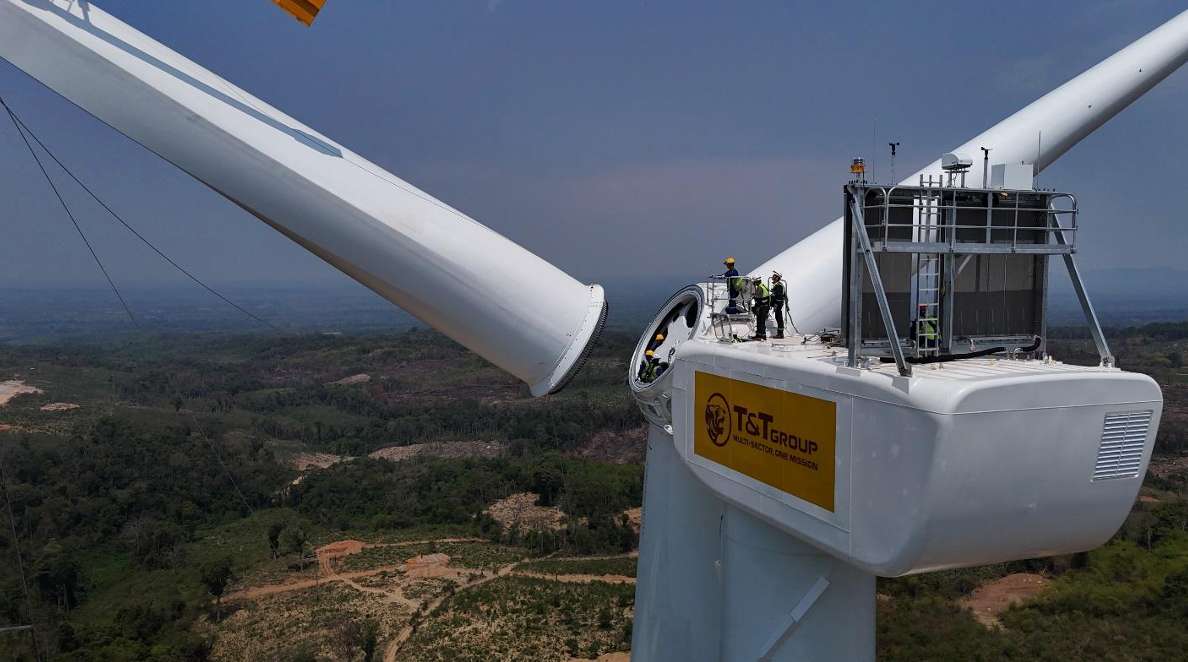
As a result, after only about 16 months, Savan 1 reached the COD milestone, bringing wind power from Savannakhet into the Vietnamese power system. Not only stopping at progress, the project quickly went into stable operation with an output of about 0.9 billion kWh per year, showing the ability to simultaneously control progress, quality and exploitation efficiency - factors that not every project can achieve when implemented in a short time.
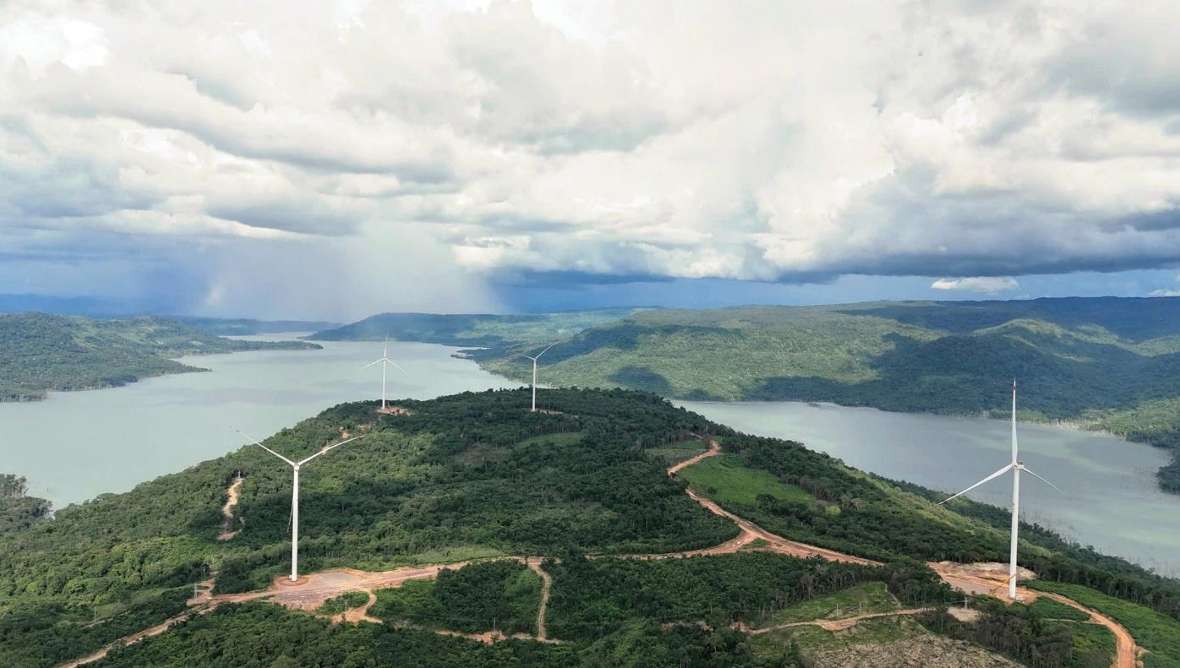
With Savan 1, the COD milestone means that the entire project development cycle – from investment, construction, completion of transmission infrastructure to the final step of participating in the electricity market – is closed in a rare period of time for a cross-border energy project.
Notably, after Savan 1, T&T Group is also proposing to develop Savan 2 Wind Power Plant. Placed in a general context, this proposal becomes more logical. When projects can use shared transmission infrastructure, equipment transportation routes and deployment experience, marginal investment costs will be optimized, while the exploitation efficiency of the entire project cluster will be improved. At the same time, the fact that Savan 1 has been verified for short-term deployment capacity also creates a premise for subsequent projects to be organized at a higher speed.
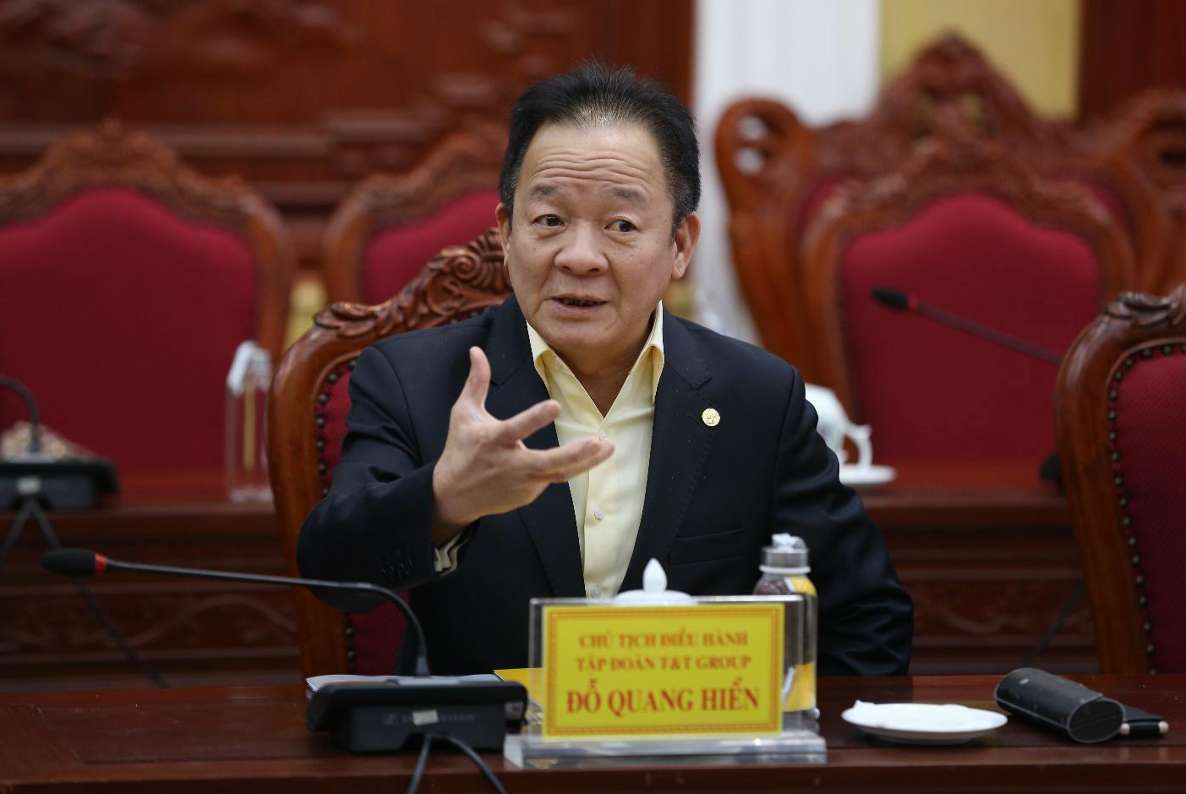
Mr. Do Quang Hien, Founder and Chairman of T&T Group, once emphasized that energy investment is only sustainable when linked to national interests, actual operational capacity and long-term value for the economy. T&T's approach at Savan 1 clearly reflects that spirit: both ensuring project scale and prioritizing the ability to reach the destination, creating real electricity for the system.
Savan 1 is not the starting point of Vietnam-Laos energy cooperation, but it is a milestone showing that the approach to project implementation is changing. From progress depending on many objective conditions, progress control is gradually becoming an organizable and repetitive capacity – starting from careful preparation, allowing the implementation process to take place at high speed and continuously.
This approach also clearly reflects Bau Hien's management philosophy of "prepare carefully – implement quickly", in which progress is no longer a dependent factor, but the result of a system designed to operate at high speed.


