
About 50 km from the center of Ho Chi Minh City, Can Gio has an area of more than 71,300 hectares. Currently, Binh Khanh, Can Gio, An Thoi Dong and Thanh An communes still do not have direct roads connecting to the center of Ho Chi Minh City, and must depend on Binh Khanh ferry.
Not only that, Can Gio is also about 15 km from Vung Tau through Ganh Rai Bay. Travel between the two localities currently also requires using sea ferries, operating from 6 am to 10 pm every day, with a ticket price of about 70,000 VND/trip.
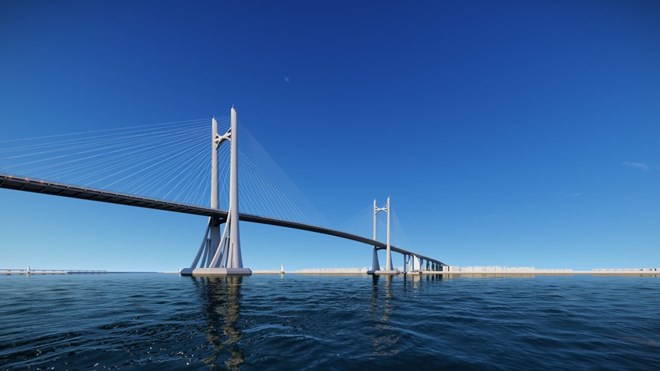
To gradually break this isolation, Ho Chi Minh City is implementing large infrastructure projects such as Can Gio bridge and Ben Thanh - Can Gio metro line. In addition, a series of new connection projects are also being prepared for investment.
Can Gio - Vung Tau sea-crossing road costing over 92.6 trillion VND
The most notable is the Can Gio - Vung Tau sea-crossing road project with a total length of about 14 km, a scale of 6-8 lanes, combining both bridges and sea-crossing tunnels.
The sea tunnel item is about 3.1 km long, including a 2.1 km submerged tunnel, a 390 m closed tunnel and a 610 m open tunnel, designed with 6 lanes, using reinforced concrete submerged tunnel structure similar to Thu Thiem tunnel. Two artificial islands will be built at both ends of the tunnel.
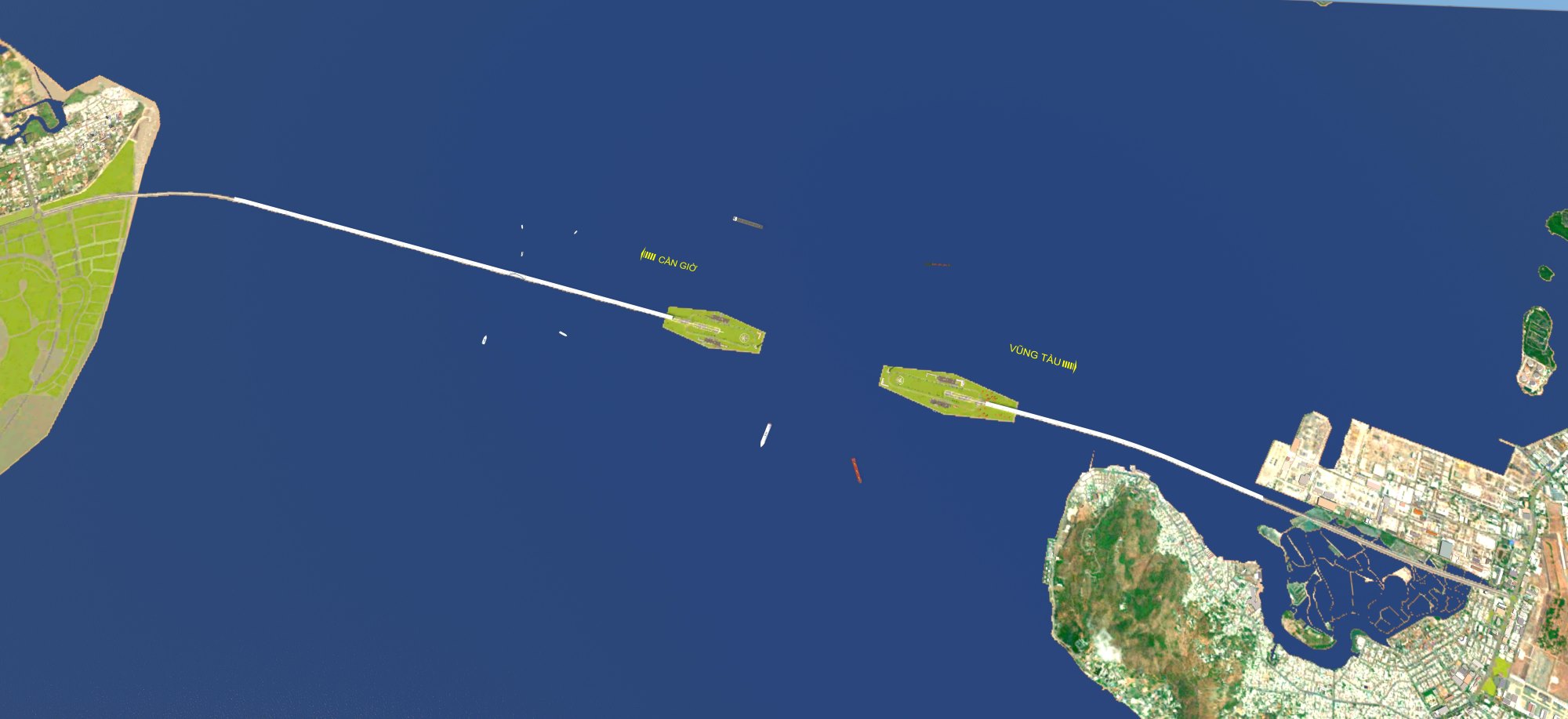
The sea bridge section is about 8 km long, including a section on Can Gio side of more than 5.3 km and on Vung Tau side of more than 2.6 km, with a scale of 6 lanes.
In addition, the route also has an approach road section of nearly 3 km, of which the Can Gio side is more than 1.1 km long and the Vung Tau side is nearly 1.9 km long.
According to the traffic organization plan, motorbikes are only allowed to circulate on access roads, not allowed to enter bridges and tunnels due to safety conditions in the marine environment.
The project has a total estimated investment of more than 92,600 billion VND, implemented in BT form. The project is expected to start construction in 2026 and be completed in 2029.
When put into operation, the travel time from Ho Chi Minh City to Vung Tau will be reduced to more than 60 minutes, instead of 90 - 120 minutes as at present, and at the same time create a coastal development axis connecting Can Gio - Long Son - Cai Mep - Thi Vai.
Rung Sac - Ben Luc - Long Thanh expressway intersection
Another important project is the intersection between Rung Sac road and Ben Luc - Long Thanh expressway, expected to start construction this year and be completed in 2028.
The project will build an interchange at different levels, in which the connecting branches from Rung Sac road to the expressway are designed at a speed of 40 km/h, combined with a central roundabout radius of 50 m.
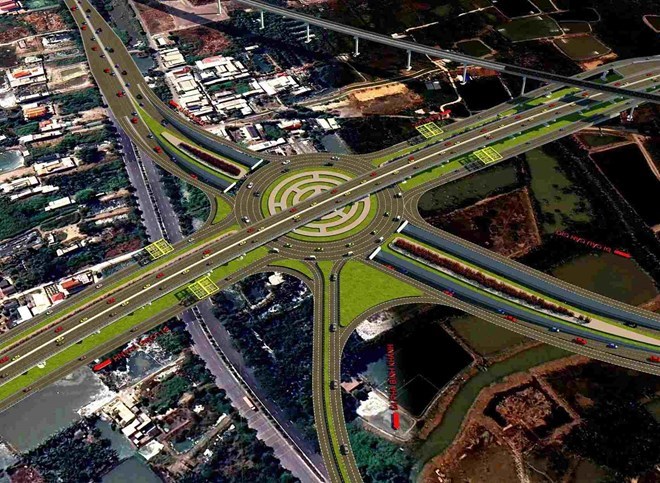
On the Ben Luc - Long Thanh expressway, another unit will be built on the right side of the route, completing the scale of 8 lanes according to the plan, with a design speed of 100 km/h.
Rung Sac road alone will have two tunnels about 610 m long, including a 150 m closed tunnel section, 10 m wide, prioritizing traffic directions from Rung Sac to Can Gio bridge and vice versa.
The total investment of the intersection project is nearly 3,000 billion VND from the Ho Chi Minh City budget.
Expanding Rung Sac road to 10 lanes
At the same time, the Rung Sac road expansion project is also being assigned by Ho Chi Minh City to prepare a report proposing investment policies in the form of PPP - BT contract.
The road, more than 35 km long, will be expanded from 6 to 10 lanes, including 8 motorized lanes and 2 parallel lanes.
The project also builds a connecting route to road 15B nearly 2 km long, with a scale of 6 lanes, connecting the Tan My area to the boundary of the Can Gio bridge project.
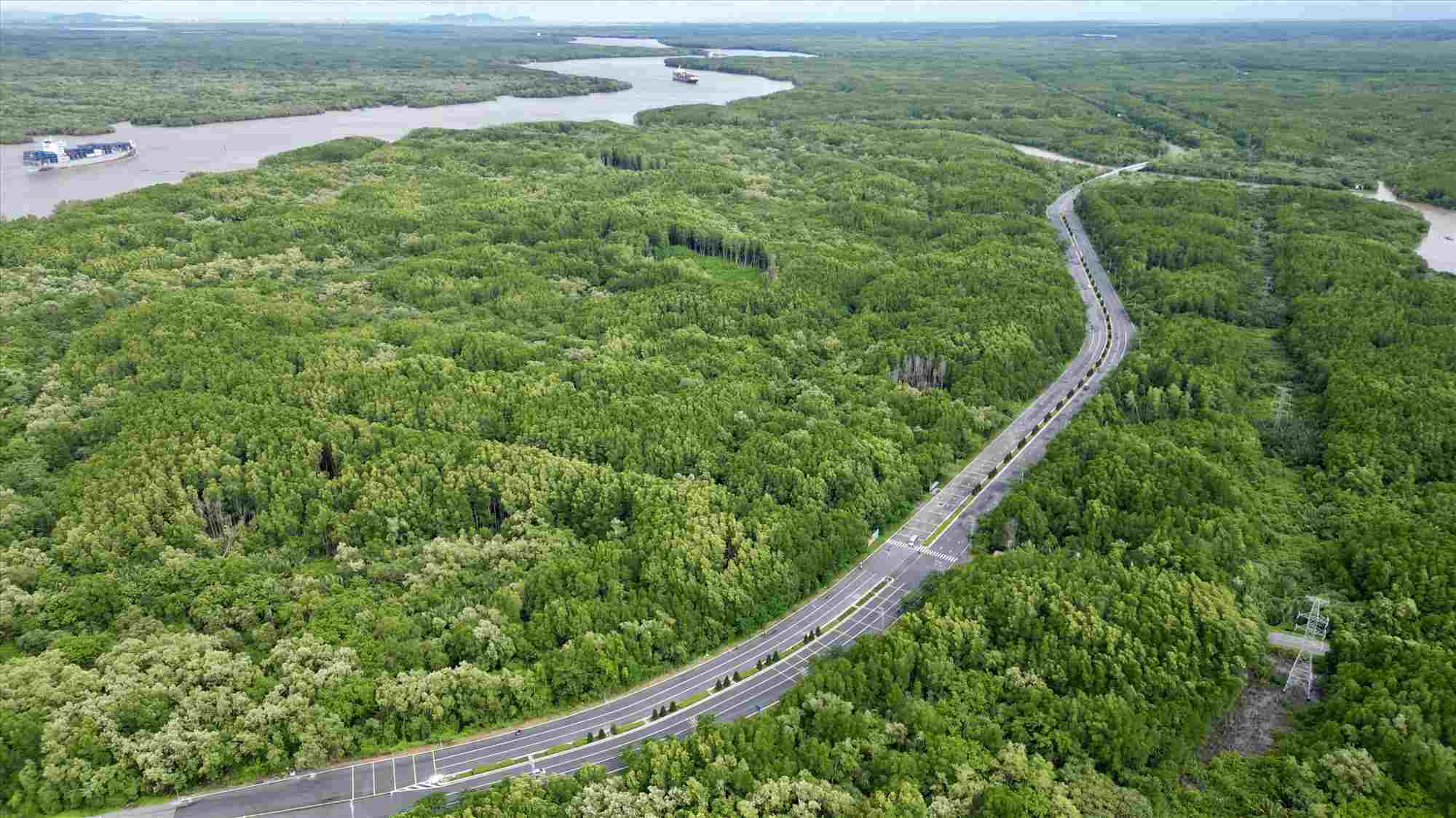
The preliminary total investment of the project is over 19,000 billion VND, including site clearance costs and loan interest during construction.
If approved, the investor will arrange all capital and deploy it in the period 2026 - 2028.


