
Vietnam officially enters the secondary emerging market group
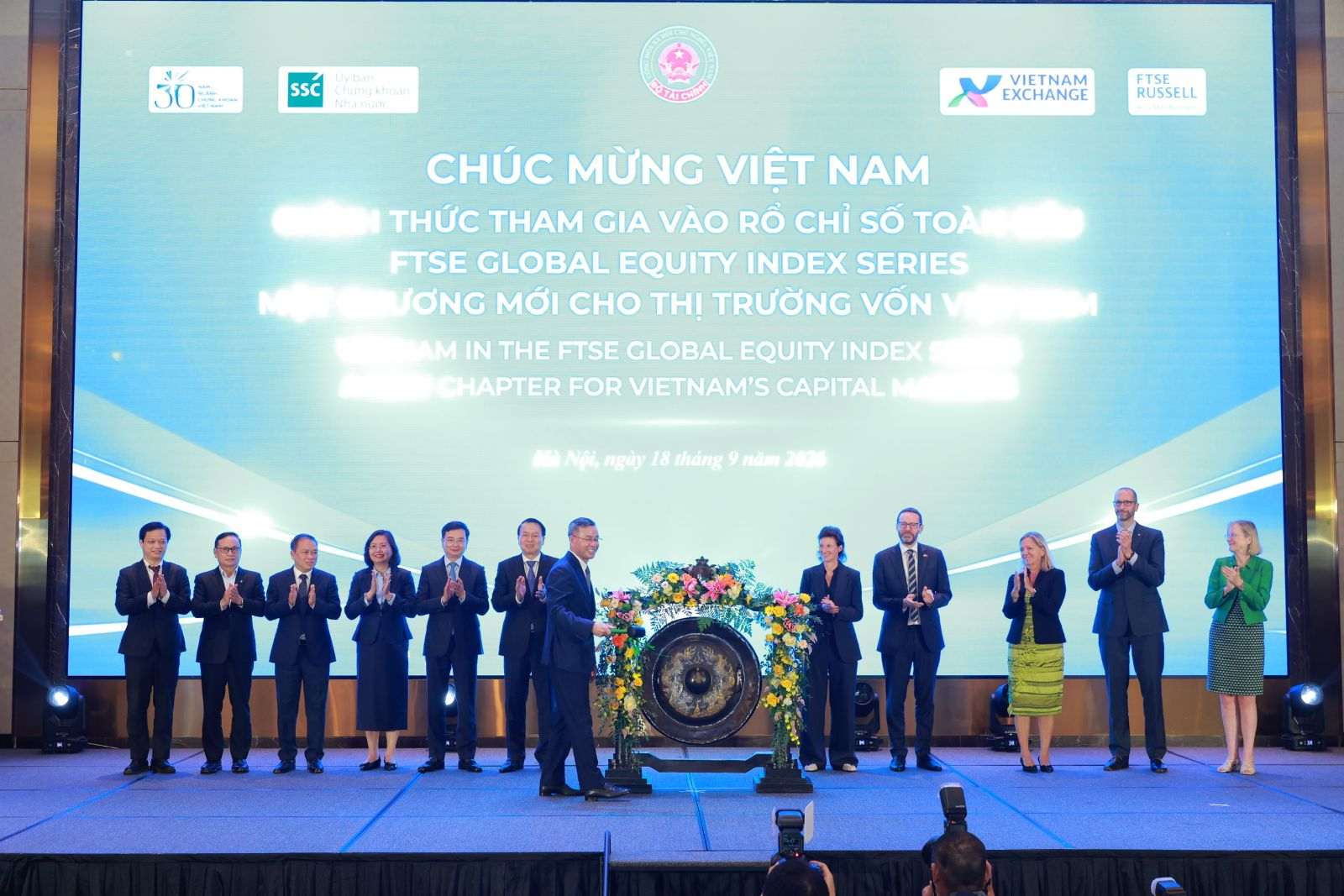
On September 18, 2026, in Hanoi, the Ministry of Finance in coordination with FTSE Russell organized a conference for Vietnam to officially participate in the FTSE Russell Global Equity Index Series global index basket.
The conference takes place before the promotion of the Vietnamese stock market from a frontier market to a secondary emerging market according to FTSE Russell's classification officially takes effect on September 21, 2026. This is a symbolic event in the 30-year journey of formation and development of the Vietnamese stock market.
At the conference, Minister of Finance Ngo Van Tuan and delegates performed the gong sounding ceremony, marking Vietnam's official promotion to the secondary emerging market.
Ms. Mariam J. Sherman - Director of the World Bank in Vietnam, Cambodia and Laos - assessed that joining FTSE Russell is a recognition of the significant reforms Vietnam has implemented for many years, and at the same time opens a new chapter for the capital market.
This upgrade should be considered a milestone, not a final destination," Ms. Mariam J. Sherman emphasized.
According to representatives of the World Bank, the upgrade milestone should be seen as the starting point for the next reform phase. In which, handling the limitations on foreign ownership ratio is an important priority.
Vietnam needs to closely coordinate with index providers and market members to find practical solutions to this issue. Handling restrictions on foreign ownership ratios not only contributes to increasing Vietnam's weight in the FTSE Russell index basket but also supports the process towards improving emerging market groups and attracting more foreign capital.
Ms. Mariam J. Sherman also emphasized the increasing role of the capital market in the problem of mobilizing resources for development. Public investment and bank credit will continue to play an important role but cannot alone meet the capital needs of the economy.
A deeply developed capital market can play a decisive transformational role, attracting private capital and institutional investors, diversifying capital channels outside the banking system, and orienting long-term savings into value-added investments," she said.
Vanguard plans to invest about 65,000 billion VND
Notable information about capital flows at the conference was shared by Mr. Duncan Burns - representative of Vanguard Global Fund Management Group.
With a managed asset scale of about 10,000 billion USD and more than 60 million investors globally, Vanguard is looking at Vietnam in a long-term investment strategy.
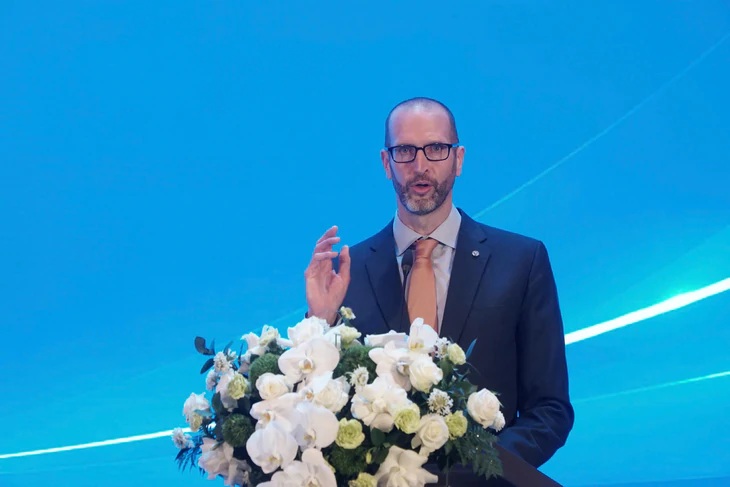
According to Mr. Duncan Burns, Vietnam has achieved an upgrade after many years of reforms in market access, transparency and infrastructure. With the characteristics of an index and long-term investor, Vanguard does not consider Vietnam's entry into FTSE Russell's emerging market group as a short-term investment opportunity.
We are not short-term traders. Our index funds and ETFs always focus on the long term," said Duncan Burns.
A Vanguard representative said that the group plans to invest about 2.5 billion USD, equivalent to about 65,000 billion VND, in Vietnam next year. "Next year, Vanguard plans to invest about 2.5 billion USD in Vietnam through our portfolio," he said.
Not only in the expected capital flow scale, a noteworthy point in Vanguard's plan is the time it holds the investment.
Vanguard plans to maintain the proportion of investment in Vietnam for decades, as long as Vietnam is in the index set," Mr. Duncan Burns affirmed.
According to Vanguard representatives, joining large benchmark indices often helps a market increase its presence, expand investor participation, increase access to capital and deeper integration into the global financial system.


