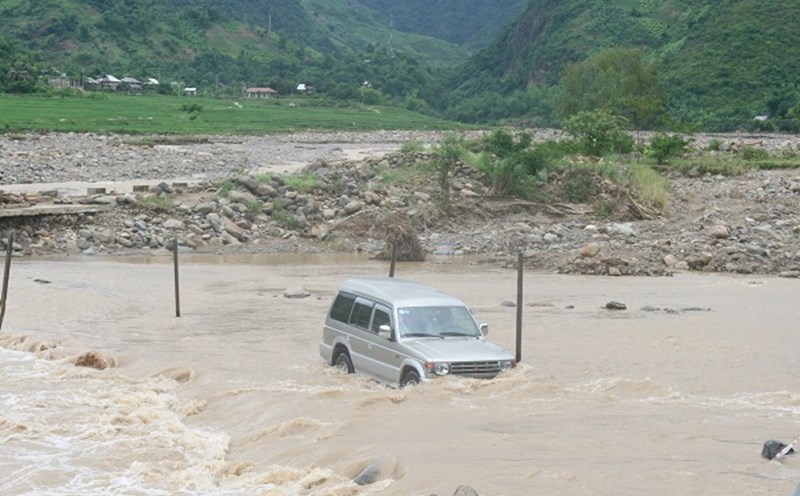
The rainy season is a time when cars face many risks such as flooding, reduced visibility, slippery roads and damage to electrical systems. Some simple habits below are advised by the Ninety Eight Auto Auto Repair, Maintenance and Care Center (Thu Duc City, Ho Chi Minh City) that can help drivers limit incidents and ensure safety when using the car.
Minimize travel through flooded areas
When encountering flooded roads, drivers should prioritize finding other routes instead of trying to overtake. There is no common safe water level for all cars, because wading ability depends on car design, air intake position, electrical system and manufacturer recommendations.
For cars with low ground clearance, if the water level is high or there is a risk of approaching the air intake, car doors and important electrical components, drivers should not continue moving.
If forced to pass through shallow flooded sections, it is necessary to maintain a slow, steady speed, keep a distance from the car in front, avoid sudden acceleration, sudden braking or stopping in the water. Driving too fast can also create water waves, increasing the risk of water falling into the air intake.
Especially, if the car is running through a flooded area and suddenly turns off the engine, do not try to start it again. If water has entered the air intake, starting the engine can cause water to enter the cylinder, causing water damage and seriously damaging the engine. Drivers should turn on warning lights, take people to a safe location and call for rescue.
Check engine oil and key systems
After the car passes through a flooded area, the driver can check the engine oil. If the oil changes color abnormally, is cloudy white or shows suspicious signs of water content, it is necessary to take the car to a repair facility for inspection instead of continuing to operate.
After the car is deeply flooded, you should also check the overall air intake system, electricity and parts that are likely to be in contact with water. Early detection helps limit the risk of widespread damage.
Rain wipers need to be checked regularly. A broken, cracked or worn wiper blade will not clean the water on the glass, causing visibility to drop sharply when it rains heavily. The lighting system also needs to ensure normal operation.
Wash your car properly after going in the rain
After going in the rain, you should clean up mud, dust and pollutants clinging to the car. If left for a long time, these substances can affect the paint surface.
Drivers should not arbitrarily use high-pressure water hoses to spray directly into the engine compartment, especially at electrical jacks, control boxes, sensors and electronic devices. If cleaning the engine compartment is necessary, it should be done according to the manufacturer's instructions or at a facility with appropriate techniques.
Check the brakes and tires before going in the rain
After going through water, the brake pad and brake disc surface may get wet, temporarily reducing braking effectiveness. Once out of the flooded section, drivers should drive slowly and brake lightly a few times in a safe place to check, and also help the brake surface dry again.
Tires also need to be checked regularly, especially for spur depth and pressure. Tire wear reduces drainage, while improper pressure can affect road grip. Checking the tire when it is still cold and pumping it correctly according to the manufacturer's specifications is a simple way to help the car operate safer on wet roads.