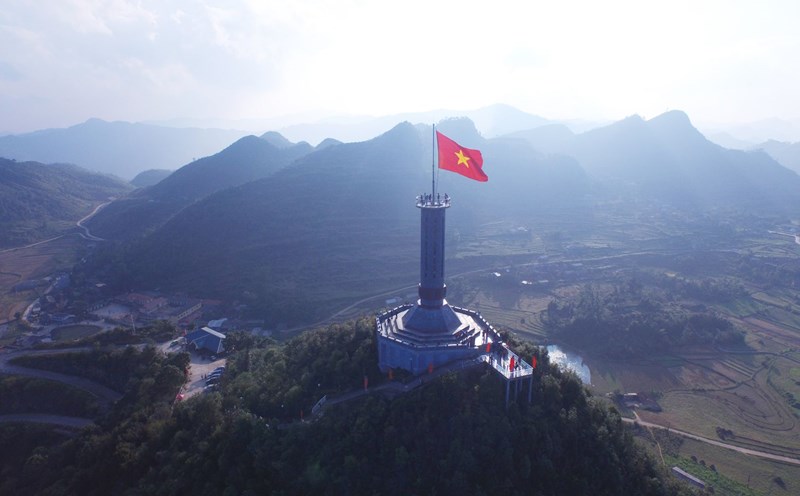
This beautiful small village, at the end of this year, was honored by the United Nations Tourism Organization (UN Tourism) as one of the "Best Tourist Villages in the World in 2025". The road from the community cultural tourism village to the Best Tourist Village in the World has lasted nearly 2 decades, changing the face and life of the villages dramatically.
However, there are values that never change. For example, the mesmerizing beauty of this land at the forefront in the cycle of Spring - Summer - Autumn - Winter, when the yellow color of ripe rice has reached the pink color of buckwheat flowers, peach blossoms blooming early to welcome the winter wind. Or like the dark purple sky, sparkling with stars in the night.
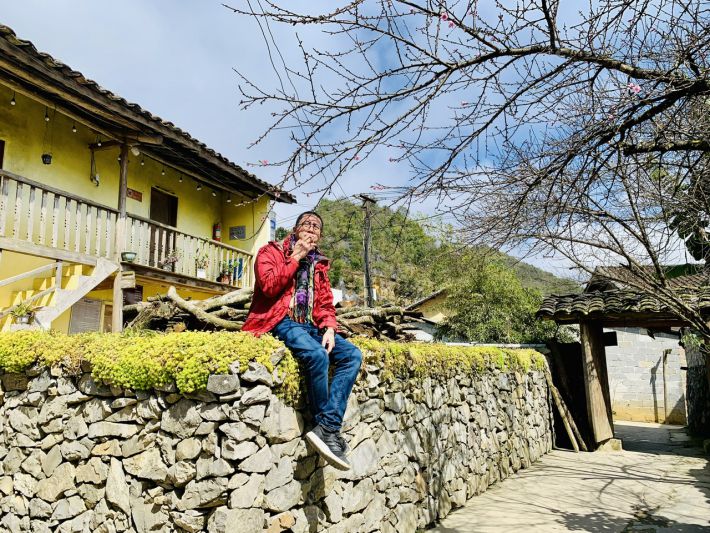
Once, wandering back to the northernmost land of the Fatherland on a winter night. Dong Van Stone Plateau had passed its lush green season, replaced by the overwhelming blackness of cat ear stone, harsh but tough like the color of indigo clothes, like the sunburnt skin of the Mong people.
The weather is skin-chillingly cold, but during the day it is filled with golden sunshine like honey. Above and below the rocky plateau is a clear blue sky like an ocean, overshadowed by a vast emerald green color, overlapping along thousands of mountain peaks patched up about dark and faint because of clouds.
Looking around the rocky plateau during this time, it is easy to associate with the colors in the paintings of French painter Claude Monet (1840 - 1926), with many greens in different shades. In winter, the rocky plateau suddenly becomes strangely gentle because the most dangerous time has passed, no more rain, floods, flash floods...
The soil has dried up in the dry winter sun, no longer covering the water causing landslides, but covered with the pinkish-white color of continuous patches of buckwheat, or brilliant yellow of mustard flowers. Rows of elephant grass for livestock to eat in winter also sprout densely on the rocky fields, looking like charcoal spots.
In winter, on these sweet but sunny days, few can resist the beauty of the land with sky gates. Quan Ba Heaven Gate, Lung Cu Heaven Gate... sky gates that divide the territory of the Mong people from the lowland people. That territory is rugged and completely different from the outside world, and it contains the beauty of change.
If you have free time, sitting in one place for 24 hours, you will see that indescribable beauty fluctuating like a living entity. Still that mountain peak, still that hillside but every now and then different. That's thanks to the clouds. Clouds in the rocky plateau are always rolling, stirring, dissolving, killing and destroying, unpredictable transformation.
The colors of the hills and mountains also change with the clouds. Sometimes dark, sometimes faint, sometimes faint sunspots, sometimes magical with ray clusters passing through the holes of the clouds piercing down, forming inefficient light streams. Thanks to clouds and light, the hills and mountains become living entities, with souls, with love and sex, making people empathize and vibrate with their circumstances.
The road to the northernmost point is a difficult road for human life. Reaching the top of the sky and then rushing down the deep slope. Wandering through countless thousands of flowers, they fall back into the misty mist. The specks of light dust flying sparkling every dawn, every sunset under the Yen Minh pine canopy are also the specks of dust of life born from black cat ear stones, sharply standing alone and weathered.
That winding, winding, winding road suddenly disappeared behind a corner, suddenly lined up in 9 rows, folding into layers and slipped into the eye. The car kept running endlessly. Quan Ba, Can Ty, Bat Dai Son, Bach Dich, Lao Chai, Yen Minh, Pho Cao, Sung La, Lung Tao, Ma Le, Lung Cu... Just up and down, down and up, the sunlight kept shining on the right and on the left.
Then the night fell, Lo Lo Chai village of the Lo Lo Hoa people shone with lights. The people of Lo Lo Hoa have lived in this topland for more than 300 years, since they migrated from China to Vietnam, choosing this dragon-headed land as their homeland. They have been part of Vietnam, day and night preserving the border region.
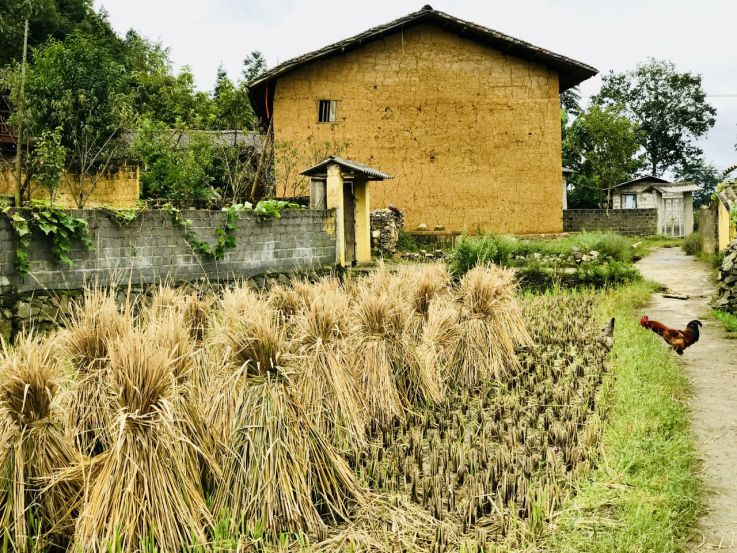
Lo Lo Chai village still retains almost intact ancient wall houses. Houses with walls up to 60cm thick are built (construction techniques of H'Mong people, Lo Lo people, Ha Nhi people) with gold clay, meticulously pressed and yin-yang tiled roofs, creating soft lines.
This construction technique not only shows the skill of the Lo Lo people but also the philosophy of living in harmony with nature. In winter, thick walls keep warm, in summer bring a cool feeling. Many houses have existed for hundreds of years.
Night at the North Pole, at an altitude of 1,800m above sea level, it's strange. When silence has engulfed the space, when all lights have faded, the beauty of the North Pole night sky appears. Sitting and drinking corn wine, silently swallowing each glass, looking up at the sky and watching stars is truly sublime pleasure.
The stars here are big and brightly shining, radiating a languageless beauty on a clear sky without street dust, fog, and opacity blurring, reducing the inherent beauty of the stars. With just a sip of wine, looking up, the more stars you see, the brighter they become.
People say that stars are the eyes of people who are far apart and follow each other. Is that true? No, no. Just drink to get drunk, to soften your soul, to let the starlight soak in a cup of corn wine and in the eyes of the traveler.
In the effervescent breeze, the night sky in the North Pole is brightly lit to weave more beauty for the small village and linger in people's eyes, becoming an unforgettable reunion.
It's a bit of a bit of a bit of a bit of a bit of a bit.
It's a bit of a bit of a bit of a bit of a bit of a bit.
It's a bit of a bit of a bit of a bit of a bit of a bit.