Not only creating livelihoods, these red-hot forges also contribute to preserving the cultural identity of the highlands.
The sound of forged hammer still echoes in the small village in the highlands.
In many highland villages of Son La province, handicraft forges are still on fire all year round. The sound of hammer blowing loudly on the red-hot iron bar has become a familiar image, associated with the working life of the H'Mong people for generations. For the H'Mong people, knives, hoes, and sickles are not only agricultural tools but also products of ingenuity, experience and family secrets.
On the top of Cham Co slope, belonging to Na Vien village, Chieng Mai commune, for many years, Mr. Sung A Di's blacksmithing furnace has been regularly lit every day. With more than 20 years in the profession, he is one of the few people who are still attached to the traditional blacksmithing profession in the village for a long time.
His family's forging furnace is about 40m2 wide, located right next to the house. Inside the furnace, there are always a few workers taking turns working, some turning the basin, some hammering, some grinding the blades. In addition to forging knives, he also accepts to repair agricultural tools such as hoes, sickles, axes, and hoes for people in the area.
Mr. Di shared: "Working as a blacksmith requires familiarity with the hand and experience, the most difficult thing is firing the billet and grinding the blade. Looking at the steel color, you must know if it is thick enough, if it is too hot, it is brittle and easily cracks the blade; if there is no fire, the knife is not sharp, the blade is easily curled. This job is hard, hot, and takes a lot of effort, but I am used to it, so I can't give it up.
According to Mr. Di, to make a knife, many stages must be undertaken, from selecting steel, cutting billets, firing, hammer handles, shaping, tempering and sharpening. The craftsman must work continuously, coordinate smoothly, if one stage is wrong, the product will not meet the requirements.
Each month, his family produces about 100 - 150 products, mainly forest knives, cleavers and agricultural tools. Products are not only sold in the commune but also ordered from highland provinces such as Lai Chau, Dien Bien, Lao Cai; even customers in Hanoi, Hai Phong also come to order because they believe in the durability of handmade forged knives.
Not only Chieng Mai, in highland communes such as Ta Xua, Muong Leo, Phieng Cam, Ta Hoc, Suoi To... many small forges are still burning day by day, contributing to preserving a handicraft that has existed for hundreds of years in the lives of the H'Mong people.
Father passed on to son to keep the profession
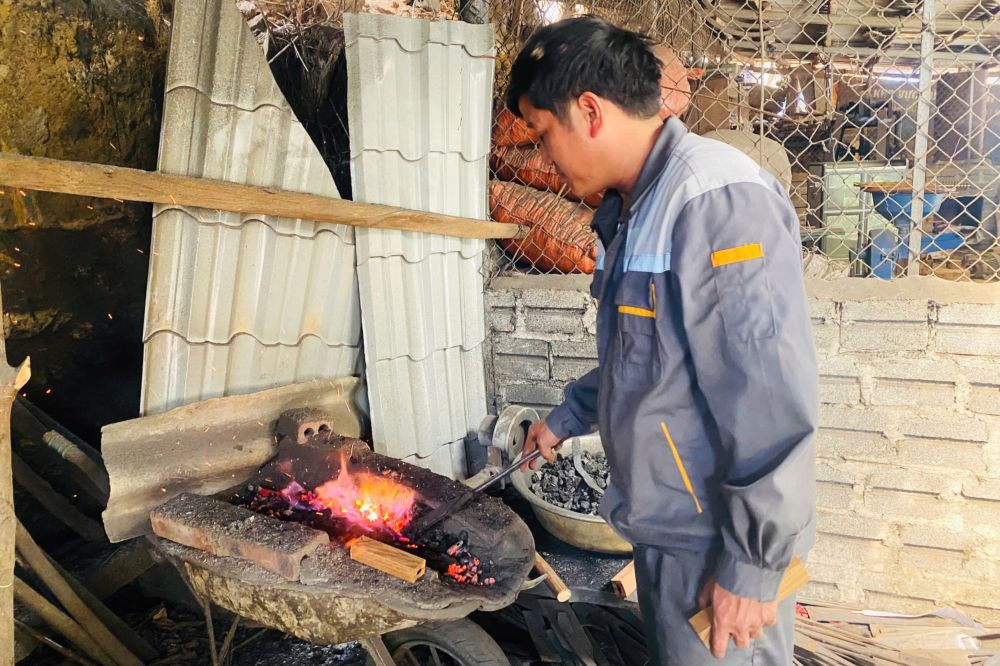
In Nong Tau Mong village, Phieng Cam commune, Mr. Sung A Sua is the person who continues the blacksmithing profession from his father. From a young age, he was familiar with burning the kiln, spinning the jar, hammer handle and learning each step of forging knives from relatives in the family.
In 2021, after working as a worker in Bac Ninh, due to the impact of the COVID-19 epidemic, he returned to his hometown. Seeing that there were not many people working in the village, he decided to rebuild his family's blacksmith workshop to continue his old profession.
I learned the profession from my father. When I went to work far away, I also intended to quit, but when I got home, I saw that no one was doing it anymore, so I continued to do it to preserve the family's profession. This profession is hard but it is a profession left by ancestors, it's a pity to quit," said Mr. Sua.
The main materials for forging knives are car pins, ball bearings, ship steel or old steel types. After cutting the cast according to the size, the iron is fired red in a charcoal kiln, then the hammer handle is used many times to shape it. Then, the blade is tempered with water, oil or banana tree trunk to increase hardness but not to make it brittle.
Each knife must be made for nearly a day to be completed. The knife handle is usually made of black wood, mulberry wood, rosewood or buffalo horn, cow horn; the knife shell is wrapped in wood, sewn with copper to increase firmness and beauty.
Currently, he makes about 30-40 products each month, priced from 500 thousand to more than one million VND each. Some products are sent to H'Mong people living in the US, Laos, Thailand according to orders.
Not only Mr. Sua, many young people in the village also learn the profession from relatives. Mr. Mua A Trang, Phieng Cam commune, shared that he followed the profession passed down by his uncle from 2013.
“Every month I make about 40-50 knives, mainly sold to people in the area. This job is not rich but enough to live on, and it preserves the ancestor's profession,” Mr. Trang said.
In Ang Ung village, Chieng Mai commune, Mr. Sung A Lenh learned the craft from Mr. Sung A Di, Chieng Mai commune for more than 6 years, then separated to work separately. "When I was little, I liked seeing my uncle do it, so I followed and learned the craft and got used to it. Now I have my own kiln, making knives for sale around the area, stable income, enough to support my family," Mr. Lenh shared.
Small forges are still burning every day, preserving the long-standing craft of the H'Mong people. The young generation of workers continues their ancestors, so that the sound of hammer does not fade in the highland villages.
Maintaining traditional blacksmithing, preserving high-level identity
According to local authorities, the blacksmithing profession of the H'Mong people was very popular in the past. Many families live by blacksmithing, making agricultural tools to exchange for rice and necessities for daily life. However, currently, the number of people in the profession is gradually decreasing due to the appearance of cheap industrial products with diverse designs.
Mr. Luong Van Thi - Chairman of Muong Leo Commune People's Committee - said: "Weaving is a long-standing traditional craft of the H'Mong people. Currently, there are still some households in the commune maintaining it. The locality is mobilizing people to preserve the craft, and at the same time find ways to promote products and create outlets to increase income for people.
In Phieng Cam commune, Mr. Dang Tien Dung - Chairman of the Commune People's Committee said that the locality always encourages people to maintain traditional handicrafts, including blacksmithing.
“Handicraft blacksmithing products are very durable, trusted by people, if associated with tourism, introducing products to tourists, blacksmithing can still develop. Both preserving culture and helping people have stable incomes,” Mr. Dung said.
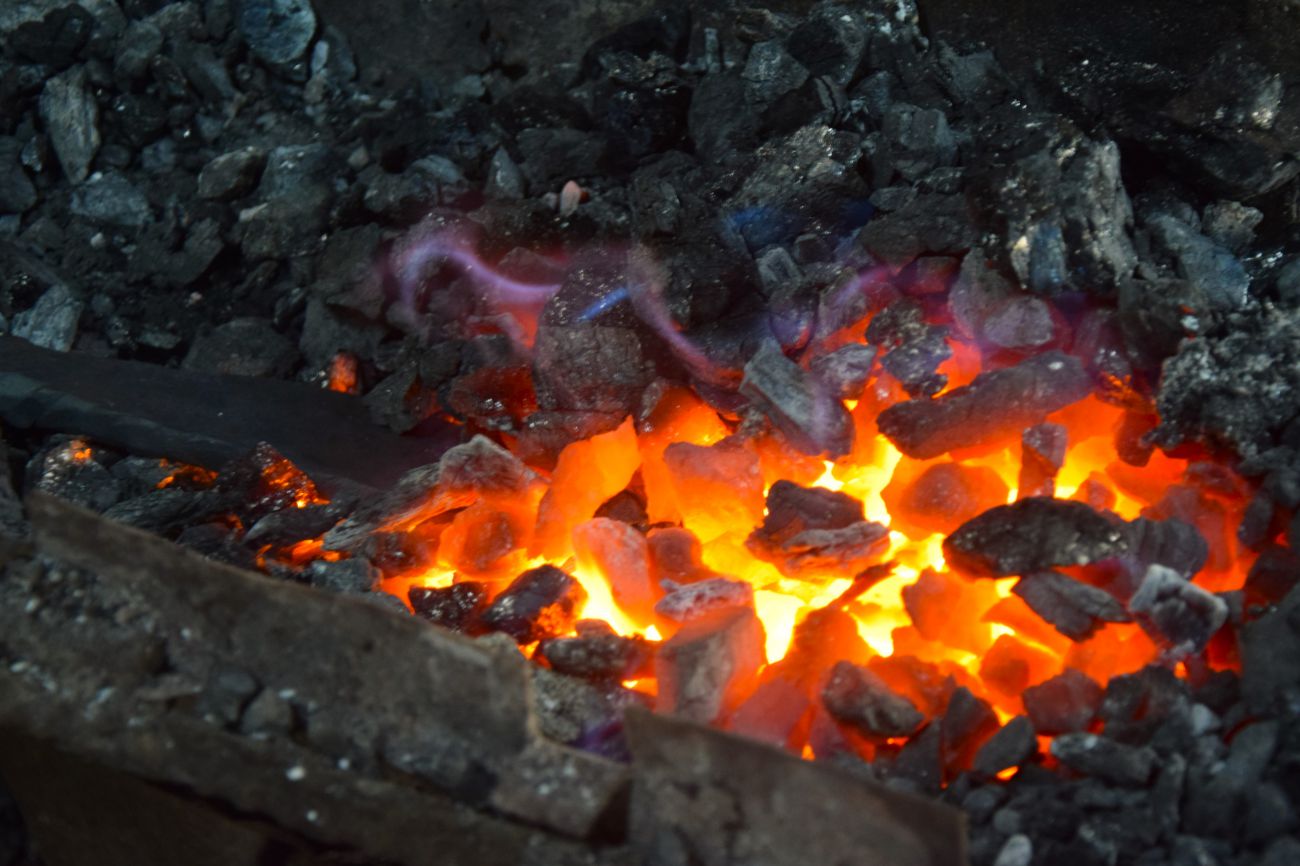
Although life has changed and become more modern, in the highland villages, by the red coal stove, the blacksmiths are still persistent and diligent with each hammer beat. That hammer sound not only creates knives and hoes, but also preserves the memory of an ancient craft, preserving the identity of the H'Mong people in the highlands of Son La.