
In the modern and hurried pace of social life, family meals are not just meals but the most frequent gathering to connect relationships between family members.
Family meals are indispensable in society in all eras. It is true that the pace of industrial and urbanized life has made family members share less time with each other. Every day, parents go to work, children go to school from morning until late afternoon, even until late at night.
That lifestyle forces all members to take care of breakfast and lunch to suit the requirements of work and study. All are only in the right time frame to easily meet, especially during dinner, when parents and children come home to prepare meals and eat meals that can be full for all members.
When I went to Korea, I found it very strange that almost people living in cities like Seoul do not have dinner at home. After work, husbands or young people often invite each other to eat grilled food, drink sochu at familiar restaurants, and only return home when they have passed through the night sky.
Wives, if they are housewives at home, rarely cook dinner to welcome their husbands and children. They also invite each other to eat grilled meat and drink sochu. And their children too, after school they join groups to eat rice cakes and black soy sauce noodles at restaurants. This has become a lifestyle in Seoul.
However, Koreans do not disregard family meals, it's just that it's different from Vietnamese times. Their family meal is usually in the morning, when the whole family wakes up together, cooks breakfast, eats breakfast and then brings rice to the office or class. That is the moment when all living behaviors in society cannot affect the family.
For Vietnamese society, even in the era of technology strongly dividing relationships between family members through text messages, social networks, wifi waves, 5G waves and private bedroom doors, family meals are still the most effective tools to maintain the family home.
Vietnamese people are also eager to experience freedom in eating, to be able to eat what they like, eat in the space they like and with the person they like, or simply to have more time to work and study. Then, it is no longer an experience but has become a lifestyle.
However, as family meals gradually disappear, many people realize that: Family meals are not simply a meal, but a place to preserve the most sacred spiritual values, when the wife talks to the husband, the parents talk to the children, not by short messages or being "memeized".
In Vietnamese traditional culture, family meals always have a special meaning. It is not only a time for family members to eat and drink together, but also a moment of reunion after a long day. In the cozy space of the kitchen, simple dishes such as a bowl of vegetable soup, a plate of braised fish, and a bowl of fish sauce also become more delicious because of the feelings of the mother and wife entrusted into it.
Women also have to participate in social activities, work, study... but they still try to spend time cooking family meals for their husbands and children. And what could be happier than other family members trying to come home early to help with meals, or at least eat on time.
Family meals are also a special communication space, where family members can share everyday stories with each other. Joy needs to be shared, achievements need to be encouraged, but sadness, difficulties, and work pressures need to be shared more at the meal table so that the whole family knows and cares together.
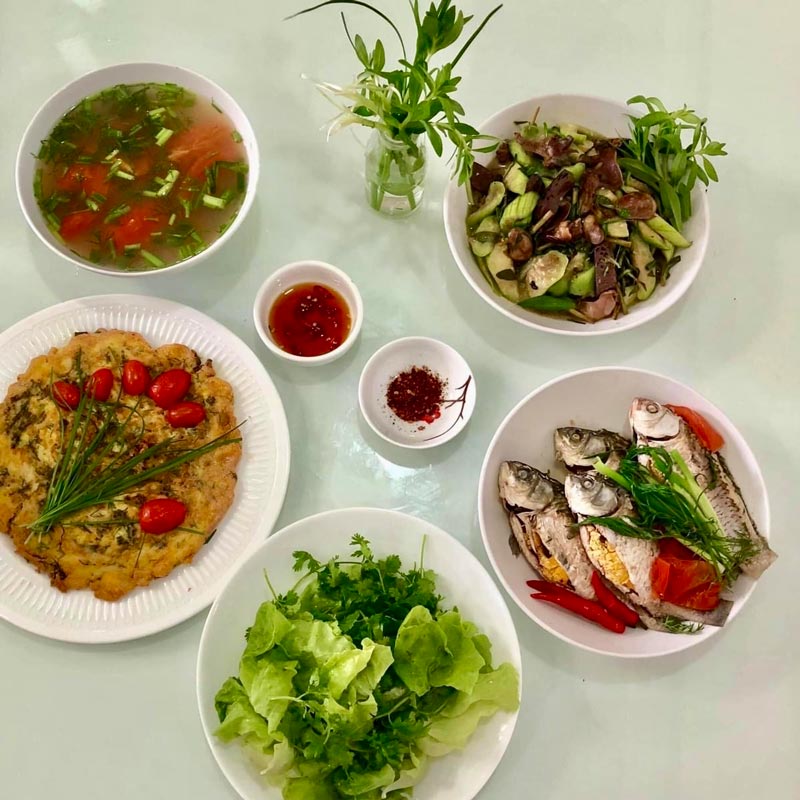
Stories, confidences, and conversations at the family meal are always received in the easiest and most convenient way. From there, wives understand their husbands, children understand their parents, and conflicts and disagreements are "disconnected" earlier, especially at a cozy meal and delicious dishes.
Not only stopping at the spiritual meaning, family meals are also a place to form and nurture human character. From how to invite meals, how to pick up food, how to listen to others speak, each person gradually learns basic rules of conduct. That is where we learn to love, share and be grateful.
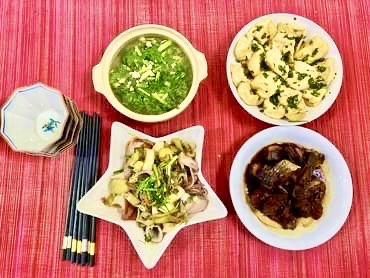
Nowhere is better than home-cooked rice
Families can also gather around meals outside restaurants, however, the level of intimacy and privacy is also reduced significantly. Because that place is a public place, and the appearance of strangers can block the need to share and confide. Only at home can everything happen smoothly and harmoniously.


