Memories of the old profession
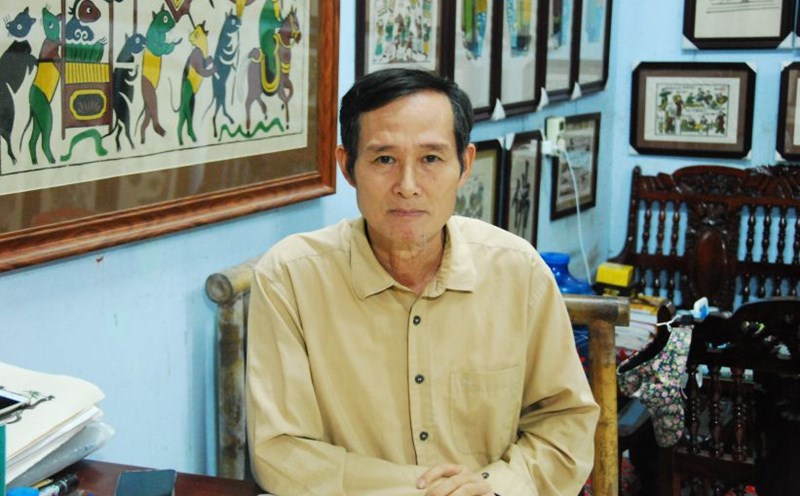
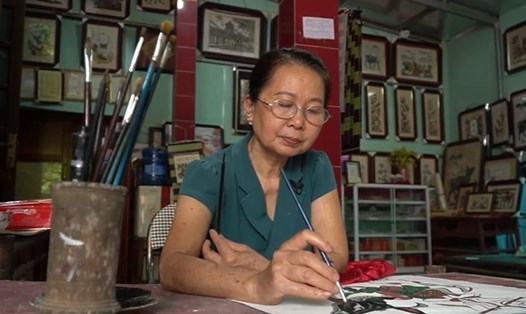
Dong Ho village (Thuan Thanh ward, Bac Ninh) has long been associated with the image of yellow fountain paper, carefully cleaned wood- printed molds and the warm colors of folk paintings hanging all over the porch. In that space, silver-haired artist Nguyen Huu Qua still sat at the printing table every day, his hands in the sun putting each engraving on the paper with the care of the person who had lived his entire life in the same profession.
Born into a family of many generations of painters, the childhood memories of artisan Qua are the image of the whole village busy making paintings every Tet holiday. He clearly remembers the scene of the fountain paper folding the yard, children running around the wooden carvings, adults taking turns mixing colors and printing paintings.
Dong Ho paintings are not only hanged for entertainment, but are also wishes and wishes for a prosperous new year: A herd of male pigs, great-grandfather chickens, social- enough mice weddings... Those simple images have nurtured the folk aesthetics, creating the identity of Vietnamese Tet for many generations.
"My family has been making paintings for many generations, from the time of our father and grandfather to dozens of generations before. Since I was a child, I could only look and follow, I could not remember exactly when I learned the profession, said Mr. Qua.
Dong Ho paintings have many unique aspects, creating a unique feature compared to indigenous carpentry paintings such as Hang Trong, Kim Hoang or Hue paintings. The artist said that first of all, it is the material of scrap Do paper, which helps the painting surface to be slightly golden and bloom the color paints. Colors are completely natural: Red from pebbles, green from tea leaves, yellow from Sophora japonica flowers, white from gourd, black from straw ash and bamboo leaves.
Another big difference lies in the printing technique: Dong Ho paintings are printed in front color, printed in rear features. The layers of color are stacked on top of each other: White pressed red, yellow pressed green... creating a unique interweaving effect that no other painting genre has. The harmony in each painting is the result of the "occulty" and the experience of the artist. It is the combination of paper, color and printing techniques that creates the indispensable identity of Dong Ho painting.
At the age of over 60, artisan Nguyen Huu Qua still makes paintings according to traditional methods: Print each color, fine-tune each detail, absolutely do not use industrial products. All depends on hands, patience and understanding of the profession have become instinct.
Belief in the revival of the 500-year-old painting genre
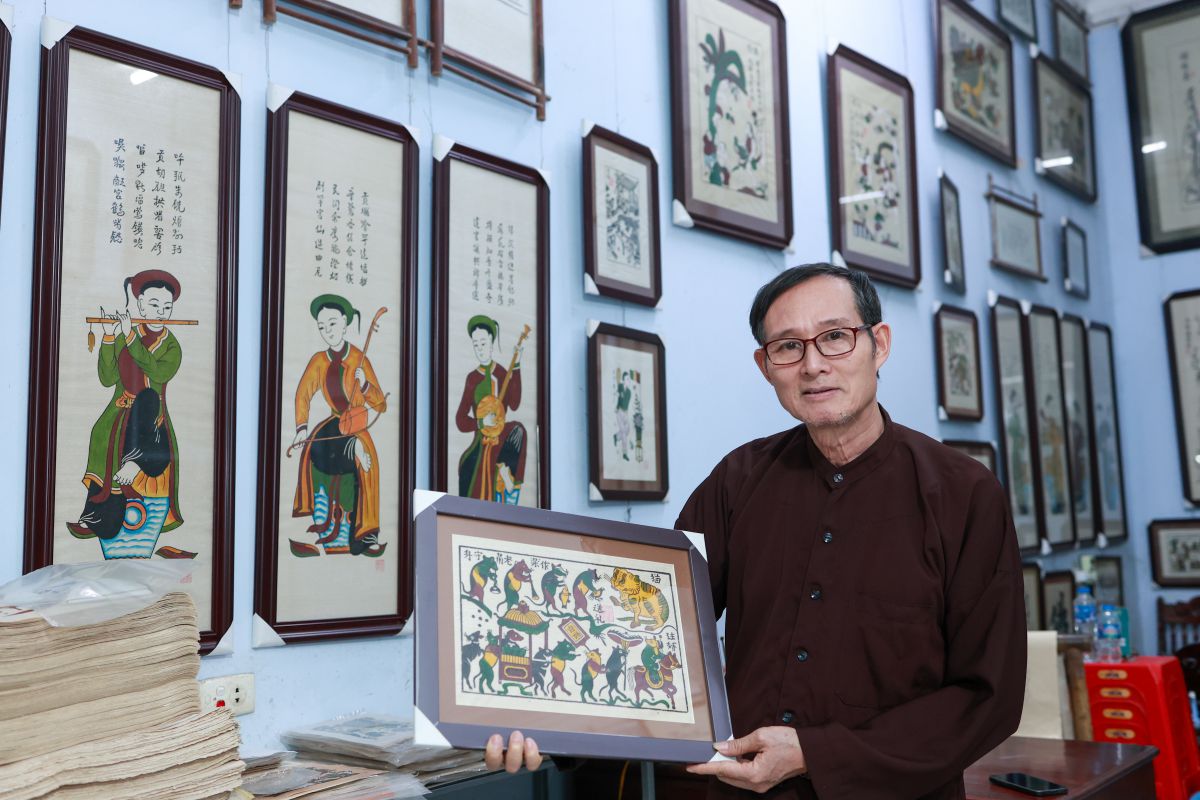
As one of the two rare clans that still maintain the profession of making Dong Ho paintings in Bac Ninh, artisan Nguyen Huu Qua still struggles to keep the profession, to inspire passion for the next generation.
In recent years, artisans have paid special attention to researching and editing the Han - Nom writing system on Dong Ho paintings, a job that he called "the quietest and most difficult". According to him, anyone can print paintings, but understanding the correct Han - Nom language and understanding the correct prose is another matter. He spent decades pursuing, because if he did not study it regularly, he would immediately forget it.
In passing on the profession, artisan Nguyen Huu Qua feels lucky to have a younger generation in his family. That is his eldest son, Mr. Nguyen Huu Dao (born in 1990), now also awarded the title of artisan, and can replace him with the job.
He also spent time participating in propaganda activities, introducing the value of Dong Ho paintings to domestic and international audiences through exhibitions and seminars organized by the State and localities. In addition to maintaining family production, artisan Nguyen Huu Qua also welcomes groups of students and researchers to study and practice, and train their children and grandchildren...
However, the worry about the profession being passed down to artisan Nguyen Huu Qua is still a headache. What he worries about most is the source of raw materials: thi wood for carving planks, Do tree shells for making paper, scallops for coloring... are increasingly difficult to find due to urbanization, and craftsmen cannot exploit them on their own. Meanwhile, the problem of training successor children still faces many difficulties.
The artist said: "Young people who want to follow a profession must have a minimum income, but while the job is too cheap and the output is unstable, it is difficult for them to stick with the profession. In my opinion, the State needs to have appropriate support policies, so that the next generation can confidently learn a trade and stay long-term."
In addition, finding a direction for Dong Ho painting products is also an issue that needs attention. According to the artist, if the problem of raw materials, craftsman training, preservation and production is solved in accordance with standards, and the output of products is combined, Dong Ho paintings can completely survive sustainably.
In the last months of the year, artist Nguyen Huu Qua and his son are still tirelessly participating in seminars and exhibitions, bringing the Vietnamese heritage Dong Ho painting line proudly to introduce to domestic and international friends.
Amidst the changes of modern life, the image of artisans still quietly sitting next to old carvings, keeping the life continuous for a heritage that has existed for half a century. Although there are still many concerns about the ingredients, output or successor, he still believes that Dong Ho paintings will not be lost, as long as there are people who want to learn, understand and preserve them. That perseverance is an important fulcrum for the 500-year-old painting genre to continue to be revived, live in contemporary life and spread Vietnamese cultural values to many generations later.
The Dong Ho folk painting making profession in Dong Khe quarter, Thuan Thanh ward, Bac Ninh province, was born about 500 years ago. The community has created paintings with specific thematic characteristics, printing techniques, colors and graphics using woodblock printing techniques. The topics of the paintings often include worship paintings, interwoven paintings, historical paintings, daily paintings, landscape paintings, associated with the custom of hanging paintings on Lunar New Year, Mid-Autumn Festival, ancestor worship and worship of deities.
On December 8, 2025, the 20th Session of the Intergovernmental Committee of the 2003 Convention on the Protection of UNESCO's Intangible Cultural Heritage took place at the Red Apple World Cultural Heritage (New Delhi, India). Here, the Committee approved Decision No. 20.COM 7.a.1, to include the Dong Ho folk painting making craft in the List of Intangible Cultural Heritage that needs urgent protection. This is the 17th Intangible Cultural Heritage of Vietnam recognized by UNESCO.