
We started our journey from Turku, the ancient capital of Finland, by a night train crossing the Baltic Sea. At exactly 8 pm, the train arrived, passengers continuously went to the check-in area. To maximize 2 trips a day, Viking Line only spent 30 minutes cleaning 900 rooms. Waiting for a long time until boarding time, perhaps everyone was nervous because they didn't know if the train was really like in the picture.
And then the huge ship appeared before my eyes, more precisely, only a part appeared before my eyes. More than 40 years of living in this world, that was the first time I stepped on such a large ship. Viking Grace ship is 218m long, only 50m shorter than Titanic, 11 floors, with all services like a 5-star complex. Seeing the children overjoyed, throwing suitcases into the room and running to explore, I breathed a sigh of relief. The round-trip ticket for a 4-bed cabin is only 139 Euros, half the price of an airplane but with this high-class service, it's really too profitable.
Renaissance and ruins
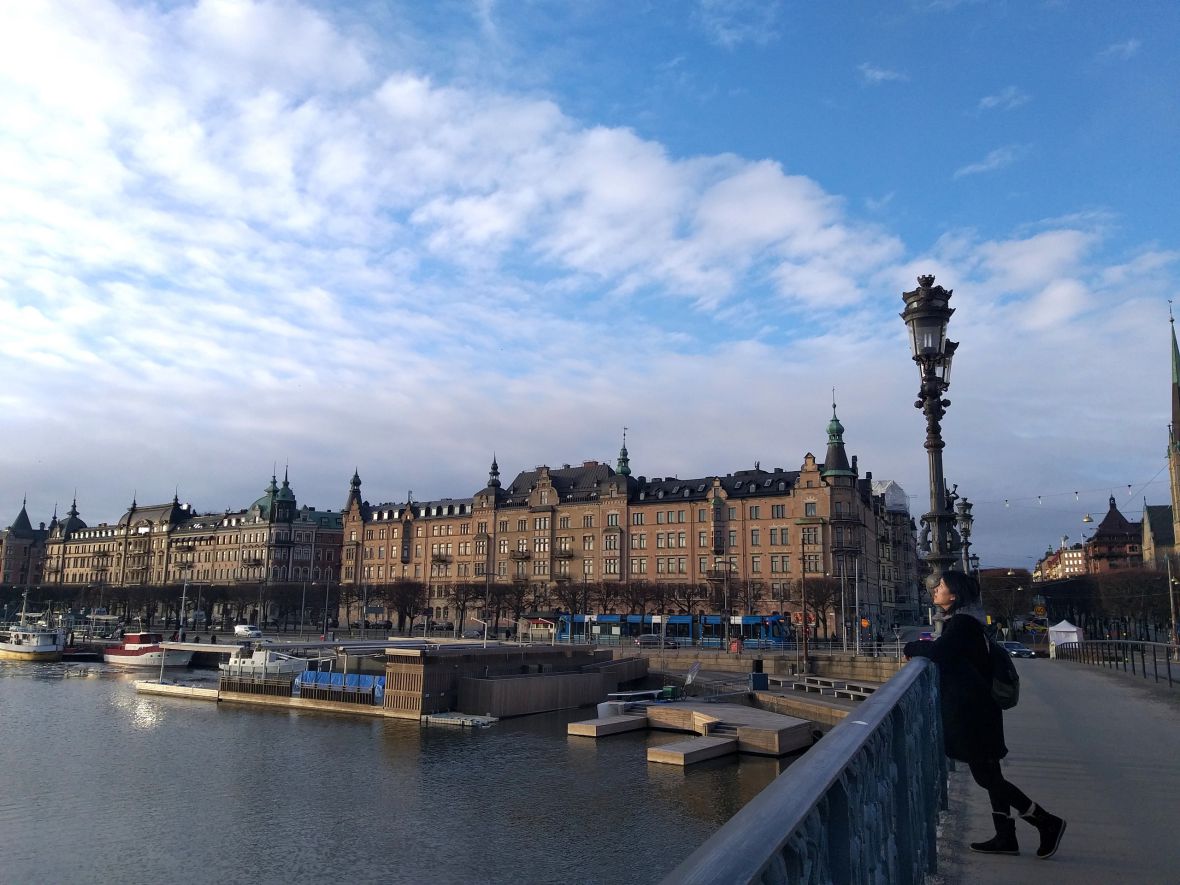
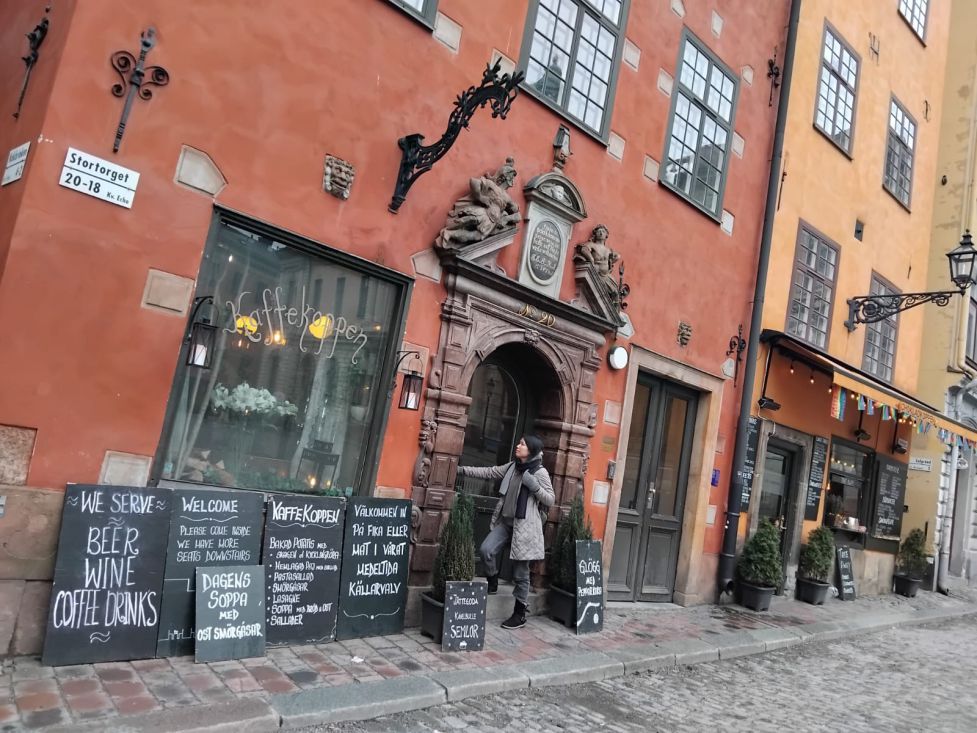
At 6:30 am, the train docked, thick fog and wet underground. February when the ice and snow have melted, it's really great in a Nordic country. Going back up the road known as Stockholm Balcony, but because the fog was too thick, we couldn't see the most beautiful scenery of the city, we stopped at a small, pretty cafe to rest to relieve fatigue. Completely different from what I heard about open and friendly Swedes, the cafe owner welcomed guests with a cold face and maintained that attitude until we all left.
Anyway, that did not affect our subsequent experience. The apartment rented through Airbnb is located right in the heart of the Old Quarter, priced at 65 Euros/night, enough for 5 people, has been renovated to suit modern lifestyle, but the interior still has the shape of the 18th century. The 40cm wide window placed with several pretty flower pots, looking straight at the opposite building, which is also no less old. We arranged it perfunctorily and went down the street together.
I freely admire the magnificent architectural works from the Middle Ages, gently walking on the paved road so as not to awaken hundreds of years of peaceful history. I am fascinated by the mossy green copper roof of Tyska Kyrkan Church built in the 14th century, bustling when visiting Storkyrkobrinken or Vasterlanggatan commercial street, lively, noisy, quietly passing through Prastgatan silently like a silent monk, then excited when accidentally touching Kakbrinken with a rune-carved stone slab that must have been from the Viking era. Who would have imagined that Gamla Stan was once a slum that no one wanted to step into, luckily the Stockholm authorities promptly realized that the precious gem was buried to be preserved before it was all destroyed by time and human hands.
Mysterious layers
And then, as always, curiosity about dynasties makes my heart flutter when I set foot in the Royal Palace. In the history of the monarchy lasting more than 1,000 years in this country, there have been coups, depositions, imprisonments, hangars or guillotines, but what attracted me most was the fire that burned down Tre Kronor Castle in 1697.
A massive Renaissance-style structure was completely destroyed in just a few hours, carrying thousands of national documents; 3 fire prevention officials were convicted, but to this day the main culprit remains a mystery. A not-so-light regret when looking at the remaining artifacts and the restored images. Although knowing that we cannot get back what we have lost, it seems that the past is still something that haunts us for a very, very long time.
Thanks to this visit, I finally learned about the origin of the name Vaasa after living in the Baltic coastal city for several years. In Swedish, it is written Vasa, the family holding the first throne after Sweden became independent from Denmark in 1521. That is also the name given to the sunken warship when it first set sail.
The next day we arrived at the Vasa Museum, where the wreck of that ill-fated ship was placed. Even though I had seen pictures online, I still had to restrain myself from jumping up in delight to see it with my own eyes. It is indeed a masterpiece of humanity, not only the shipbuilding, but also bringing it ashore after more than 300 years of being buried under the seabed at a depth of 30m. Modern technology has helped people restore almost all the details on the ship over 40m high, including hundreds of sculptures. Another unsolved mystery: Why could the ship sink just by a gust of wind while still in the Gulf of Stockholm. The Swedish Royal Navy's latest warship began its short journey on August 10, 1628 and only traveled about 1,300m. More than 50 people died, and no one was charged after the tragedy occurred.
A few "cuts" across the city
But there is a question that I found an answer to not long after, which is about the lack of friendliness of the natives. Previously, these neighbors were always taken as contrasting examples to the cold and distant Finns, but now it's different. As immigrants from the Middle East and Africa flock to Sweden, everything changes completely.
Stockholm alone now has 62 areas on the police's "no-go" recommendation list, 22 of which are at high risk of violence and crime. These are all places with high immigrant rates, unemployment and under-education rates beyond control. Being considered one of the safest countries in the world, Sweden is facing an unprecedentedly serious organized crime situation. It is understandable why indigenous people are becoming suspicious and wary of all foreigners.
But anyway, we didn't encounter anything unexpected, we were even more warmly welcomed at a Viking-style restaurant. Just accidentally stopping by while strolling around the Old Quarter, the children were immediately attracted by the man in charge of the restaurant to the point of having difficulty leaving. He wore Viking clothes, welcomed guests and kept the atmosphere always noisy and bustling, full of the big talk style of those who once caused terror at sea.
The way the dining table is arranged, using candles instead of electric lights, fur mats or music, and even just a word from the coat keeper all contribute to creating a top-notch customer experience. We decided to book a table and when we returned the next day, the whole group was welcomed like legendary warriors who had just returned from a heroic voyage.
The food was not too excellent, but everyone was full and satisfied with all senses; the two French tourists sitting at the same table also said this was their best experience in Stockholm. That dinner left a deep impression to the point that the children excitedly said a few days later, "Well, doing service is service".
Overall, the trip was complete: No incidents, on schedule, spending under control. But the greatest value is not in numbers, but in the stories, images and layers of history interwoven between the Renaissance and ruins - things that will remain for a long time after we leave Stockholm.


