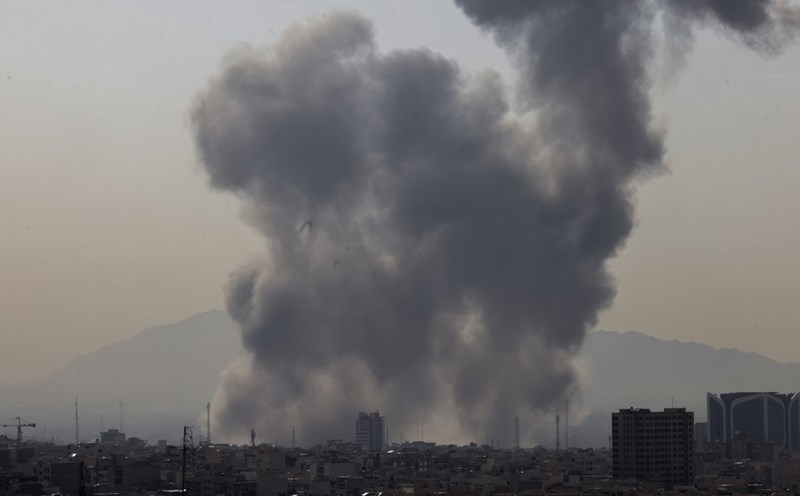
Before the US and Israel airstrikes Iran on February 28, nuclear negotiations between Tehran and Washington resumed, in which the prominent factor was economic interests. Iran's oil, gas and strategic minerals became the focus.
Notably, the initial discussions did not have the prominent presence of US nuclear experts. Instead, figures with economic and strategic roles such as Middle East Special Envoy Steve Witkoff or Jared Kushner, President Trump's son-in-law, appeared in the center. This shows that the balance of priorities shows signs of leaning towards commercial interests rather than purely security.
Unexploited huge minerals
According to the Iranian Organization for the Development and Innovation of the Mining Industry, this country ranks 15th in the world in terms of mineral reserves, estimated at about 60 billion tons. Iran has more than 10,000 active mines and owns over 68 types of minerals, from iron ore, copper, zinc to rare materials serving high technology.
The total value of Iran's natural resources and minerals is estimated at about 27,300 billion USD, of which minerals alone account for about 1,400 billion USD. However, only about 2% of the mineral potential is fully explored, while the value of resources that have been identified and officially exploited is only about 29 billion USD - a very small number compared to the potential scale.
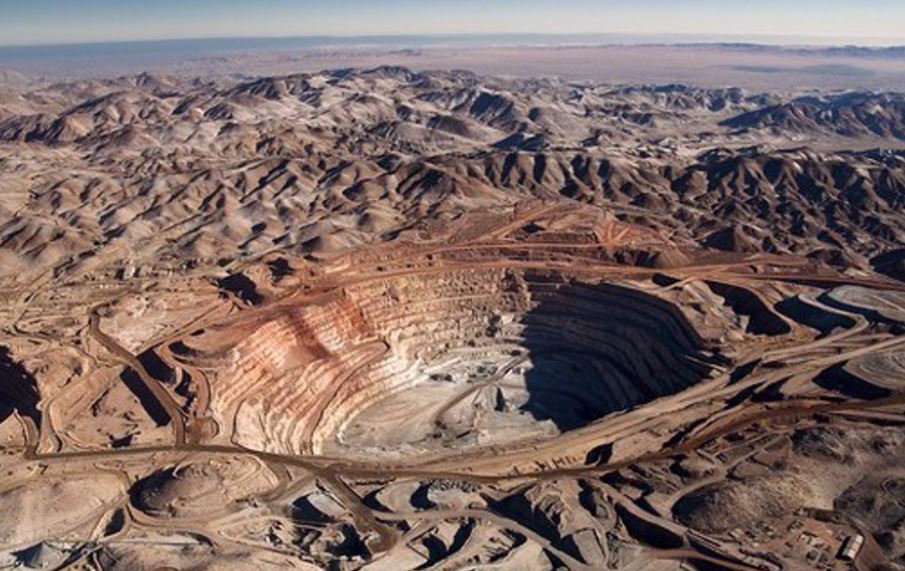
Iran has about 3.8 billion tons of iron ore, equivalent to nearly 1.9% of global reserves; 2.6 billion tons of copper, accounting for about 5% of the world; and about 15 million tons of zinc. Bauxite reserves at the country's largest mine are estimated at 10.6 million tons.
Gold is also a bright spot in Iran's mineral portfolio with 340 million tons of reserves confirmed at 24 mines. The Shadan mine in Khorasan province is assessed to have a lot of untapped potential.
In recent years, Iran has also discovered an additional 125 million tons of potential reserves and 85 million tons of new resources, including rare earth elements such as lanthanum and cerium - strategic materials for advanced technology.
Iran also owns 33,900 billion m3 of gas, exporting about 16 billion m3 per year. The country recently discovered its first lithium mine in Hamadan province with estimated reserves of 8.5 million tons. Cobalt and nickel - platforms for the production of batteries, high-tech weapons, and semiconductors - have also been confirmed in Zanjan and Kerman provinces.
Regarding nuclear weapons, Iran has uranium, of which a part has been enriched over 60%, approaching the technical threshold related to weapons levels of about 90%.
Oil and strategic location
However, the biggest "precious gem" is still oil. Iran is currently the 3rd largest oil producer in OPEC, after Saudi Arabia and Iraq. According to OPEC's latest report, Iran's oil production reached about 3.3 million barrels/day in December 2025. Oil reserves have been proven to be at 208.6 billion barrels, putting Iran in the group of countries rich in hydrocarbons in the world.
Geographical location further increases Iran's strategic value. Located at the crossroads of West Asia, bordering Afghanistan, Pakistan, Iraq, Turkey, Azerbaijan, Armenia, Turkmenistan and opening up the Persian Gulf, Oman Sea, Indian Ocean, Iran controls the northern coast of the Hormuz Strait - a shipping route transporting about 20 million barrels of oil/day, equivalent to nearly 1/5 of global oil trade.