
Following the Connemara sheep
If possible, go to Connemara to buy an Aran sweater made of traditional Irish sheep fur. In fact, it is entirely possible to do it online: Just a few clicks and a hand-woven Aran sweater will be sent anywhere in the world. But locals believe that only when they see firsthand how the wool is made, can they understand its true value.
Connemara is located on the west coast of Ireland, where the gray mountains meet the Atlantic Ocean. Here, sheep appear everywhere: on the meadows, along the roads, in eateries and even in local stories. Recently, Connemara has developed the "Sheep and Wool Trail" tourist route - a journey taking visitors to meet farmers, shepherds, weavers and famous Irish shepherd dogs.
In a wool store in Leenane town, owner Aine O'Toole introduces customers to a handful of freshly trimmed raw sheep wool. It is soft, slightly damp and has a characteristic oily smell. "It's lanoline. The natural wax helps sheep withstand rain and keep warm in the sea breeze," she explained.
Connemara mountain sheath wool is famous for being durable, warm and quite moisture-tolerant. But many modern people are no longer used to the slightly rough feeling of pure wool, so brands often add cashmere or merino to make it softer. Ms. Aine laughed and said: "People now expect things to be much more comfortable.
A century ago in western Ireland, Aran sweaters were real labor clothes. Fishermen wore them to go to sea, farmers wore them in the cold rain. Wool blankets or sheep fur coats are often used very durablely, still maintaining warmth over many years.
But paradoxically, sheep farming today is almost unviable thanks to selling wool. Bernard King, a local farmer, said that his father used to have enough money to buy a car after the sheep fur selling season. But now, a fur cutting season brings in so little money that it is not enough to pay the barber's labor.
The money earned is mainly from sheep meat," he admitted. Most Irish wool currently has to be transferred to the UK for processing, and many batches continue to be sold to China as carpets or industrial products.
The story of the weaving profession
Along Killary Fjord, visitors can visit farms to watch sheepdogs work. In the middle of the heavy rain, the farmer just whistled softly, and the dog Rex immediately rushed to collect the whole flock of sheep back to the barn. In the strong wind, the whistling and dog barking sounds echoed throughout the hillside.
In Connemara, sheep are not only livestock but also a part of the soul of the landscape. Many mountainous areas here are still common pastures that have existed for hundreds of years. Even Connemara National Park maintains native breeds such as Connemara horses, ancient Irish goats and Cladoir sheep - native sheep breeds that are being restored through a gene conservation program.
A National Park manager stroked his thick beard and affectionately said about the sheep breed: "Their fur is so soft that it can wrap infants.
In the last days at Connemara, many tourists come to the wool weaving class of Mrs. Carina Coyne - who still makes wool by traditional methods: washing, picking, brushing, pulling yarn and dyeing with grass picked in the valley. Red color taken from wildflowers, yellow from scallions, green from star anise leaves.
Her workshop is packed with yarn spinning wheels, weaving frames and bundles of wool hanging all over the walls. Each product is clearly stated with the implementation time: One wool roll can take 50 hours, children's jackets more than 70 hours, and adult jackets sometimes take nearly 200 hours of labor.
Putting on this shirt is like being immersed in nature," Ms. Carina said, offering an ivory cream wool roll.
After a few hours of trying to spin the yarn by hand, it is not difficult to understand why a handmade sweater here costs several thousand euros. It's not just clothes, but also time, skills and a slow pace of life woven into each yarn.
At the Standun store in Spiddal village, a salesperson often says to a customer when giving a light-colored sweater: "It will follow you for life.
Amidst the modern pace of life, Connemara still retains old handicrafts and the slow pace of life typical of Western Ireland.
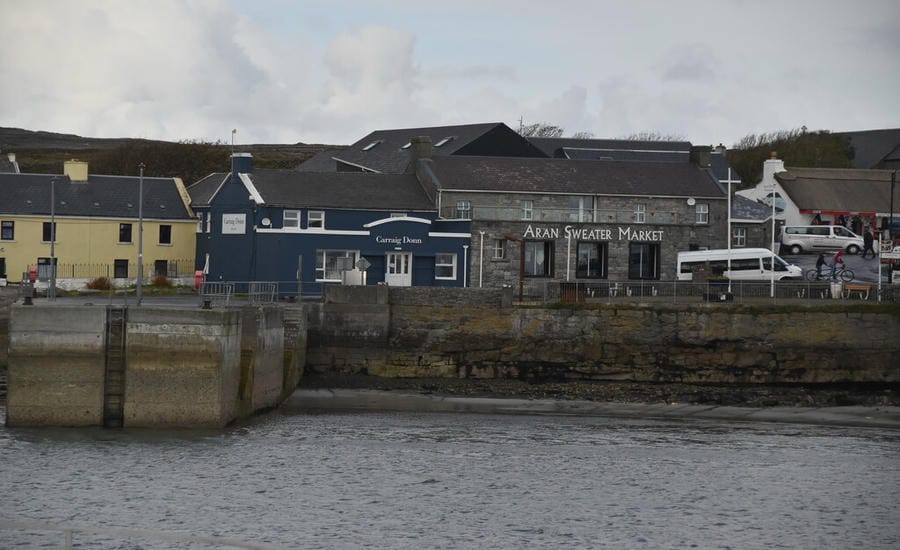
Land of sheep
Connemara is located on the west coast of Ireland, where rocky mountains, mudflats and grasslands stretch as far as the Atlantic Ocean. Cold, humid and windy climates have long associated this land with sheep farming. On the gray hillsides, herds of sheep appear almost everywhere, becoming a familiar image of Connemara. Local people have long used sheep wool to weave blankets, coats and especially the famous Aran woolen sweaters. Many farms in Connemara still maintain the traditional grazing method, using shepherd dogs to herd livestock between the vast mountain slopes.
Why is Aran sweater famous?
Aran sweaters are a famous cultural symbol of Ireland, originating from the Aran archipelago off Galway. The characteristic of this type of sweater is the embossed patterns of rope twisting, mesh eye or honeycomb. Many Irish people believe that each pattern has its own meaning: rope twisting symbolizes fishermen praying for a safe sea trip, while honeycomb patterns symbolize hard work. Initially, the original Aran sweater was knitted from unoiled sheep wool, so it was very warm and had good moisture resistance, suitable for the cold and humid climate of the Atlantic Ocean.


