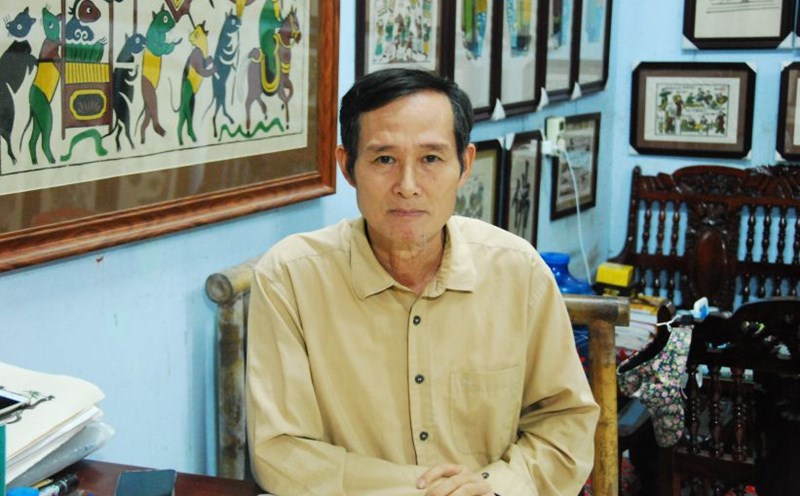
Dong Ho folk paintings, a unique wood carving painting lineage originating from Dong Ho village, Thuan Thanh ward, Bac Ninh province, has existed and developed through hundreds of years of history. Not simply handicraft products, this painting lineage plays a role as a vivid reflection of traditional Vietnamese agricultural society, preserving the soul of the nation through each piece of wood and glue.
Manufacturing techniques by artisan hands
Technically, Dong Ho paintings belong to the line of printed paintings from wood carving boards, the production process requires close coordination between aesthetic thinking and sophisticated handicraft skills. Unlike ordinary painting styles, Dong Ho paintings are created through a system of printing boards, in which wood carving boards play a core role. The wood used to carve the boards must be rosewood or ink rope wood. The tool for crafting is a set of chisels made of hard steel, each set consisting of about 30 to 40 pieces of different sizes, allowing for complex details.
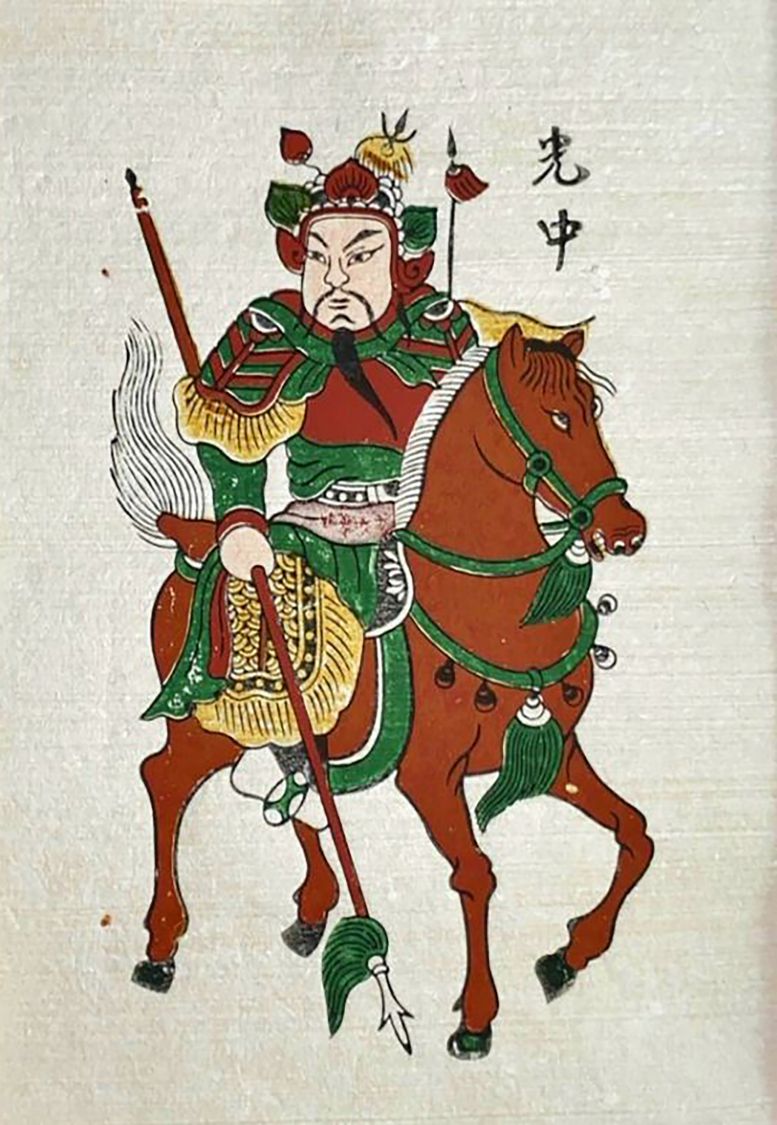
The unique point that makes up the unmistakable identity of Dong Ho paintings lies in the material and color. The printing paper for paintings is traditional Do paper, handcrafted from Do tree bark, the surface is brushed with a layer of water hyacinth made from crushed scallop bark, creating a distinctive white color. The color system used in paintings is completely natural, reflecting the close connection between humans and nature in the Northern Delta region. Yellow is extracted from Sophora japonica flowers, deep red from rose gravel or redwood, white from scallop bark powder, black from bamboo charcoal and green from indigo leaves. These are basic, original colors and are usually not mixed.
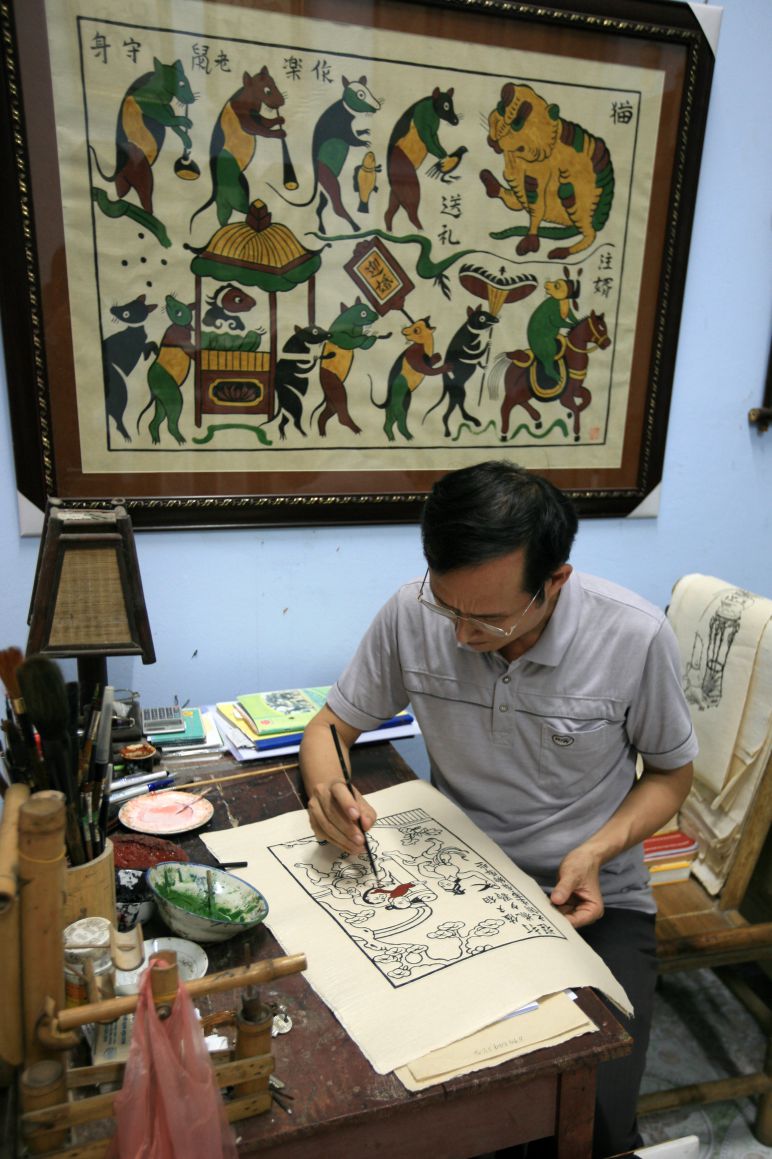
The painting printing process adheres to strict principles on printing layers and techniques. Before printing, Do paper is prepared in large sets. Artisans use a brush (made of pine leaves) to apply color to the cardboard, then apply the "patching" method - that is, stamp the printing board onto the colored cardboard surface so that the ink absorbs evenly, and then strongly press the board onto the paper. The printing technique requires absolute accuracy so that the color patches match each other without deviation. The immutable principle in this process is that each color corresponds to a separate carved woodblock; how many color prints are needed for the sample painting. After printing each color and drying it, black strokes are always printed at the end to complete the work. This process creates physical and visual depth for the painting, making the color as if soaked in the paper, durable over time.
Deep artistic value
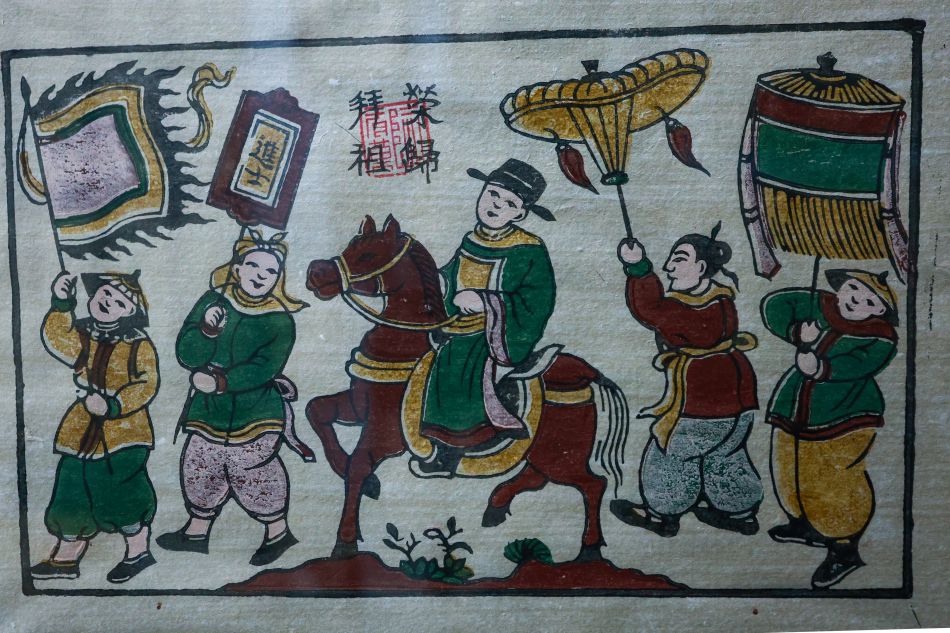
In terms of art, Dong Ho paintings possess a unique visual language with high symbolism and decoration. The painting layout is usually tight, using simplified lines and flat, even colors. However, behind that rustic and simple beauty is a whole system of human philosophy and profound social reflection. The content of Dong Ho paintings covers 7 main types including: worship paintings, congratulatory paintings, historical paintings, story paintings, proverb paintings, landscape paintings and paintings reflecting daily life.
Through these themes, Dong Ho paintings become an annals with images of the material and spiritual life of ancient Vietnamese farmers. That is the age-old desire for a harmonious, warm, and happy family life; the desire for a fair and good society; the moral lessons of being human and the honor of beauty. From a folk aesthetic perspective, Dong Ho paintings not only bring aesthetic pleasure but also perform the function of education, preserving traditional cultural capital. The process of creating painting designs is not a single individual work but the result of collective intelligence, inherited and perfected through many generations of artisans. This explains why there are many different variations for the same topic, or a painting design can have many color combinations, showing the movement and constant creativity of the craft village community.
Although carrying great historical and cultural values, the Dong Ho painting profession has been and is going through harsh ups and downs. The golden age of this painting genre lasted from the 19th century to the 40s of the 20th century, when Dong Ho Tet paintings were indispensable items in every house. However, historical changes after 1945 caused the painting profession to be almost wiped out at times. From the number of 17 painting lineages in the past, the craft village now only maintains a weak existence with 2 lineages of artisans Nguyen Dang Che and Nguyen Huu Sam. The latest statistics show that the number of artisans is now only 3 people, the number of practitioners is about 20 people and only 2 elderly artisans have the ability to teach.
From National title to UNESCO honor
Clearly recognizing the importance and critical condition of the heritage, the Bac Ninh provincial government and the Ministry of Culture, Sports and Tourism have implemented many timely intervention measures. In 2012, the Dong Ho folk painting profession was included in the List of National Intangible Cultural Heritage. In particular, on December 9, 2025, at the 20th session held in India, UNESCO officially listed Dong Ho folk paintings on the List of Intangible Cultural Heritage in Need of Urgent Protection. This is the 17th heritage of Vietnam to be honored internationally. This listing is not only a strong affirmation of the artistic and unique historical value of the Dong Ho painting genre but also opens up great opportunities and poses a heavy responsibility in protecting this heritage from the risk of fading away.
Bac Ninh province has issued resolutions on developing small-scale handicraft villages, building separate planning areas and assigning the Department of Culture, Sports and Tourism to implement the "Preserving the Intangible Culture of Dong Ho Painting Village" Project. The Dong Ho Folk Painting Preservation Center inaugurated in 2023 is an important step forward, creating space for tourists to visit, experience and learn about the painting making process. However, preservation cannot just stop at titles, but needs to solve the sustainable livelihood problem for the subject community.
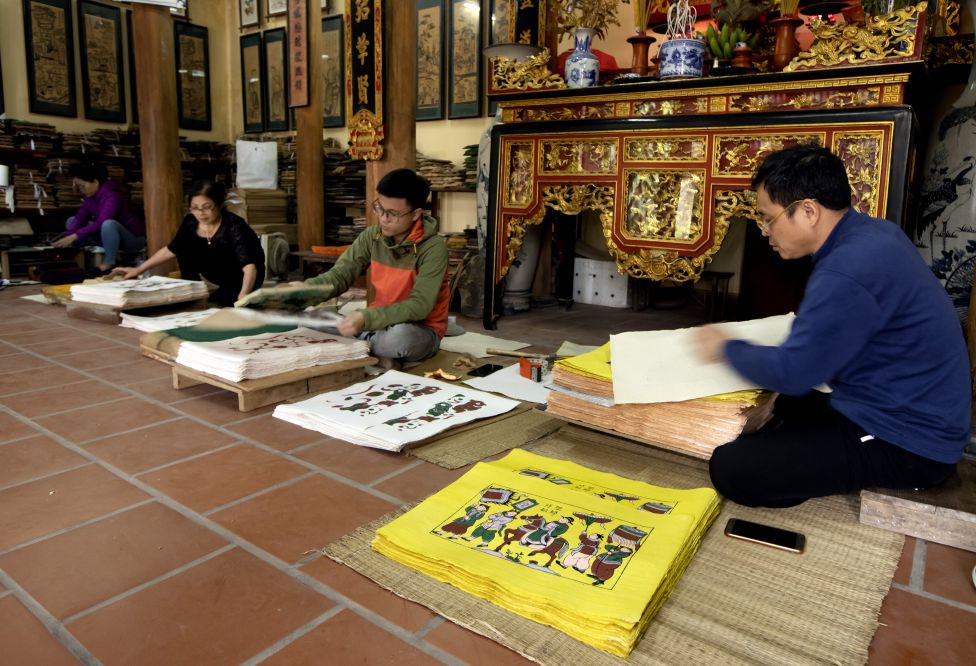
The reality of tourism in the painting village today reveals many limitations. Although welcoming tens of thousands of visitors each year, the tourism model is still "quick visit - quick experience", lacking depth. Tourists mainly stop for short periods of time to take photos, low spending, making economic benefits not really spread to professionals. Heritage is being separated from the living space and real rhythm of community life, with the risk of becoming a purely performing place instead of a vivid cultural entity.
To solve the problem of preservation and development, the construction of the Duong River tourism route is being considered as a strategic direction. This tourism route is not simply a traffic solution but a way to approach heritage according to the historical and cultural flow. The Duong River connects Dong Ho painting village with a dense system of relics such as Dau Pagoda, But Thap Pagoda, Kinh Duong Vuong Mausoleum. The journey on the river will allow visitors to slowly absorb the Kinh Bac cultural space before approaching the craft village.
This approach also helps to transform the model from "check-in" tourism to deep experiential tourism. Tourists will have enough time to learn thoroughly about diep paper, natural colors, and carving techniques under the direct guidance of artisans. At that time, artisans will not only be performers of skills but also become people who impart knowledge and community memories. This model promises to create a stable and selective customer base, opening up a product consumption space suitable for the value of handicraft labor, while reducing the pressure of direct commercialization on the craft village space.