
But instead of just relying on the traditional harvest taking place in May and June, many Moc Chau farmers are proactively "controlling the crop season", bringing plums to ripen early and extending the harvest time until August.
Thanks to the application of science and technology in cultivation, today's off-season plum gardens not only bring high economic value but also open up new attraction for experiential tourism on the green plateau.
Extending harvest season, increasing the value of agricultural products
Usually, Moc Chau post-harvest plums begin to bloom before the Lunar New Year and give a bumper harvest in early summer. However, the concentration of production in a short time once caused many households to fall into a situation of "bumper crop, price drop". When plums ripen simultaneously, the consumption market is under great pressure. Selling prices drop deeply, causing the effort of caring for the whole year to sometimes not be commensurate with income. From that reality, under the guidance of specialized agencies, many garden owners in communes and wards on Moc Chau plateau have boldly applied technical measures to regulate the flowering and fruit setting time of plum trees.
Operations such as pruning branches to create ventilation, clinging branches, and circling the bark to inhibit growth, combined with a reasonable irrigation regime and applying organic and microbial fertilizers have helped the tree bear fruit earlier and prolong the harvest season. Thanks to this, instead of only harvesting in a few peak weeks, many plum gardens can start harvesting from March and maintain it until August of the solar calendar.
Leading visitors to visit the nearly 2ha garden with trees that are both flowering and sparkling with fruit, Mr. Dang Van Lap, Co Do residential group, Thao Nguyen ward shared: "Previously, my family let the trees grow naturally. The fruit is abundant but small in size, selling in the main season only reaches about 10,000 - 15,000 VND/kg. About 4 years ago, my family started applying the technique of making early ripe plums. Immediately after the harvest season ended, the whole family proceeded to clean the garden and prune branches. In August and September, they carried out cordoning to encourage the tree to differentiate flower buds.
According to Mr. Lap, this is a process that requires precise techniques and close monitoring of each stage of growth. Fertilization and spraying of biological pesticides must be at the right time to nourish flowers and help plants bear fruit in winter frost conditions.
Thanks to applying the correct techniques, my family now has hậu plums to sell very early, the price at the garden ranges from 60,000 to 100,000 VND/kg, 3 to 4 times higher than the main season. It is expected that this year, my family's plum garden will harvest from March to July, with a yield of about 20 tons," Mr. Lap added.
The story of Mr. Lap's family is becoming a model for many households in Moc Chau. Instead of increasing output at all costs, plum growers focus on quality, selling time and market value.
From off-season plum gardens to experiential tourist destinations
Not only bringing economic efficiency from fruit harvest, early-ripening plum gardens also create new vitality for Moc Chau tourism in a time when it is not yet the peak season.
In the last days of April, Ms. Tran Thi Huong's family, Cho Long residential group, Thao Nguyen ward, is busy harvesting off-season plums to deliver to traders.
Ms. Huong said: "My family currently has more than 2 hectares of hậu plums, of which about 80% of the area has been treated to yield off-season fruit. Care requires more effort than conventional cultivation, especially the stage of supplementing organic nutrients, preventing pests and diseases and adjusting fertilization regimes to make the trees bear fruit early.
Thanks to complying with the clean agricultural production process, VietGAP, my family's early plums are of good quality, ensuring food safety. The fruit is not too large but crispy, juicy, with a harmonious sweet and sour taste, and is favored by the market. Traders from the lowlands come to buy right in the garden, so the consumption output is quite stable.
As the economic value of off-season plums becomes increasingly clear, many gardeners are also starting to invest in landscape embellishment to combine with welcoming tourists. Small walkways in the garden, photo miniatures, rest areas or local product stalls are harmoniously arranged between the green color of leaves and the red-purple color of ripe plums. Tourists coming to Moc Chau at this time no longer have to regret it because it is "not yet plum season". They can directly step into the garden, pick early-season plums themselves and enjoy them on the spot.
Ms. Cao Thi Loan, a tourist from Ninh Binh, said: "Initially, I thought this time was not yet the plum season, so I only intended to go to Moc Chau to admire the scenery. But I was quite surprised when I was still allowed to visit the garden and pick ripe plums myself. Although the fruit is not as big as the main season, it is very crispy, juicy, and has a pleasant sweet and sour taste.
From a seasonal agricultural product, Moc Chau plum is gradually becoming a unique tourism product thanks to the new production thinking of farmers. The application of science and technology to spread crops not only helps increase income per unit area, but also reduces the pressure of main crop consumption, avoiding product surplus. More importantly, off-season plum gardens have contributed to enriching the experience for tourists when coming to Moc Chau National Tourist Area.
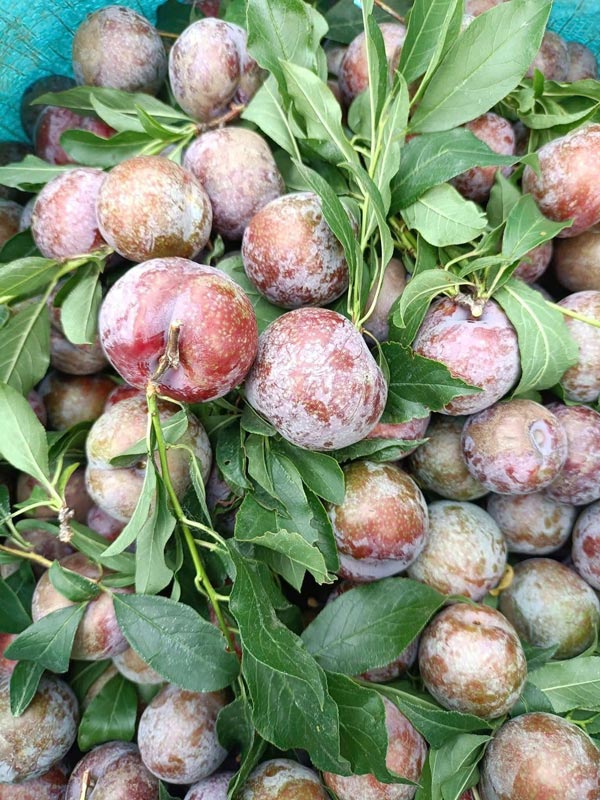
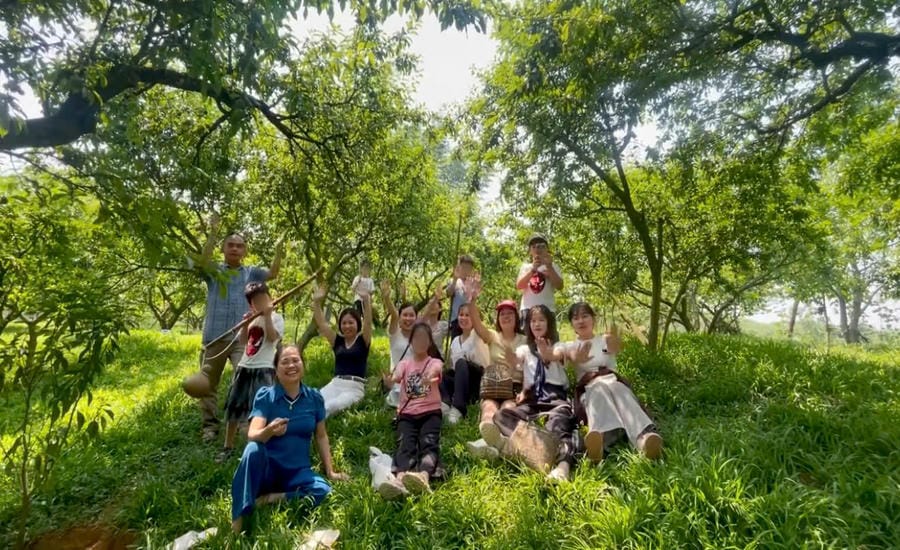
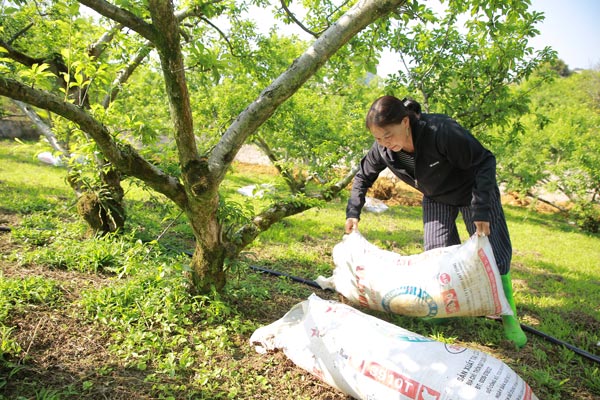
In the clear weather of the highlands, strolling in a garden laden with fruit and enjoying the sweet and sour taste of the early season is what makes many tourists want to return. The plum season in Moc Chau is therefore no longer confined to a few short months. With the diligent hands and innovative thinking of farmers, that sweet season is being extended every year.


