
However, a new wave from young people of the 9X generation such as artist Nguyen Xuan Lam or artist Trinh Thu Trang is breathing a strong breath of life into it. With digital technology, they not only restore ancient strokes but also bring Vietnamese heritage to "travel" into modern life and reach international level.
Redrawing" the heritage
Artist Nguyen Xuan Lam - a prominent face in innovating folk paintings shared that he grew up like a typical urban 9X generation, strongly influenced by globalization with MTV or Disney Channel. It was not until 2016, while struggling to find a graduation idea at the Museum of Fine Arts, that the moment he saw the painting "Five Tigers" completely changed his worldview.
Xuan Lam recalled: "At that time, I had a very different feeling, as if I was seeing it for the first time but also very familiar. That moment made me realize that this could be the starting point for my direction.
However, the path to "redraw" heritage is not smooth at all. He once faced skepticism from the academic environment itself when friends wondered why he did not pursue formal materials such as oil paint or lacquer after 5 years of studying. Even his use of modern color palettes such as vibrant orange has been criticized by some researchers as being too flashy compared to traditional simplicity.
Sharing that beat, artist Trinh Thu Trang began her journey again from concerns about applicability. She realized that folk paintings in the past were mainly handmade, in small quantities and often only used for worship or Tet hanging. Meanwhile, modern design requires the accuracy of machinery and industrial printing capabilities.
Artist Thu Trang shared: "Now I see that this painting genre has a lot of potential for application to modern designs, so I am forced to digitize it, I cannot do it all manually.
Thu Trang's biggest difficulty is not only technique but also deep understanding of culture. She believes that it's not just taking photos and then using a camera to display them. For her, each motif is a story. "When displaying anything, you must understand its meaning. The application of folk paintings needs to be very careful so as not to distort its position or cultural meaning" - artist Thu Trang said.
Those were days and months of meticulous research on each color tone, each curved line to preserve the spirit of Hang Trong paintings amidst dry graphical software.
Transformation and international reach of heritage
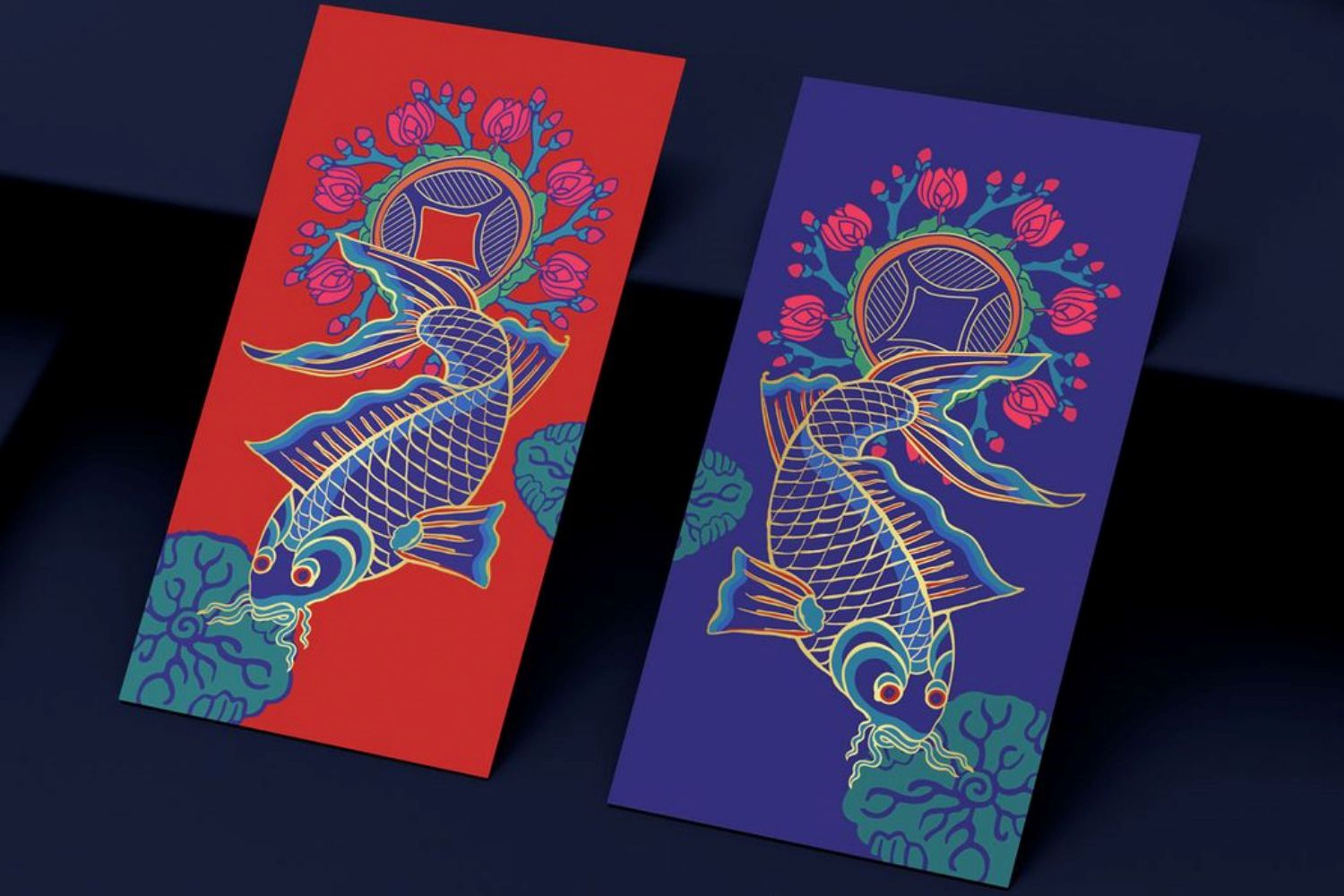
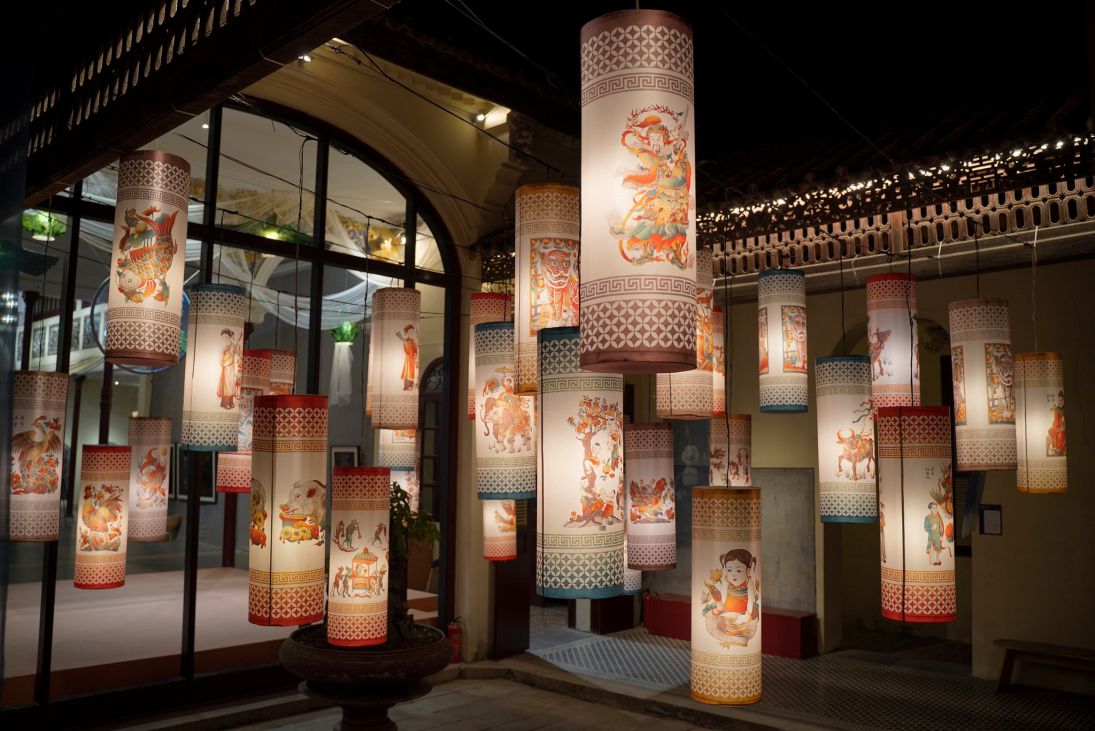
Digitization does not lose the "soul" of folk painting, but on the contrary, it creates a new language so that heritage can talk to young people. Artist Nguyen Xuan Lam has developed his own technique, combining hand-drawing with pencil to maintain softness, then scanning and processing colors on a computer. He replaces the single color patches in the original painting with vivid color transitions, reflecting the breath of the technology era.
This approach has turned centuries-old ancient paintings into trendy products such as canvas bags, calendars or content spread on social networks. The surprising result is that after 10 years, Lam realizes that young people approach folk paintings no longer as something belonging to a distant past but as an image system that can be interpreted in many new ways.
For Trinh Thu Trang, digitalization is the key to bringing Hang Trong paintings into craft villages and major brands. She has succeeded in bringing folk motifs to Nha Xa village silk scarves, Bat Trang pottery and even wine or natural cosmetics brands. These products, when brought to the US, Australia or Japan, have received positive feedback from international customers. She excitedly confided: "They find our traditional motifs very strange and beautiful, so they really want to learn about them.
Facing the explosion of technology, both artists affirmed that tools are just means, and the soul of the artist is the deciding factor. Trinh Thu Trang always encourages young people to get inspiration from heritage to create because traditional values are like a precious material, a foundation of heritage for young people to rely on to create more.
And Nguyen Xuan Lam sent a deeper message about restoration: "The important thing is not to restore it to look really similar, but to understand clearly what we are doing with those materials. If we just repeat it, it is very easy to stop at the form.
He believes that when young people find personal connections with tradition, technology will become wings to take culture further.
The problem of heritage preservation in the 4.0 era has found a solution from young people who dare to think and dare to do. Thanks to digitization, folk paintings are no longer lying idle in museums but have gone down the streets, going into each bag, scarf and following international friends across five continents. That is the most sustainable way for Vietnamese heritage not to be forgotten but to take off with the times.


