
A great scholar of the nation
Nguyen Tu Chi (1925 - 1995), full name Nguyen Duc Tu Chi, pen name Tran Tu, was one of the leading ethnologists of Vietnam in the second half of the 20th century. Born in Dong Hoi (Quang Binh), from the famous Confucian family in Ich Hau, Can Loc (Ha Tinh), he grew up and grew up in Hue.
Nguyen Tu Chi's life path and scientific path are associated with major changes in the country's history. In 1945, when he just passed the full baccalaureate exam of the Department of Philosophy and Literature at Pellerin School (Hue), the August Revolution broke out, he chose to follow the Viet Minh, participate in the resistance war and work in Inter-zone 5. After many years of practical activities, in 1957 he studied at Hanoi General University.
In the period 1961 - 1963, Nguyen Tu Chi went to Guinea to work as an education expert, and at the same time conducted field research, African ethnology research and built a project on the Gao Empire in West Africa. Although his thesis was not fully defended, his structural thinking and scientific field methods became the foundation throughout his research career.
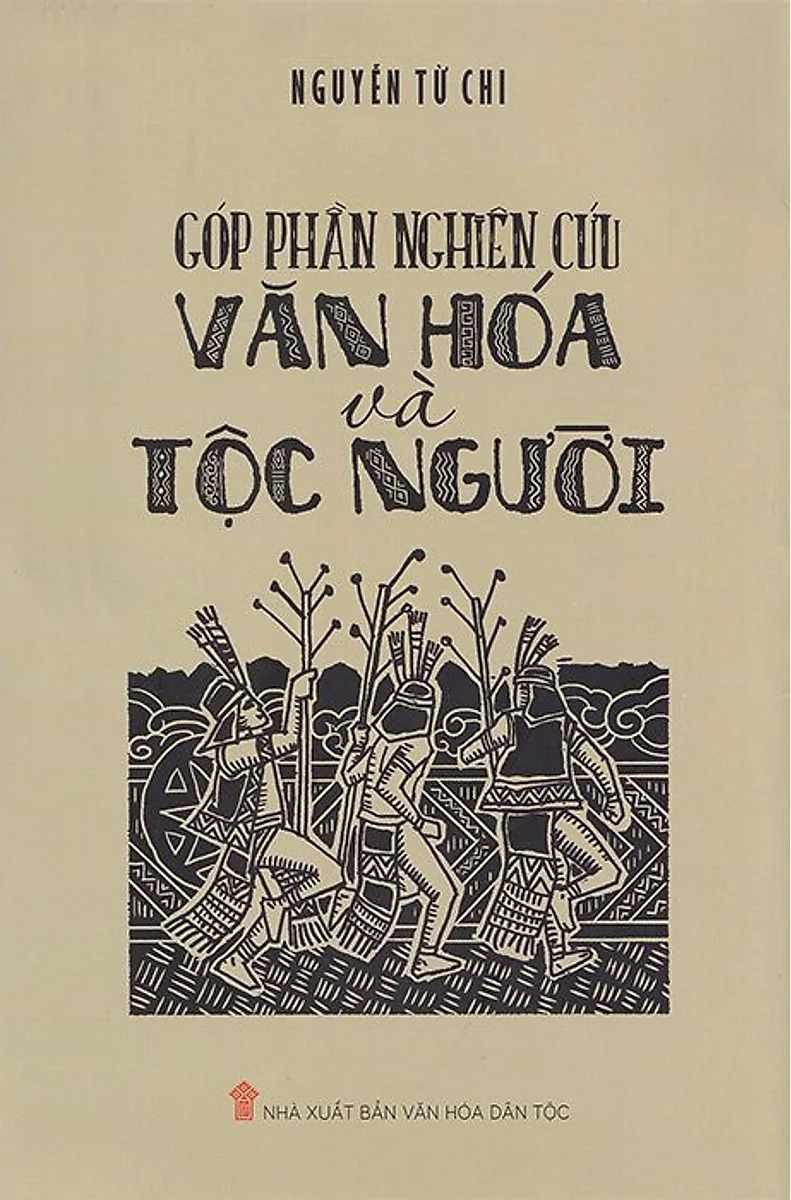
Returning to Vietnam, Nguyen Tu Chi devoted all his energy to researching the traditional society of Vietnamese people and Muong people. The structure of traditional Vietnamese villages in the North is considered a classic work, with a breakthrough discovery about Giap - the fundamental self-management unit in the community organization of villages and communes. In Muong people research, works such as "Muong skirt patterns", "The realm of life and the realm of death in the traditional concepts of the Muong people" or "Around the forms of field exploitation" have clarified the continuity of culture, cosmology and socio-economic foundation of traditional Muong society.
Many works by Nguyen Tu Chi were published in France by the publisher L'Harmattan and still retain their academic value to this day.
At the scientific conference "Ethnologist Nguyen Tu Chi with the culture of Vietnamese ethnic groups" on December 28, Assoc. Prof. Dr. Bui Hoai Son - Standing Committee member of the National Assembly's Committee for Culture and Society - commented: "Mentioning Nguyen Tu Chi is mentioning a true cultural figure. His empathetic research helps us preserve cultural identity in a vivid way, without extremism, without "museuming" and without being separated from the community.
Not only is he a great scholar, Nguyen Tu Chi is also respected for his professional ethics and charitable personality, inspiring many young generations of researchers. Although he passed away in 1995, the academic legacy and "phenomenon Nguyen Tu Chi" still continue to suggest many valuable issues for contemporary Vietnamese social science.
The colleague, the simple, exemplary teacher
Besides the massive academic legacy, Nguyen Tu Chi was also a dedicated professional successor, contributing to the formation of a research trend called the "Tu Chi School of Ethnology".
Assessing him, French President Jacques Chirac, in his speech at the opening ceremony of the Vietnam Museum of Ethnology (1997), said that along with Nguyen Van Huyen, Nguyen Tu Chi is a great scholar, a role model. In terms of professional achievements, he was awarded the prestigious award, the Ho Chi Minh Prize by the President of the Socialist Republic of Vietnam.
Assoc. Prof. Dr. Tran Lam Bien had more than 13 years of attachment and closeness with researcher Nguyen Tu Chi. In his memory, Nguyen Tu Chi led himself to ancient cultural research naturally, without imposition. The conversations that lasted until late at night opened up to young researchers at that time vast horizons of knowledge, from Latin America, Africa to the Central Highlands...
According to Assoc. Prof. Dr. Tran Lam Bien, Nguyen Tu Chi has a deep understanding of Shamanism, from the remaining phenomena in Vietnam to the faded belief systems, leaving only traces in legend. What he learned from Nguyen Tu Chi is only a very small part compared to the depth of knowledge of his teacher, his brother.
Mr. Tu Chi once said, as a Vietnamese person, first of all, you must be for the Vietnamese nation. That means when you enter the national cultural identity, first of all, you must understand who Vietnamese people are. To know who you are, you must know who your parents and grandparents are, what the identity is. And you must find the true identity with both reason and soul, not the identity that is rumored on the tongue," said Assoc. Prof. Dr. Tran Lam Bien.
With Prof. Dr. Le Hong Ly - Chairman of the Vietnam Folklore Arts Association, in teaching and research, Nguyen Tu Chi is a character with a very unique style, very classic but with strong influence. Right from the 1960s, Nguyen Tu Chi practiced the core methods of modern Anthropology, which are today considered standards in training Anthropology at universities around the world.
Therefore, when reviewing documents and images about him, many people ask the question: How did he travel, how did he live, how did he live with the people that he could say so many things? The answer lies in the fact that he is truly immersed in the life of the research community," said Prof. Dr. Le Hong Ly.
Nguyen Tu Chi once said that his research is actually very difficult, but the way he talks about it is very innocent, simple, sincere and humble. He often says: "I don't do anything. I just follow the Muong people, live with them, ask them what they know." From those simple questions, he discovered many big issues of community culture, of social structure.
From small details in daily life, Nguyen Tu Chi recognized the core characteristics of community culture. When studying the Muong people, he found many similarities with Vietnamese villages and came up with the idea of returning to this topic. In the difficult conditions of the 1960s - 1970s, he chose to study from the closest things, such as a path of self-study and deepening knowledge.
It is thanks to this approach that Nguyen Tu Chi's works have become particularly attractive to later generations. His research is not only of academic value, but also suggests methods and inspires many subsequent research classes.
It's a bit of a bit of a bit of a bit of a bit of a bit.
It's a bit of a bit of a bit of a bit of a bit of a bit.
It's a bit of a bit of a bit of a bit of a bit of a bit.


