
Outstanding ethnologist
Nguyen Tu Chi (1925-1995) was a leading ethnologist of Vietnam in the second half of the 20th century. In the specific political and social context of that period, he emerged as a distinct phenomenon of Vietnamese social science. His main research direction focused on the structure of Vietnamese villages and Muong culture.
With works of high academic value, published in France by L'Harmattan Publishing House, Nguyen Tu Chi is still considered by researchers to be a leading expert in these two fields. Besides research activities, he also imparted vocational training to many young researchers, contributing to forming an academic trend called the "Tu Chi School of Ethnology".
Not only outstanding in academics, Nguyen Tu Chi is also respected for his professional ethics and charitable personality. He has a strong influence and inspiration for social science research, especially in the fields of ethnology and anthropology.
At the opening ceremony of the Vietnam Museum of Ethnology in 1997, French President Jacques Chirac once assessed Nguyen Tu Chi, along with Nguyen Van Huyen, as great scientists of Vietnam. For his outstanding contributions to science, he was posthumously awarded the Ho Chi Minh Prize.
Mr. Nguyen Tu Chi passed away in 1995, but the "Tu Chi phenomenon" still has many things to be further explained to this day. What factors have created his unique research path and what contributions that academic heritage has made to contemporary Vietnamese social science is still an open question for researchers.

At the scientific conference "Nguyen Tu Chi ethnologist with the culture of Vietnamese ethnic groups" to celebrate the 100th birthday and 30th death anniversary of Nguyen Tu Chi, Prof. Dr. Le Hong Ly - Chairman of the Vietnam Folk Arts Association - said that Mr. Nguyen Tu Chi is a greatly influential academic figure.
What we today call modern anthropology, in fact, many methods have been practiced by Tu Chi since the 1960s. Field research methods, approaches to community life, observations from the smallest details - all are still taught in universities around the world today," he said.
According to Prof. Dr. Le Hong Ly, Mr. Nguyen Tu Chi's research later became a valuable document for younger generations. Many researchers continued, inherited his method and developed it further. It can be said that he is one of the people who laid the foundation for modern anthropological research methods in Vietnam.
Simple people in everyday life
A very special thing is that despite having a high education, he always lived very simply. He was not greedy for formality, did not care about title or appearance. There are very ordinary stories about Mr. Nguyen Tu Chi that many people keep telling each other.
Prof. Dr. Le Hong Ly shared: "When introduced as a professor, he just smiled and said'professors are the same'. That innocence made many people initially think he didn't know anything, but when they heard him tell stories, everyone was attracted.
He can tell very real stories: from simple meals in the family, conversations with his wife, to small things in daily life. But from those stories, he draws profound observations about society, about people.
His research method is therefore very special. He passed it on to many later generations, including famous researchers. Later generations understand that the value he left behind lies not only in the work, but also in the personality.
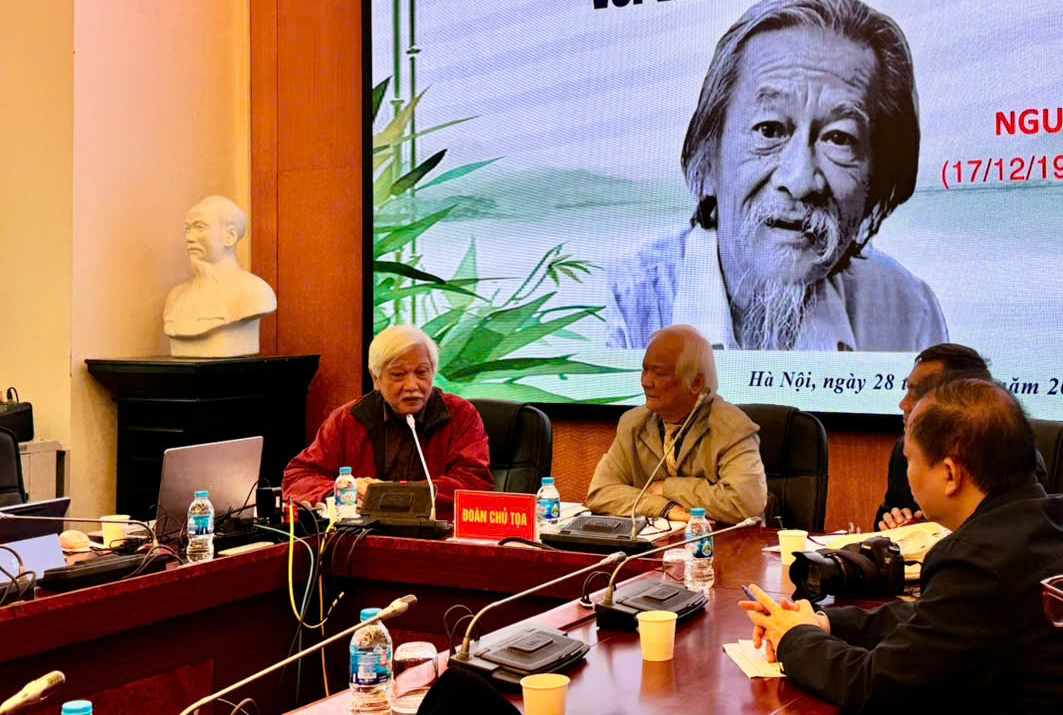
Historian Duong Trung Quoc commented: "He lived simply, quietly, without revealing himself. It is this humility that makes his personality even more radiant. Unfortunately, many times, it is not until you look back that people realize all the value of that person".
According to the historian, what makes people especially respect Nguyen Tu Chi is not only his talent, education or fame, but also his freedom of thought, a surprising and respectable attitude of independent living.
The conference was attended by colleagues, students and people who are attached to and particularly interested in the career of ethnologist Nguyen Tu Chi. The sharing of scientists, colleagues and students not only contributed to more clearly outlining the portrait of a great scholar, but also suggested many reflections on the path of serious, independent and responsible science.


