
Dawn in the middle of the river market
I have been to rural markets nestled under the shade of banyan trees at the beginning of villages, highland markets gathering in sessions, or crowded city markets from early morning to late at night.
However, the first time I set foot in Cai Rang floating market, I learned that there is a market where people do not step on the ground, do not need fixed stalls, and there is no noise echoing everywhere. All trading activities take place on boats and canoes drifting in the river.
From many river branches, large and small boats connect in one direction. Some are full of pineapples, mangoes, watermelons; some are crammed with vegetables just harvested from the orchard. The sound of boat engines mixed with the sound of water beating and calling each other creates a very unique harmony of the river region.
What interests me most is the beo trees - the way people in the Mekong Delta introduce their goods. On each boat, a tall pole is erected, hanging a few types of agricultural products being sold. No sign, no advertising, just looking up at the beo tree, customers know what that boat sells. In the vast river water, bunches of green bananas or clusters of bright red rambutans swaying in the early morning wind.
A boat full of fruit slowly approached our boat. Ms. Dang Thi Chang (52 years old) stood on the boat, quickly peeled a mangosteen and invited tourists to taste it. Her generous smile made the distance between the seller and the buyer seem to disappear. In just a few minutes, a few coconuts and bags of mangosteen were transferred from one boat to another.
Not far away, a small boat selling coffee and soft drinks weaves through the boats. The woman sitting at the bow of the boat both maintains balance and quickly prepares each cup of iced coffee for customers. On that boat just over 1 meter wide, everything is arranged strangely neatly: water bottles, a few cans of condensed milk, coffee boxes and neatly stacked plastic cups. As soon as the customer signals, the boat will approach the side of the boat to deliver goods and then quickly row away.
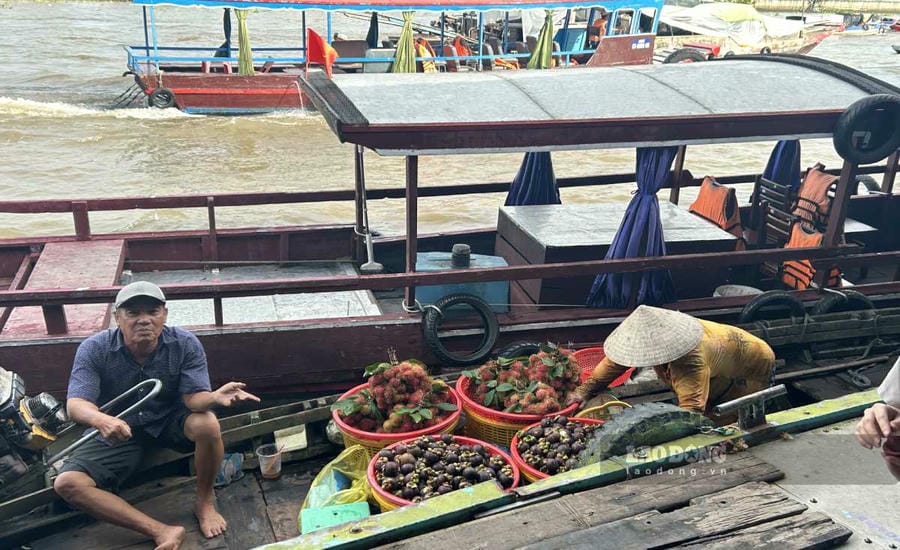
Life under the canoe
Mr. Dinh Van Hung - the boat driver told us that Cai Rang floating market has existed since waterway transport was still the artery of the Mekong Delta. At that time, boats from all over brought agricultural products here for trading and exchange, and gradually formed the most famous river market in the delta region. Although today trade has changed a lot, every morning, the floating market still wakes up with people who have dedicated their whole lives to the water.
The sun gradually rises. Boats carrying fruit line up to anchor in the middle of the river, while small boats continuously weave to sell breakfast, coffee or transport tourists. In that scene, I met Mrs. Bay (real name Nguyen Thi Be), a woman who has been attached to this river for more than 4 decades.
Mrs. Bay's boat is not large, a few life jackets are neatly hanging at the bow of the boat. At the age of 67, her figure is much smaller than I imagined of a person making a living on the river. Only her hands are still strong. Every time she holds a paddle or pulls the boat close to the side of the boat, calling out to guests when they are preparing to board the boat to move to another tourist destination: "Be careful, son!".
More than 40 years of rowing boats, every dawn of the floating market begins to be the same: Waking up when it is still dark, preparing boats, and then welcoming the first visitors. Only the scenery in front of her is changing year by year. "In the past, boats and canoes were very crowded! When it was fruit season, the whole river section was packed with boats. If you wanted to row across, you had to wait. Now it's different, roads are more convenient, many people are going ashore to trade" - Mrs. Bay said and looked towards the boats that are gradually sparsening on the water.
When floating markets face the worry of fading
In another corner of the market, a small boat selling noodle soup still slowly rows from boat to boat. The woman sitting behind the wheel said that she has been making a living on the floating market for more than 30 years. In the past, her customers were mainly traders who stayed up from early morning to buy and sell agricultural products. Now, the buyers are tourists.
That change forced those making a living on the river to also change accordingly. Some people switched from selling agricultural products to selling breakfast and soft drinks. Some people renovated boats to transport tourists. Life continued, but the pace of business was no longer the same as before. Even so, they still chose to stay, simply considering the river as a place attached to their whole lives. Leaving the water also means having to leave the job that has supported their families for decades.
Looking at the women with tanned hair still quickly rowing boats, passing each bag of fruit or carefully bringing cups of coffee and bowls of noodles to the boat next door, behind the peaceful appearance of the floating market is a livelihood that has never been easy. Each trip, each coconut sold or each cup of hot coffee in the waves contributes to their family meals.
When the sun began to rise, boats began to take tourists back to the wharf, and cargo boats also became sparse. The river returned to its inherent peacefulness, with only a few small boats continuing to go back and forth between the waters.
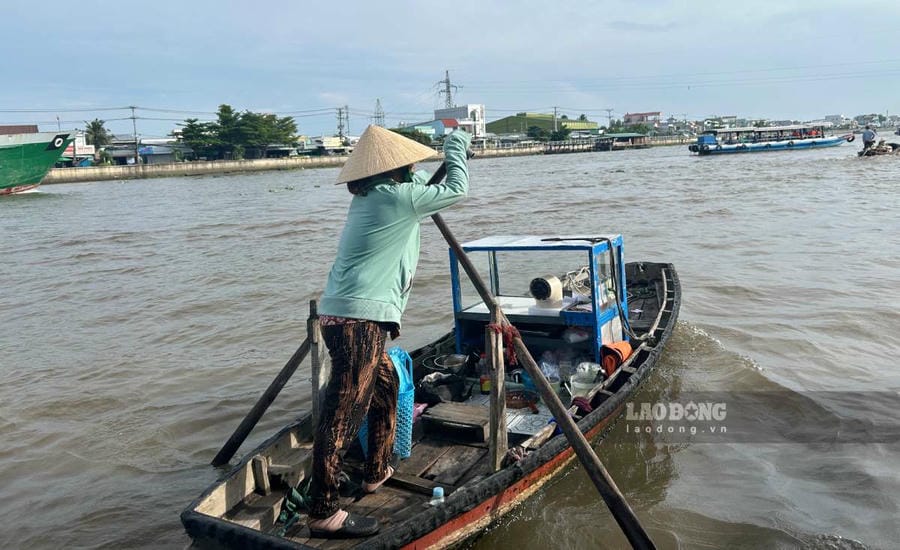
According to Southern Cultural Researcher - Nham Hung, the preservation of floating markets must be in line with the cultural reality of traders in the Southwest region such as trading methods, dressing style, and communication. To preserve floating markets, first of all, it is necessary to retain traders. At the same time, expand according to the orientation of tourism development, in which it is necessary to preserve the identity and original nature that creates the tradition of floating markets, and at the same time integrate to make floating markets develop sustainably, newly and attractively.


