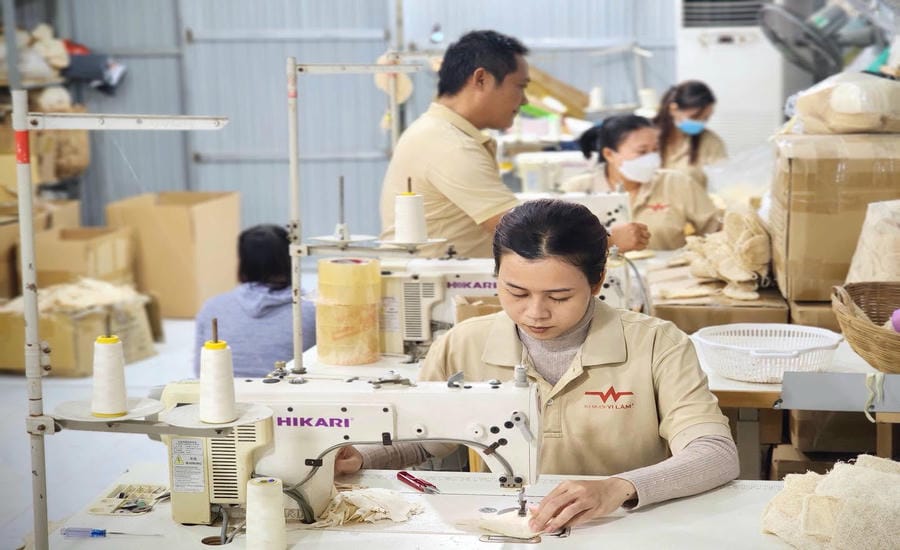
That is the story of Mac Nhu Nhan - CEO of Vi Lam luffa brand. He has persistently pursued the path of starting a business, not only to solve economic problems but also to carry the mission of protecting the environment and raising the core values of Vietnamese agricultural products.
Everything is difficult at the beginning
In the memories of many generations of Vietnamese people, the luffa trellis with brilliant yellow flowers in front of the house is a simple, familiar image. When the luffa fruits age, the fibrous flesh inside is often used as a pot broom, dishwasher or simply discarded. However, for Mac Nhu Nhan, it is a treasure waiting to be discovered.
Mr. Mac Nhu Nhan's biggest concern is not only to do business in a specific product but also to improve the value of Vietnamese agricultural products in the market. Realizing that luffa fiber is one of the raw materials with great potential, capable of creating many product lines to replace industrial goods, he decided to choose it as the first fulcrum. However, he also affirmed that the most important thing he aims for is the aspiration to elevate the value of all types of pure Vietnamese agricultural products and raw materials, not just confined to luffa fiber alone.
Choosing a path that no one has ever explored means facing countless thorns. Turning a rough, rough material into sophisticated and highly commercially valuable handicrafts is not an easy problem to solve. Recalling the early days of stumbling, CEO Mac Nhu Nhan admitted that everything must start from scratch and there is absolutely no precedent to refer to. The most difficult thing for a pioneer is the lack of everything: No guide, no available support tools, all processes are self-created and invented by him.
When searching for specialized machines or tools related to the production and processing of loofah, the results he received were almost zero. From the implementation plan to finding processing materials, all required constant thinking and creativity. At a time when the Internet was not yet widely popular as it is today, all techniques and processes were summarized by that man from his own meticulous observation and hard-working hands.
Not only stopping at solving the production problem, Vi Lam also focuses on creating community value through close cooperation with farmers. The company's purchasing model is designed to be extremely flexible and humane. Vi Lam proceeds to purchase from farmers according to the principle: If farmers have raw materials, the company will buy, even if it does not guarantee absolute consumption. Farmers just plant gourds to serve their daily food needs, if the fiber gourds no longer meet the economic needs from selling food, they can completely resell that fiber to Vi Lam to increase income.
In addition to supply from individual households, he also proactively collects raw materials from existing farms that are linked, even though he does not need official contracts, and at the same time develops his own raw material area to ensure stability for the production process.
Green Startup and the mission to heal the environment
In the context of the world struggling to fight against plastic waste, Mac Nhu Nhan's model emerged as a bright spot of the green startup trend. Right from the early days of laying the foundation, environmental friendliness and the goal of reducing waste have been identified as the core criteria, throughout all business activities.
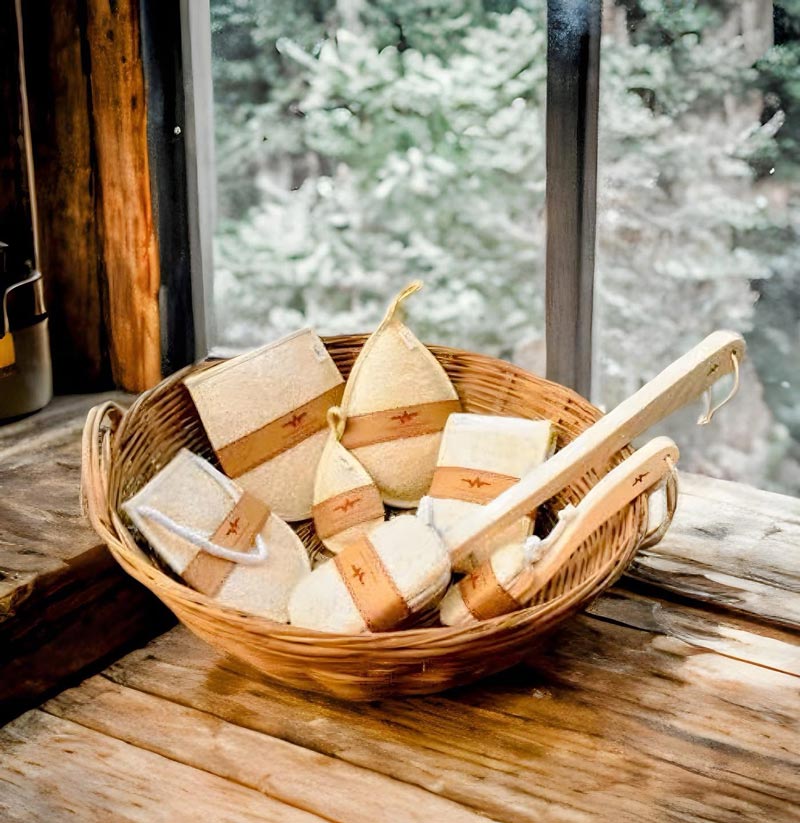
Mac Nhu Nhan's strategy is very clear: To turn something considered a waste into a high-value product, it is mandatory to make items that require extremely strict aesthetics. Therefore, the first products under the Vi Lam brand are often fashion accessories or sophisticated souvenirs, thereby helping consumers reshape their perspective and see the true value of loofah. After creating a reputation in terms of aesthetics, in order for the product to develop more widely and sustainably, they must become popular household items, creeping into the lives of each individual and each family.
Currently, Mr. Mac Nhu Nhan has successfully developed a series of practical products such as kitchen utensils with dishwashing pads; bathroom utensils such as shower wipes to household items such as indoor sandals, pot holders, or even pet cushions. Ecological products associated with daily life are gradually effectively replacing environmentally unfriendly industrial materials.
Faced with the fierce competition of cheap industrial goods flooding the market, Mr. Nhan chose a slow but steady path for himself. He revealed that initially he did not have any special business secrets other than the power of word of mouth. His philosophy is very simple: When he makes a good enough product, users directly feel satisfied, they will automatically share and spread that value to the community. In the early stages, to reach customers, he actively participated in fairs, traditional markets and a series of events promoting green living projects nationwide. The purpose is not only to sell goods but also to spread the story about loofah raw material products, thereby attracting community attention to environmental protection issues.
In parallel with that, the brand also shows deep social responsibility when regularly supporting universities, wholeheartedly guiding students to write graduation theses, and organizing many interesting workshops for students and customers to have the opportunity to directly experience the product making process.
Looking to the future, Mac Nhu Nhan's aspirations do not stop at the S-shaped land. He has been and is actively expanding the production model, with a special orientation aimed at export activities. It is encouraging that the international market in strict areas such as Asia, Europe and America is paying great attention to the company's environmentally friendly product lines.
CEO Mac Nhu Nhan sends a weighty message, which is also what he is most passionate about for young people who are nurturing the dream of starting a business from their homeland's resources: "Find every way to improve the value of Vietnamese agricultural products and resources, not find every way to reduce value by competing at cheap prices". That is not only advice on a sustainable business strategy, but also a call for national pride, arousing pride and awareness of protecting natural heritage in the journey of integration and development.