Opening up new space
At the conference to review the work in the first 6 months of the year and deploy tasks for the last 6 months of 2026 recently organized by the Ministry of Culture, Sports and Tourism, Director of the Vietnam Fine Arts Museum - Nguyen Anh Minh informed: "In 2017, the Vietnam Fine Arts Museum began to deploy the development of the iMuseum VFA multimedia presentation application. The most important thing that the product brings is to remove language barriers, helping domestic and international visitors proactively access information about the work anytime, anywhere. The visiting experience becomes more convenient, lively and attractive to many different audience groups. To date, about 8-10% of the total number of visitors use iMuseum VFA, many times higher than the number of visitors using direct presentation services. The product exploitation cooperation model also creates additional revenue for the museum, contributing to maintaining and developing the system. In 2021, iMuseum VFA was awarded the Vietnam Digital Transformation Award, affirming the effectiveness of applying technology in museum operations.
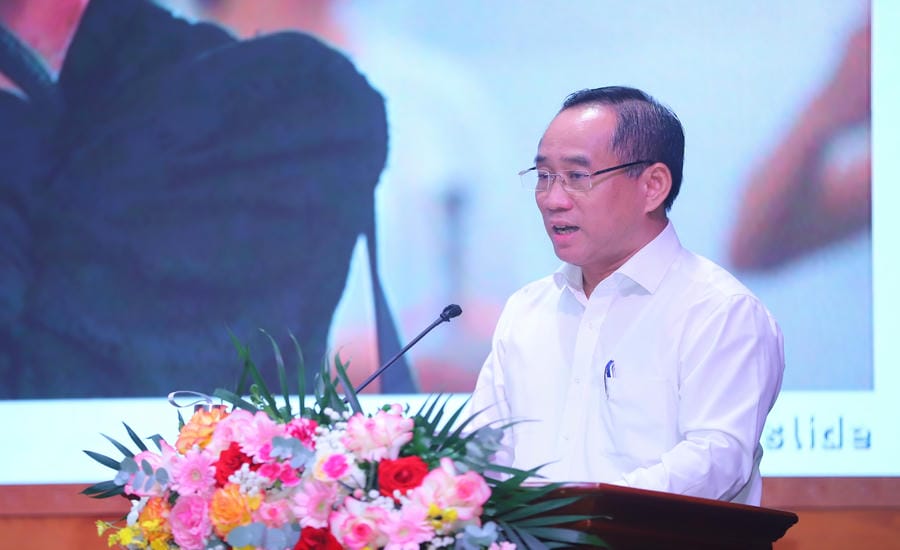
According to Mr. Minh, not only in the digital environment, technology is also directly introduced into the display space. The museum's point of view is that technology does not replace original artifacts but helps the public access and feel the value of artifacts in a more visual, vivid and attractive way.
In recent years, the museum has applied many solutions such as 3D Mapping, Cinemagraph, interactive screens, video clips and QR codes in regular exhibitions as well as thematic exhibitions. In particular, in the exhibition space of Folk and Applied Fine Arts after being revised, 3D Mapping technology has contributed to vividly recreating Dong Ho, Hang Trong folk paintings and national costume motifs, bringing a new approach to traditional fine arts values. In addition, the museum has also coordinated with AT Com Technology Company to organize "Ensuring Vietnamese Fine Arts Online" programs on a digital platform, attracting hundreds of thousands of participants. These solutions have contributed to creating a new experience for the public, especially attracting a large number of young people to visit and learn at the museum.
The combination of traditional exhibitions with digital technology has created new experiences, attracting more and more visitors, especially young people. Just searching for the keyword "Vietnam Museum of Fine Arts" on the Internet has yielded tens of millions of results, showing the increasing spread of museums in the digital environment.
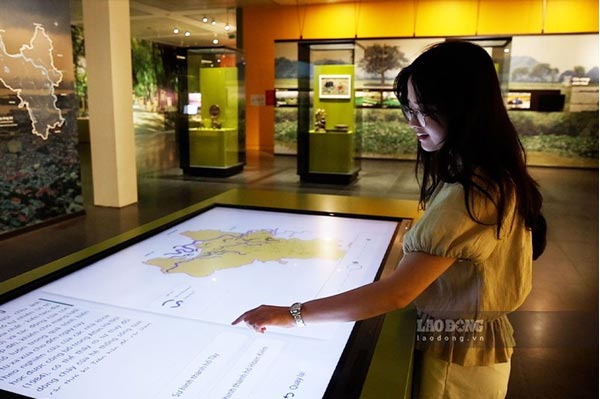
Also one of the museums that boldly expands its space in the digital environment, the Hanoi Museum is bringing a new experience, helping the historical culture of the Capital become closer.
No longer just a place to display artifacts, the Hanoi Museum is gradually becoming a modern experience space, where technology is applied to bring the history and culture of Thang Long - Hanoi closer to the public, especially young people and families.
Talking to Lao Dong Newspaper, Nguyen Thi Thu Hien, a student at the Diplomatic Academy of Vietnam, said that applying technology to exhibition activities is a suitable direction in the current context.
In the digital age, most people have smartphones and have a need to access information quickly and visually. Instead of worrying about technology making people dependent on devices, taking advantage of technology to enhance the experience for tourists is very necessary. This is a way to help museums become closer to young people," said Hien.
Spreading and protecting Vietnamese cultural values
Although there have been major changes, the issue of digital transformation in the museum sector in particular and the cultural sector in general has not yet met the requirements.
At the second meeting of the Central Steering Committee for Cultural Development of Vietnam to assess the implementation situation
Resolution No. 80-NQ/TW dated January 7, 2026 of the Politburo on developing Vietnamese culture and deploying tasks in the coming time took place on July 13, General Secretary and President To Lam said: "The attractiveness and spreading capacity of positive cultural values in the digital environment has not kept up with the development speed of digital platforms and content".
General Secretary and President To Lam requested: "The Party Committee of the Government determines that building cultural sovereignty in the digital space is an extremely important content in building an advanced Vietnamese culture imbued with national identity. Digital space is not only a place to bring cultural values to a new environment, but must become a space for Vietnamese culture to be present, recognized, loved, spread and have the ability to participate in orienting social values.
This is also an issue that the system of museums in Vietnam needs to transform faster and stronger. Director of the Vietnam National Fine Arts Museum - Nguyen Anh Minh said: To make digital transformation in the museum system continue to be effective, it is necessary to continue to improve mechanisms, policies and prioritize investment in digital transformation in the museum sector, especially building digital databases and technology infrastructure. At the same time, research and develop a set of common data standards for the Vietnam Museum system, creating conditions for connecting, sharing and exploiting data between units.
It is necessary to strengthen human resource training in digital technology, data management and digital communication, and encourage cooperation with technology businesses to develop new products" - Mr. Minh emphasized.
The application of technology and digital transformation is opening up new opportunities for museum activities, but to keep up with the pace of digital transformation, the museum industry needs to fill the gaps to join other fields in making culture truly become a spiritual foundation, an endogenous resource and an important driving force for national development in the new era.