From idea to practice
The Ministry of Culture, Sports and Tourism is finalizing the draft Law on Cultural Industry Development to submit to the National Assembly at the 2nd Session (October 2026). One of the notable contents of the draft is the Program to Promote the Consumption of Cultural Products through the National Cultural Card.
According to the draft, the National Cultural Card is a tool to confirm the right to enjoy support, incentives and participate in programs to promote the consumption of cultural products. Card support is only used to purchase and use Vietnamese cultural products and services at card acceptance units and cannot be converted into cash.
The model of supporting cultural consumption through cards has been implemented by some countries. In France, Culture Pass currently supports 150 euros (previously 300 euros) for 18-year-olds to buy books, movie tickets or visit museums...; Singapore is implementing SG Culture Pass with a support level of 100 Singapore dollars; South Korea also issues cultural experience cards for teenagers.
Talking to Lao Dong Newspaper, People's Artist Vuong Duy Bien - Chairman of the Vietnam Cultural Industry Development Association said that the goal of the proposal is to create conditions for people to access cultural products and services. However, for policies to go into life, many contents still need to be carefully studied.
According to Mr. Bien, the first thing to clarify is the scope of the National Cultural Card. Culture is a very broad field, including cinema, theater, libraries, museums, performing arts and cultural tourism. Therefore, if only using a common type of card, it is necessary to clearly identify the issuing agency, management mechanism and intercommunication between fields.
Cinema will be different from libraries, museums or theaters. If it covers everything, which agency will issue, manage and statistics? Is it necessary to call it the National Cultural Card, because the word "national" sounds very comprehensive," People's Artist Vuong Duy Bien raised the issue.
The Chairman of the Vietnam Association for Cultural Industry Development believes that the identification of beneficiaries also needs to be carefully considered. All ages want to access culture, but the needs and forms of enjoyment are very different.
People's Artist Vuong Duy Bien gave an example, if referring to the French model for 18-year-olds, it is necessary to answer the question of how children or teenagers under that age will access policies?
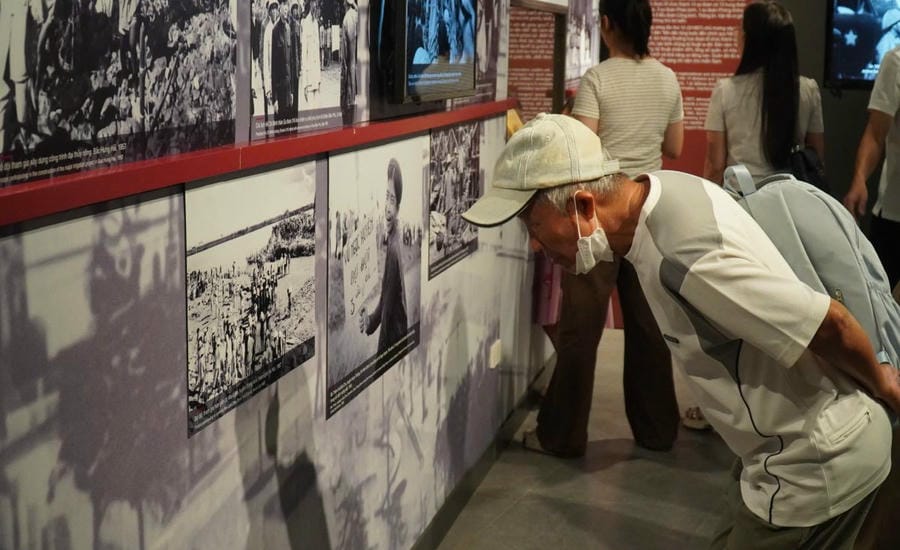
Children also want to watch puppetry, watch movies, visit museums. The elderly also have a need to enjoy culture. So who is granted a card, what age is granted, what are the incentives? These are all issues that need to be clarified," he said.
According to Mr. Bien, there is always a gap between ideas and practice. Therefore, before implementation, it is necessary to continue researching and verifying to ensure that policies are suitable for actual conditions.
Incentives are not necessarily through cards
According to People's Artist Vuong Duy Bien, if the policy's goal is to encourage people to access cultural products and services, it is not necessary to implement it through the National Cultural Card. Mr. Bien believes that the issuance of cards nationwide will entail many costs and procedures, from identifying beneficiaries, issuing to management and operation.
If implemented nationwide, it will be very costly. With more than 100 million people, issuing cards is not simple at all. To issue cards, there must be dossiers, conditions, and management procedures, and it cannot be done perfunctorily," he analyzed.
On the other hand, instead of issuing cards, Mr. Bien believes that the State can apply more flexible support policies for each group of subjects or each type of cultural activity. For example, preferential policies can be implemented through schools, agencies or organizing units, and direct discounts can be applied to some beneficiary groups.
For example, children under 16 years old are entitled to ticket discounts when watching performances, and the elderly are entitled to incentives when visiting museums or art performances. At that time, it is only necessary to verify with personal papers, and it is not necessary to check the card further," he proposed.
According to the Chairman of the Vietnam Cultural Industry Development Association, it is important to choose appropriate solutions for policies to be effective in practice, instead of just focusing on the form of implementation.
In my opinion, when building policies, it is necessary to be very cautious and scientific to avoid waste while the effectiveness is not practical," Mr. Bien said.
Mr. Bien also said that, according to the Party's policy, all people have the right to enjoy culture. Therefore, if the National Cultural Card is implemented, the identification of beneficiaries needs to be carefully studied to avoid unintentionally limiting the scope of policy access.