
Amidst the fierce competition of the domestic market with imported blockbusters, local cultural elements are the "anchor" to help Vietnamese films affirm their special position in the hearts of the public. With the "Red Land" project, the production crew embarked on a challenging journey to recreate the heroic flow of time, touching the soul of the past.
However, history when entering the sanctuary of commercial cinema faces the strict laws of the market. A theatrical film is strictly limited in duration (only about two hours), while the scale of the historical event is very large.
Regarding this issue, producer Hoang Quan acknowledged that the press is an indispensable link in the value chain of the cultural industry, playing a role in extending the breadth so that the values behind the film can continue to spread widely.
When cinema and media both aim to preserve and introduce the cultural and historical values of Vietnam, it will be an important symbiotic relationship of the cultural industry.
Any cultural industry that wants to develop sustainably must solve the problem of the future audience. For the Vietnamese film market today, the young audience generation (Gen Z and Alpha) is the consumer force that determines the revenue and vitality of the work.
Exploiting indigenous historical elements for this segment is a double challenge: How to both create a sense of closeness, in line with modern tastes, and preserve core values intact without falling into the beaten path and stereotypes.
From the perspective of the producer, Hoang Quan expects to transform the historical film genre from being "selfish" into a product with attraction in the market. According to the producer, the measure of true commercial success of a historical film is not only in the box office revenue figures, but also in the ability to activate pride and curiosity of viewers after leaving the cinema.
Producer Hoang Quan said: "I hope that the press and media will not only stop at evaluating a good or bad movie, but can also suggest cultural layers behind the work. If after watching "Red Land", the audience wants to learn more about the land, people or related historical stories, then that is already a great success. The press can play a bridge role to help arouse that curiosity, especially with young audiences".
To build a strong film and cultural industry, the production capacity of film studios and the appraisal capacity of the press criticism system must go hand in hand. When faced with works that are cultural experiments or historical reenactment, different perspectives between filmmakers and the media are inevitable. This friction does not restrain the market, but on the contrary, it is the driving force to raise the level of artistic thinking and production techniques.
Producer Hoang Quan frankly expressed that genuine filmmakers should not be afraid of thorny and sharp waves of criticism from public opinion and the press. According to him, the core thing is that those comments and assessments must be based on a constructive spirit, with serious research and understanding of historical materials. Multi-dimensional criticisms are the "filter" to help producers identify bottlenecks in the creative process, thereby further perfecting the management mechanism and thinking of making films imbued with national identity in the future.
A healthy criticism environment will help filmmakers see the points they have not done well, better understand how audiences receive works and continue to improve subsequent projects.
Historical cinema, when placed in the coordinate system of the cultural industry, is no longer the quiet nostalgia of the past, but becomes a source of dynamic creative assets, continuously generating profits in both economy and spiritual value. The breakthrough steps of a series of recent historical film projects have proven the great aspiration of filmmakers to reposition the national historical values on the domestic and international film map.
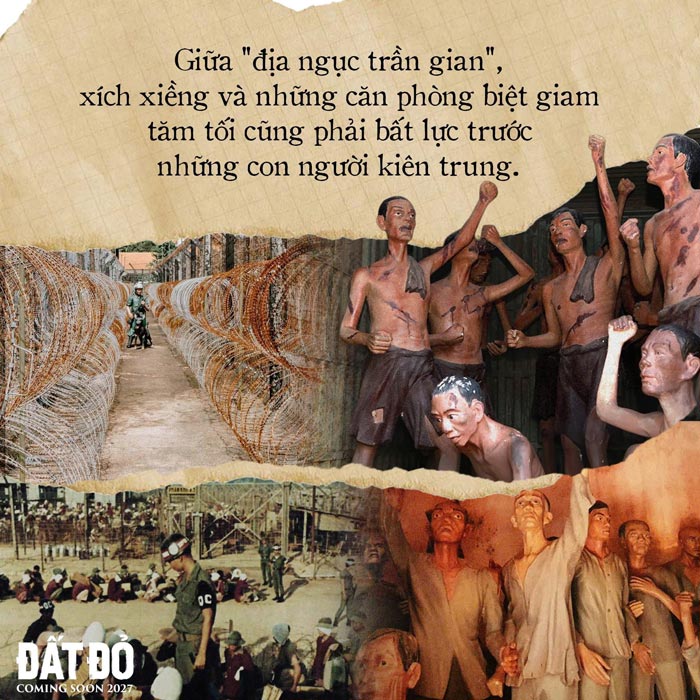
The trend of bringing historical and cultural stories of the nation to the big screen is opening a new chapter for the domestic film market. However, turning invaluable historical resources into highly competitive cultural products is not a simple problem.


