
On September 20, Tuy Phuoc Commune Trade Union (Gia Lai) said it had organized professional training on grassroots trade union work in 2026 for more than 80 commune and grassroots trade union officials.
The training class focuses on updating knowledge and professional skills for Trade Union officials, with 2 topics directly discussed and guided by reporters from the Provincial Labor Federation.
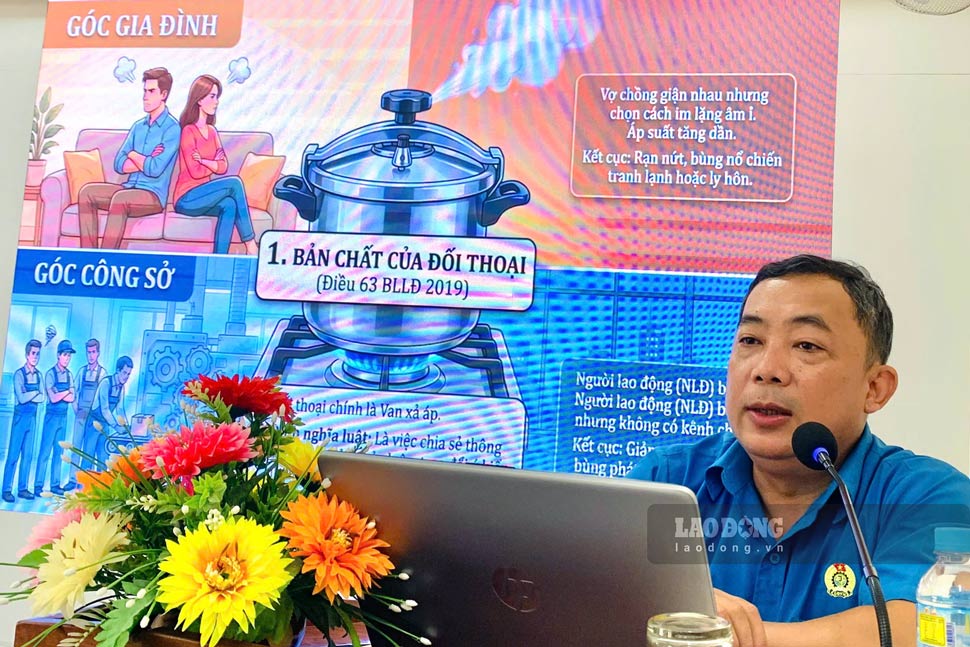
The topic "Trade Unions participate in building harmonious, stable, and progressive labor relations in enterprises" focuses on the role of Trade Unions in dialogue at the workplace; building and implementing collective labor agreements; organizing employee conferences and implementing grassroots democracy regulations.
Trade union officials were exchanged skills to grasp the thoughts and aspirations, receive and resolve workers' petitions; methods of coordination with employers in performing the function of representing, caring for, and protecting the legitimate and lawful rights and interests of union members and workers.
With the topic "Financial work of grassroots trade unions", delegates were guided on basic regulations and nghiệp vụ on financial management; estimation, revenue, expenditure, finalization; management of dossiers, documents, books. The content also focused on expenses for caring for union members and workers according to regulations, common mistakes and ways to overcome them.
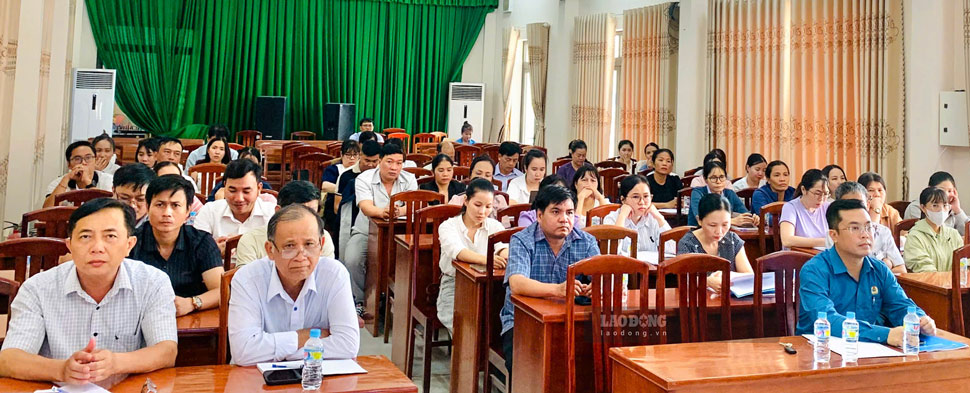
The training class combines knowledge transfer, discussion and handling of real-life situations, thereby helping grassroots Trade Union officials consolidate professional skills and improve skills in handling problems arising in labor relations and financial work.
Mr. Doan Thanh Binh - Chairman of Tuy Phuoc Commune Trade Union - said that this is the first professional training class since the Commune Trade Union was established and put into operation. In which, many grassroots Trade Union officials are new to work, so equipping them with practical knowledge and skills is necessary.
Mr. Doan Thanh Binh requested Trade Union officials to proactively exchange issues arising in practice, apply trained knowledge to operations at units, improve the quality of representation, care, and protection of the legitimate and lawful rights and interests of union members and workers.


