
From the điệp shells that were once considered waste products after each exploitation season, Mr. Dinh Cong Tuyen (born in 1980) has researched and created to turn them into unique điệp powder paintings, bearing the unique beauty of the heritage land.
The journey of more than 10 years of making flour paintings
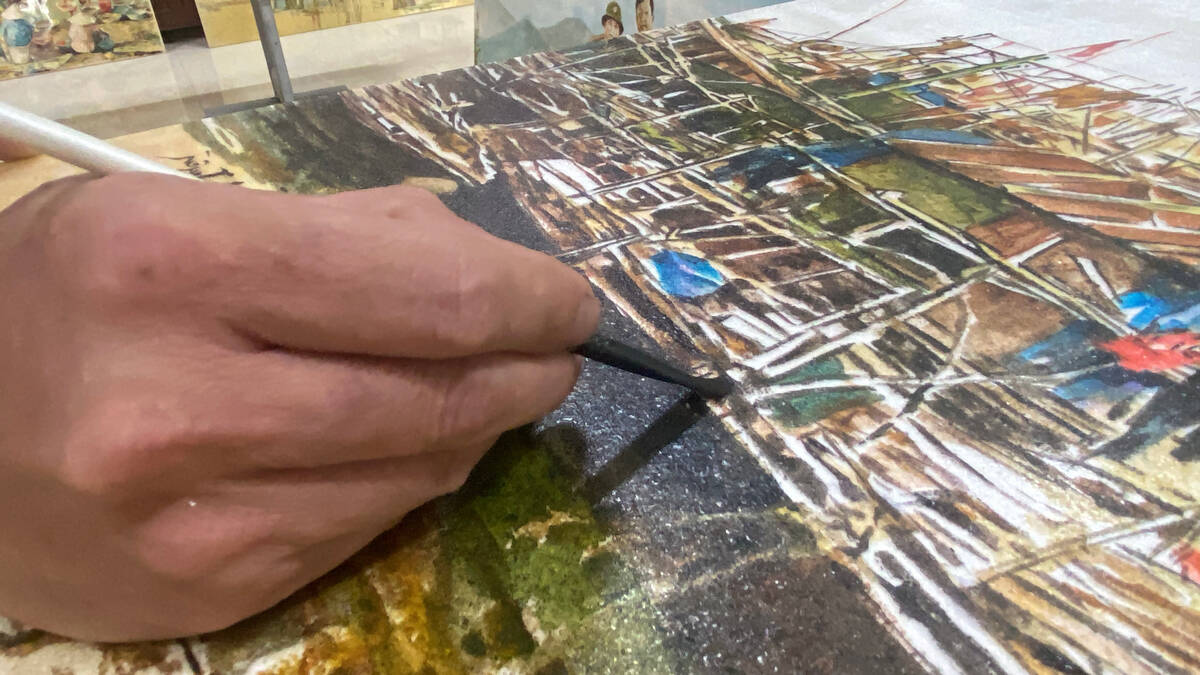
In his office in Hiep Hoa ward (Quang Ninh province), Mr. Tuyen is still diligently working on unfinished paintings. On the table are vases of colors and acacia powder sparkling with a mahogany color.
Mr. Tuyen is currently a fine arts teacher at a secondary school. The predestined relationship that brought him to diep flour paintings came when he learned about Dong Ho folk paintings. The success of Dong Ho folk paintings is the story of Vietnamese folk artisans creating diep paper. From diep flour mixed with glutinous rice flour, color and then brushed on do paper to create diep paper.
From then on, he thought of his hometown of Quang Yen, a place with a very rich source of điệp. Every year, people exploit thousands of tons of điệp to get the meat. After use, the shell is often dumped along the road, into ditches or used as filling material.
I think about making souvenirs from the abundant raw materials around me. If I succeed in making souvenirs from diep shells, I will create unique products with the unique features of my homeland," Mr. Tuyen shared.
Thinking is doing, from 2014, Mr. Tuyen began to explore and discover the most optimal stages to create a new art form. Pictures of Ha Long tourism made from flour gradually formed and officially "launched".
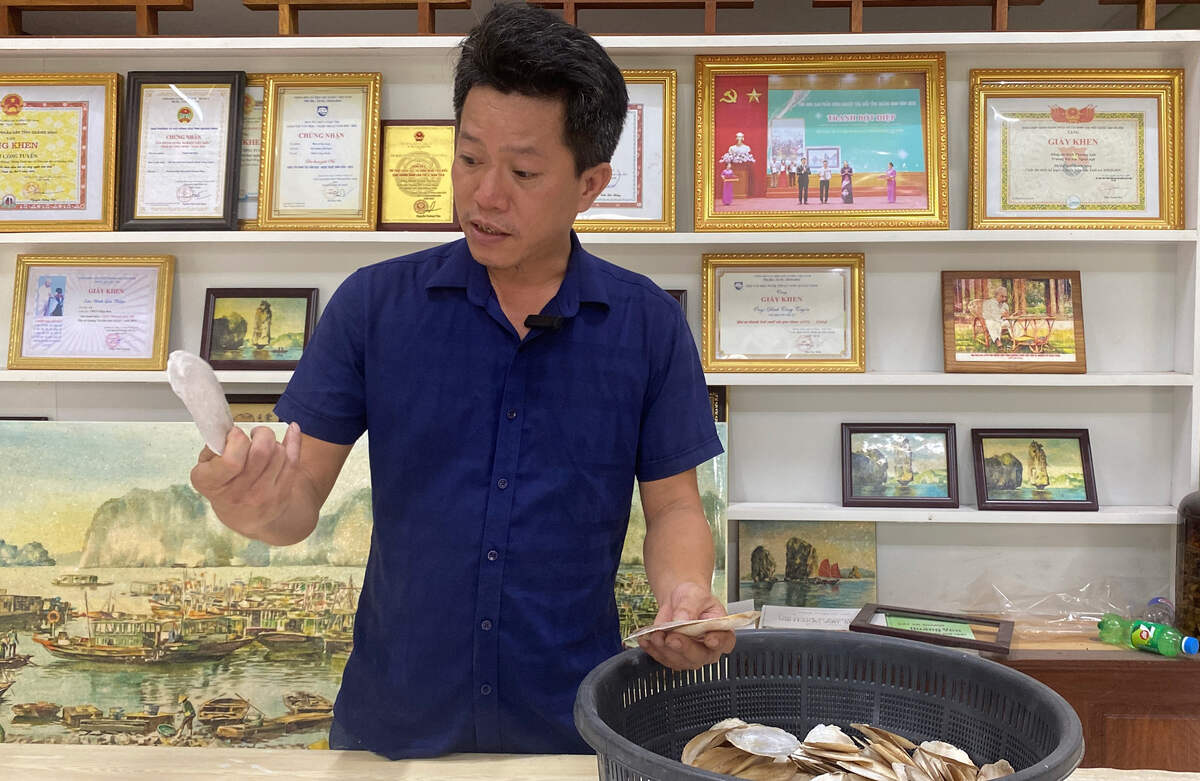
The first difficulty is processing raw materials. The shell is very hard, consisting of many layers of mother-of-pearl stacked together. To separate the mother-of-pearl layer, first of all, the shell must be burned at the appropriate temperature. He tried many ways such as using wood stoves, charcoal stoves... but all did not achieve the desired results. But that fine arts teacher did not give up.
After many experiments, he discovered that an infrared stove can solve this problem. At a temperature of about 800 degrees Celsius, just a few seconds of heating, the diep shell reaches the necessary ripening point.
When he solved the firing stage, he again struggled with grinding điệp shells, the goal was to separate the acacia layer.
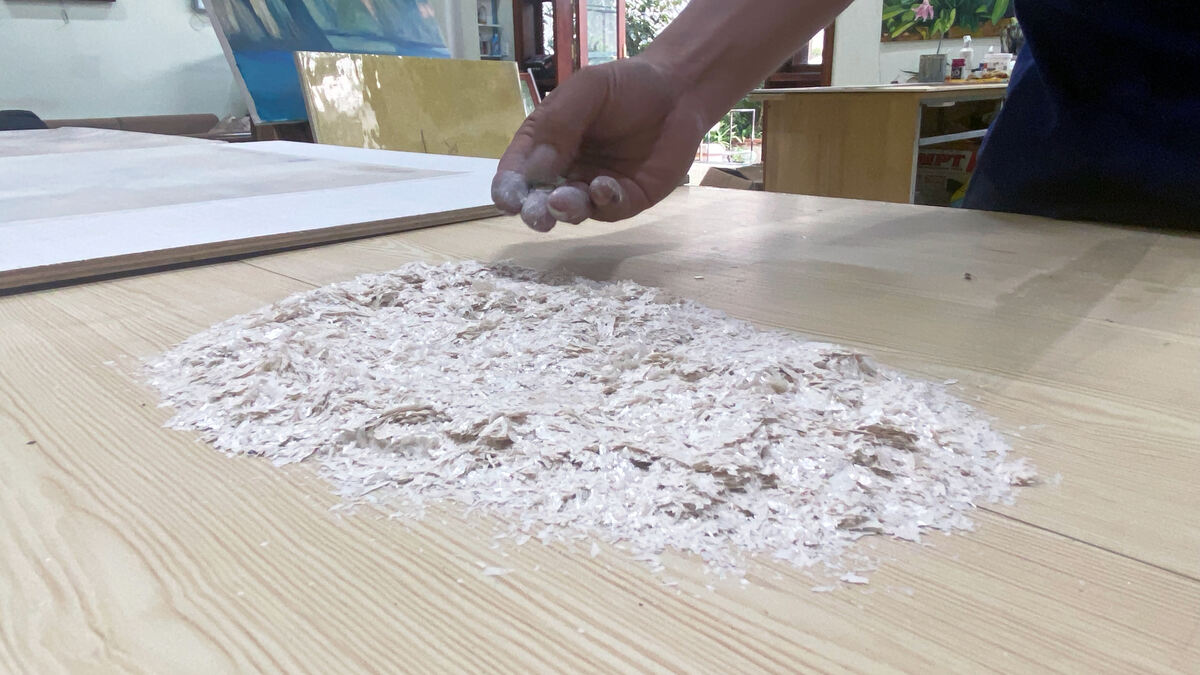
I also found many ways and accidentally encountered the opportunity to find a boat to blend Chinese herbs. When I put the điệp shell in it to blend, the results were better than expected. The entire layer of acacia was separated in a thin form, with just enough seeds according to the criteria," Mr. Tuyen recalled with a smile.
With materials in hand, the creative journey is not over yet.
In the early stages, Mr. Tuyen made it on a transparent background to faintly reflect the điệp and used the effect of paint, the coverage of điệp powder, creating paintings. About 20-30 paintings made in this way were born, but the colors were not diverse, making a product took a very long time. That teacher started to find ways to refresh it.
He discovered that diep powder cannot be dyed. If dyed, the acacia layer will lose its inherent sparkle.
What I need is the acacia light of the điệp shell to create điệp powder painting quality," Mr. Tuyen emphasized.
After that, Mr. Tuyen used a mica sheet, spread epoxy resin, and then spread fine plaster powder on it. When the resin dried, it created a thin film. After painting, he continued to spread a layer of epoxy resin to attach the rough powder grains... Thus, each most optimal stage has been found and used by him to this day.
After many experiments, I realized that the film layer is very important. Creating the film layer is the most important process when making plaster paintings," Mr. Tuyen said.
Thanks to this, the flour paintings gradually gained their own unique appearance.
Speaking about the special things in this painting genre, Mr. Tuyen said that the painting style is not like other painting genres. If you hold the entire painting, the painting layer is in the middle, not on the surface.
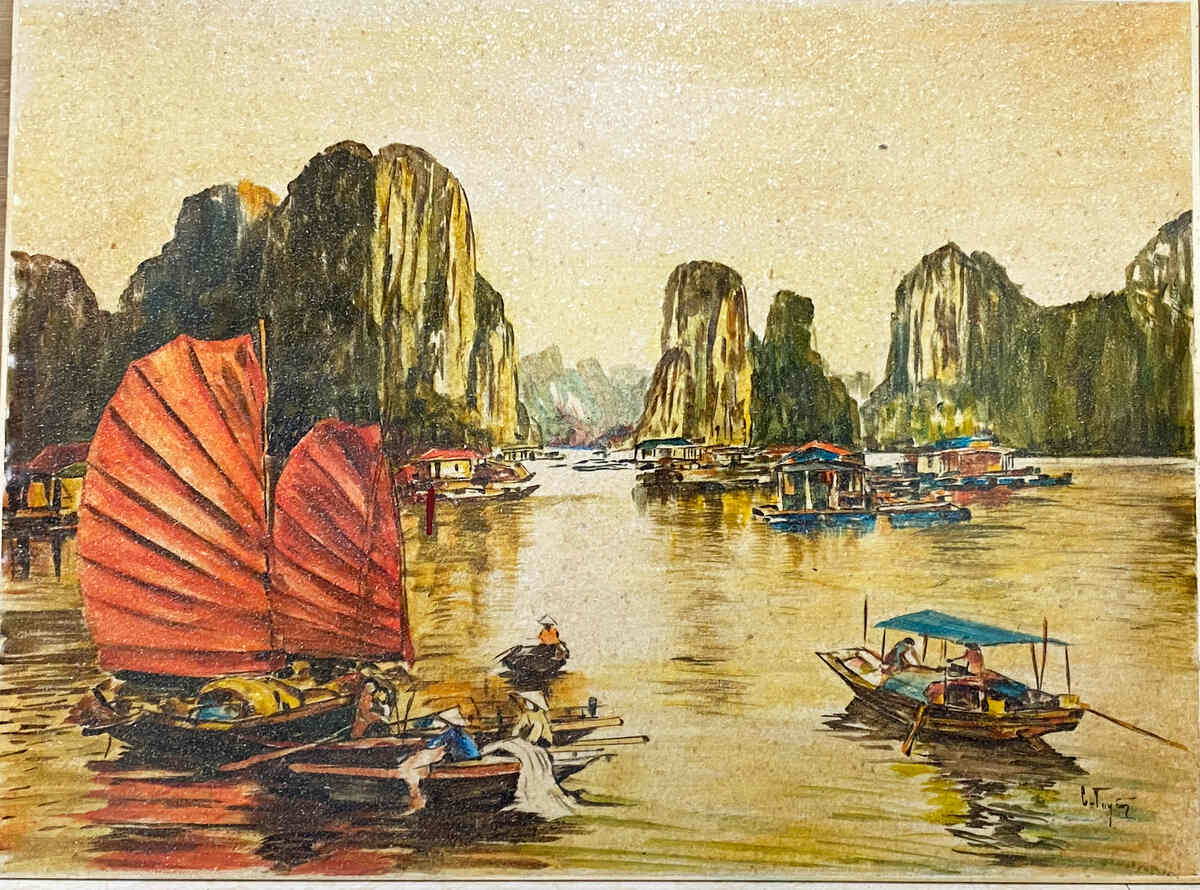
Pineapple paintings have a special beauty. When looking at paintings in the right direction of light, the acacia of the pineapple shell gives us a different and joyful feeling. The rocky mountains in Ha Long, fishing boats or the rippling water surface all become more vivid thanks to the acacia light effect.
The surface of the tranh điệp is very hard, completely resistant to conventional solvents or even gasoline, oil... Especially, with the weather of Vietnam, the tranh điệp is not deformed, so the durability is very high.
Sending the soul of the countryside into each work
Currently, flour paintings made by Mr. Tuyen have a variety of themes such as portraits, calligraphy or flowers and leaves... However, the themes he often makes are landscape paintings of his homeland, especially Quang Ninh homeland.
In his paintings, viewers can easily see rocky mountains in the sea and sky of Ha Long, bustling fishing ports or peaceful fishing villages in the rivers of the heritage region... These are not only beautiful images but also memories, love for the homeland sent through each brushstroke.
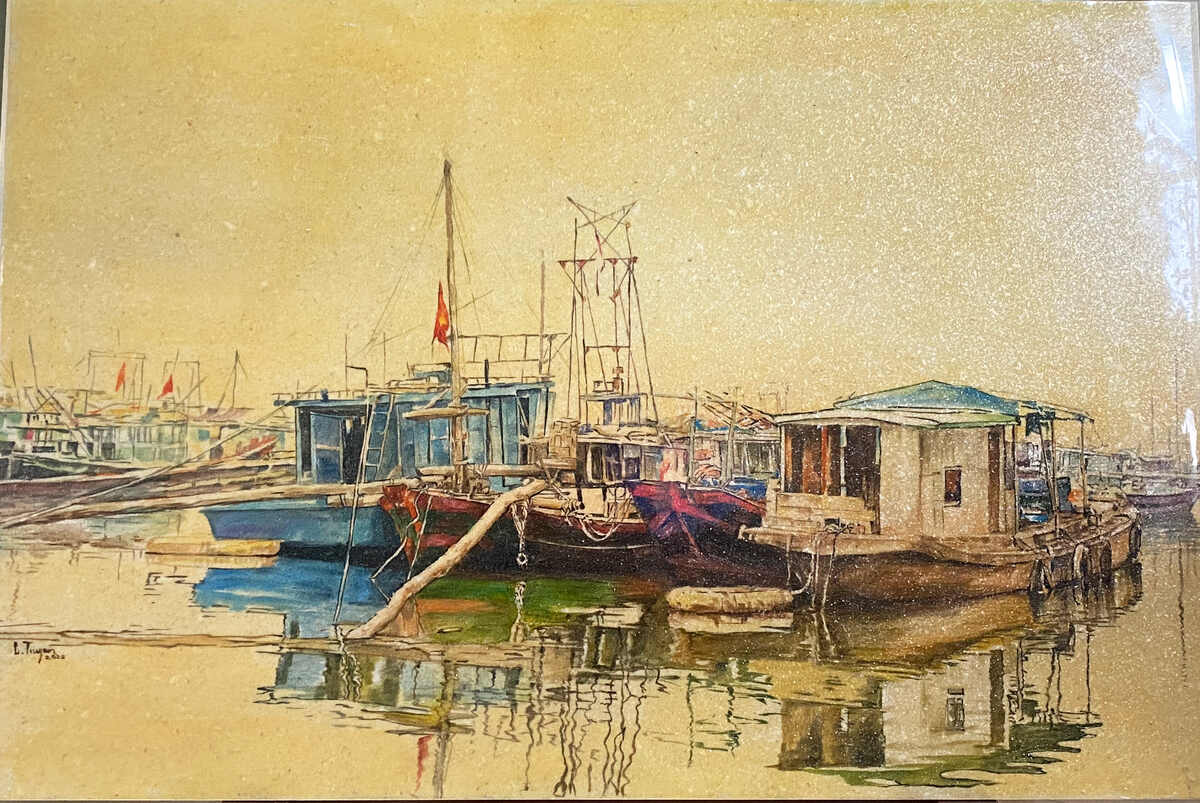
“For each small painting, I work for about 20-30 minutes. Therefore, with a order of about 300 small plaster paintings, I only work for about 1 week.
However, painting is not like other professions because it is an artistic story. There are large-sized paintings that I make every month to complete, but some are completed after 3-5 days of continuous work," Mr. Tuyen said and pointed to me his rural painting from 10 years ago or the 5th pole fishing wharf, evoking memories in the viewer.
After many years of completion, Mr. Tuyen's flour paintings have gradually become widely known. Many tourists are looking to buy them as souvenirs bearing the unique imprint of Quang Ninh.
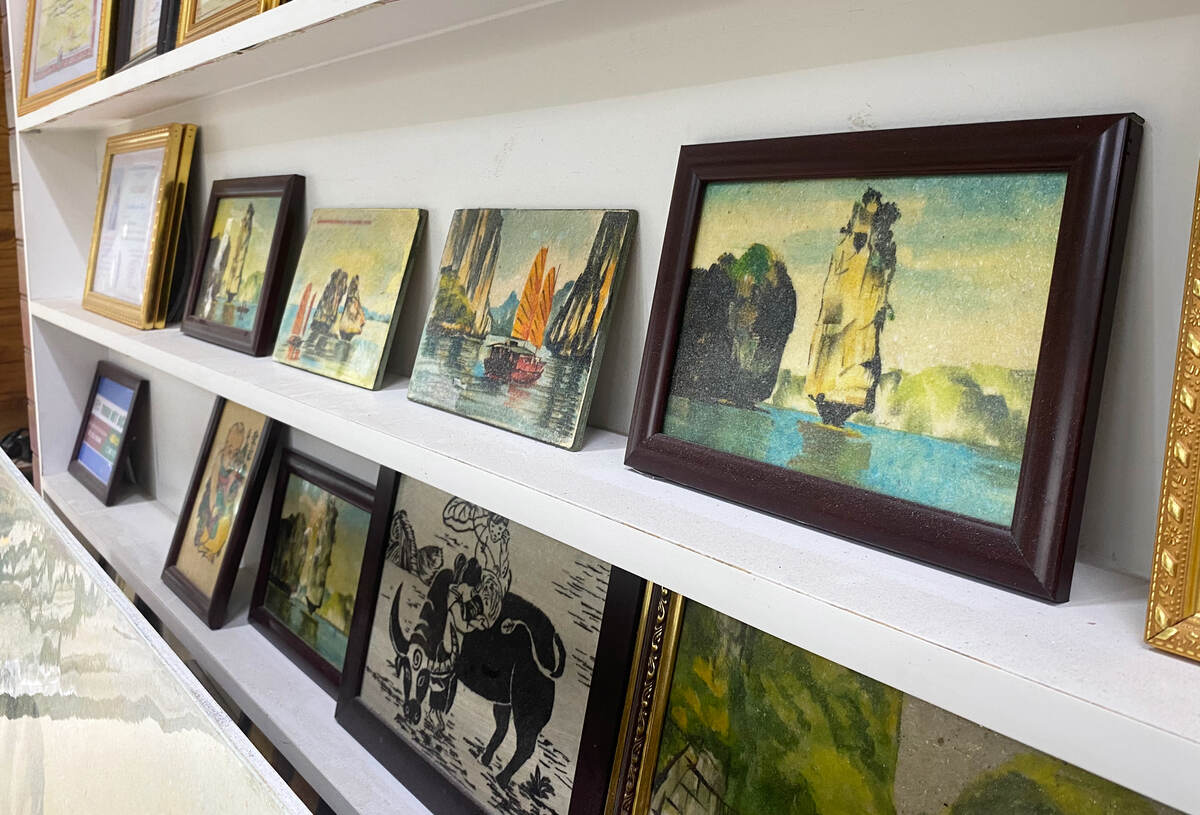
Each small painting costs from 100 thousand VND, while large works can cost 5-7 million VND or some paintings are paid 25 million VND.
Since 2017, the plaster painting product has been recognized as an OCOP 3-star product. The product once won the First Prize in the Quang Ninh Provincial Service Innovation Contest in 2018 and was recently honored as a typical agricultural product of the province.
More than 10 years since starting his journey with discarded điệp shells, that fine arts teacher hopes that in the future, điệp powder paintings will become a typical cultural product of Quang Ninh. Paintings will appear more in tourist spaces, conferences and gifts imbued with local identity.


