
Kindness does not come naturally
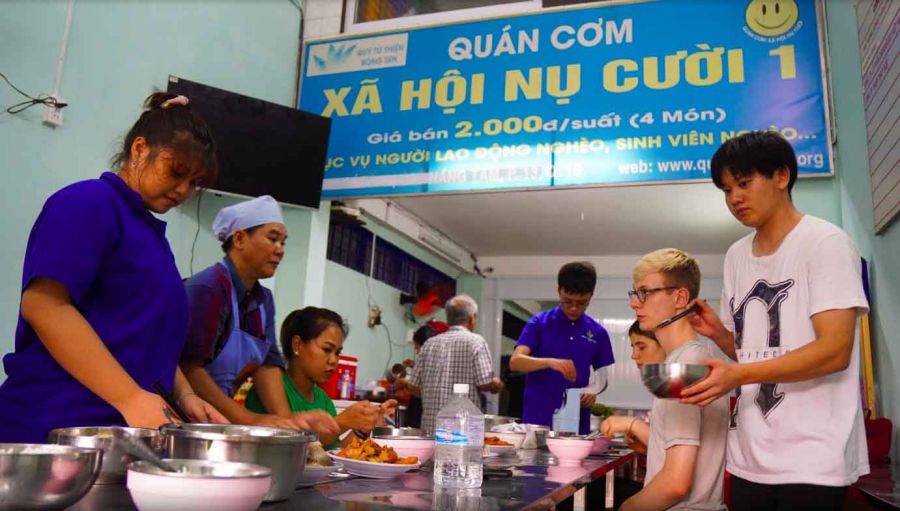
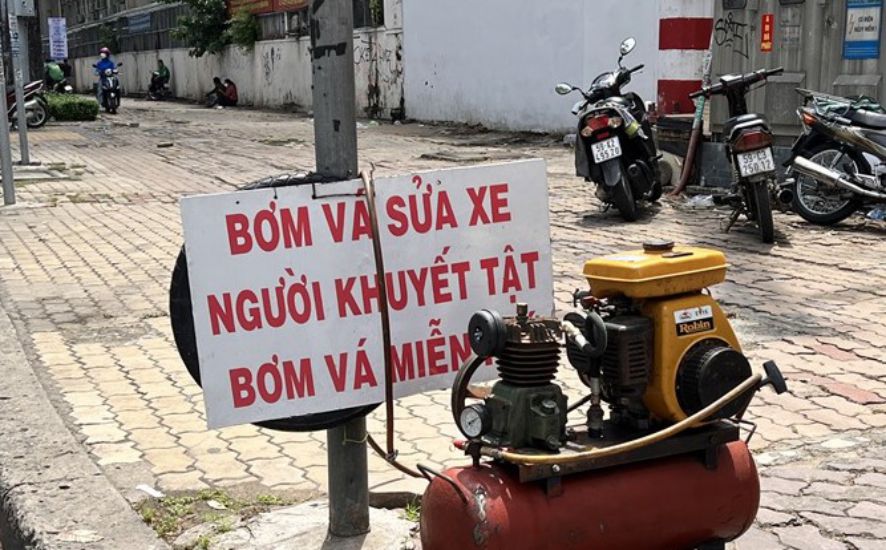
In Ho Chi Minh City, it is not difficult to see signs "free tire pumping", "0-dong meal", "0-dong bread stall"... present on many streets, as vivid proof of kindness still silently spreading in urban life.
In the last months of 2025, the image of city residents voluntarily donating money, food, and necessities at metro stations, in front of ward and commune People's Committee headquarters to send to people in the North, Central regions or Central Highlands provinces facing difficulties caused by natural disasters, has left many emotions. Many volunteer groups are also willing to travel hundreds of kilometers, directly to deeply flooded areas to support people.
Previously, during the COVID-19 epidemic, "rice ATMs", "zero-dong supermarkets" models became a fulcrum, helping thousands of poor workers overcome difficult times. This has become a "glue" connecting the community. When those behaviors are repeated every day, kindness will no longer be rare, but become a lifestyle.
However, if not nurtured and encouraged, kindness is easily overwhelmed by the pressure of making a living and the hurried pace of life. Therefore, it is necessary to cultivate kindness persistently, from family, school to social norms, so that it becomes a daily habit of behavior, not just temporary actions when emotions arise.
To make kindness not just stop at moments of impulsiveness or short-term movements, but become a long-term standard of behavior, it is very necessary to cultivate from many sides. Not only individuals, but also families, schools and society must join hands to nurture good values, so that each person when grown up is not only "good at doing", but also "knows how to live".
From that perspective, former Chairman of the Ho Chi Minh City People's Council Pham Phuong Thao said: "If you are only good at studying, good at expertise or have individual talents, it is not enough. The important thing in each typical example is to know how to live by giving for the community, for kindness. Bright examples that converge both talent and virtue have long-term persuasive power.
Kindness is also how parents treat their children, how teachers treat their students, how society honors beautiful behaviors, even small ones. When kindness is recognized and encouraged properly, it will spread naturally and sustainably.
Cultivating and spreading kindness is therefore not just anyone's story, but the common responsibility of the whole community. From each individual, each family, to agencies and organizations, if we join hands to nurture good values, Ho Chi Minh City is not only an economic locomotive, but also a place of convergence of a humane, warm life, where people are willing to live for each other and for the community.
Kindness is not lost, just waiting to be continued
Talking to Lao Dong Newspaper, Mr. Pham Nguyen Dong Nguyen - Deputy Director of the Center for Creative Investment and Digital Copyright Exploitation of Vietnam - said that young people today are not lacking in the concept of kindness. Many people understand very well, only that in the current living environment, that understanding sometimes stops at the concept level.
He imagines this reality as a beautiful city covered in fog. Value is still there, but hard to see. There are many images to observe, but there is a lack of sufficiently deep support for people to rely on and reflect. In that space, young people are surrounded by very new, very "trendy" psychological movements such as FOMO (fear of missing out syndrome) or the pressure to always be present.
On a deeper level is the fear of becoming invisible, the fear of being separated from the common flow. When that fear is large enough, people easily prioritize being seen rather than living correctly. In such a rhythm of life, kindness - which needs time and silence - becomes a difficult choice. Not because young people do not want to be kind, but because it is not easy to stop for long enough.
Mr. Pham Nguyen Dong Nguyen does not see it as a mistake, but as a "delay" - a very human delay. Because kindness, according to him, has never disappeared. It is like a seed that is already available, just waiting for more time and a healthy environment to sprout. And if it comes to long-term meaning, the most important thing lies in how kindness is continued.
According to his observation, young people do not play a "special" role more than other generations. More precisely, each individual in society has a very unique and important position. A kind action of an adult today can sow seeds in the minds of young children, and then ten or twenty years later, that value will be naturally continued.
If there is an easily noticeable difference in young people, it is the quickness in reacting to the world around them. In a closely connected society, youth combined with technology makes the spread more strong. When kind individuals appear more, its impact is therefore also wider and deeper. And according to him, it is very difficult for a society to develop sustainably if there is no longer kindness between people.
Mr. Pham Nguyen Dong Nguyen also acknowledged that we are living in a very special period of history - when human life coexists with intelligent machines, algorithms and value systems that are still being shaped. Every beginning is hard, every learning takes time, and learning how to be human in a new world is no exception.
When young people do not have many opportunities to access specific models, stories or practices of kindness, preserving and nurturing that value will certainly be precarious at times. Kindness, according to him, is not just a temporary emotion, but a skill that needs to be learned and practiced. For young people, learning new things is never too difficult - they only need more time.
Speaking about the role of family, school and media, he called it the "leading generation". Understanding and orienting is inherently a beautiful tradition, but in today's context, that generation of leaders also needs to continue to learn, constantly learn: Learning to understand the world is operating according to new rules; learning to understand the shortcomings and excesses, the very different injuries and desires of young people.
Because only when you understand do you love each other. And when people truly love each other, kindness does not need to be called out or launched, but will naturally appear in the way we live and treat each other every day.
If you are only good at studying, good at expertise or have individual talents, it is not enough. The important thing in each typical example is to know how to live for the community, for kindness. Bright examples that converge both talent and virtue have long-term persuasive power.


