
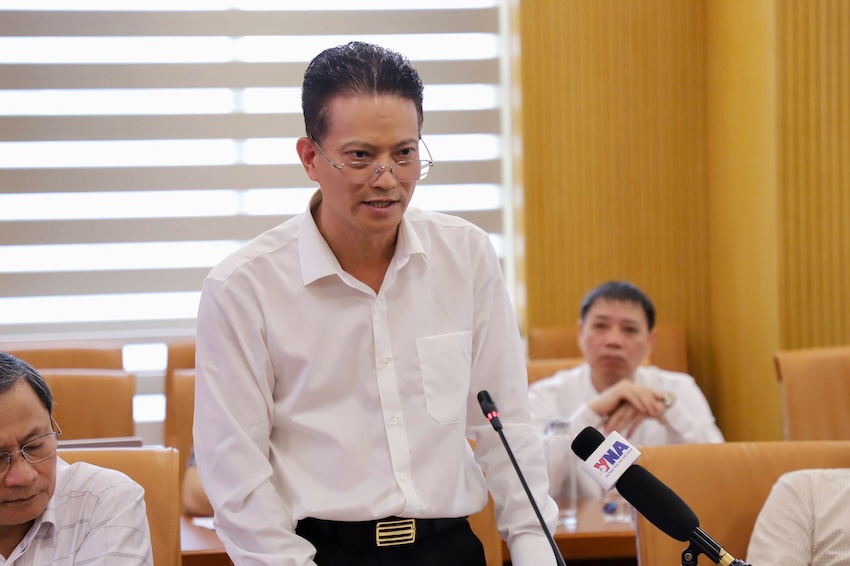
According to Mr. Nguyen Xuan Hai - Deputy Director of the Department of Environment (Ministry of Agriculture and Environment), currently, emission control and environmental monitoring have been fully regulated by law according to the 2020 Law on Environmental Protection.
Accordingly, for establishments subject to automatic and continuous monitoring, enterprises are responsible for installing automatic and continuous wastewater and exhaust gas monitoring systems; this system must meet technical requirements for measuring equipment, quality standards, surveillance cameras, automatic sampling systems, data receiving and transmitting sets. At the same time, data must be transmitted directly to local state management agencies for monitoring and supervision. The transmitted data must have full measurement parameters, measurement results, measurement units, measurement time and operating status of the equipment.
Used connection ports must be sealed; the highest administrator account of the data logger must be provided to the Department of Agriculture and Environment for management, configuration control and system software.
Regarding the current monitoring of automatic and continuous monitoring systems, current law stipulates many layers. The first is that businesses must operate, inspect, maintain, calibrate, inspect equipment and prepare complete management records and operating logs.
Second, the system must ensure meeting the technical requirements according to regulations and must be quality controlled when put into official operation and periodically annually by an independent unit with sufficient capacity, including the content of checking the monitoring location, data collection, storage, and transmission features, and must perform controlled monitoring to assess the relative accuracy of the system.
Thirdly, the Department of Agriculture and Environment is responsible for monitoring automatic and continuous monitoring data; evaluating monitoring results, continuously and comparing with the maximum permissible value of pollution parameters according to environmental technical regulations; monitoring and checking remediation in case monitoring data is interrupted; detecting monitoring parameters exceeding environmental technical regulations and proposing handling measures according to regulations.
Regarding data security control, Departments are provided with the top account of the data logger system to perform the management and control of connection ports, configurations and the process of upgrading control software (firmware).
Representatives of the Department of Environment added that, according to the provisions of the 2020 Law on Environmental Protection, Decree No. 08/2022/ND-CP and Circular No. 10/2021/TT-BTNMT, the current automatic, continuous monitoring system is designed in the direction of ensuring objectivity, transparency and having a multi-layered control mechanism.
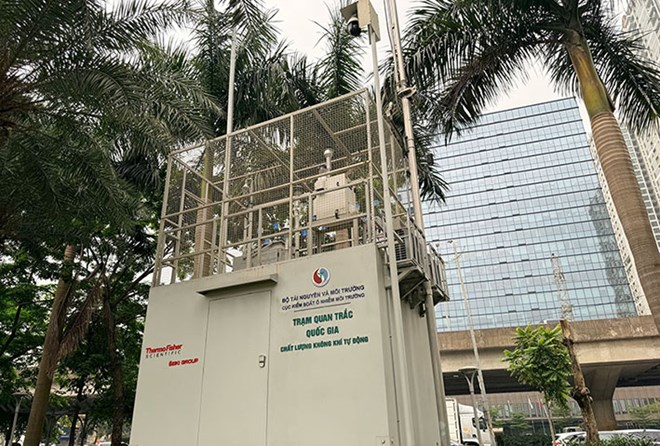
Businesses are responsible for installing and operating the system, but monitoring data must be transmitted directly and continuously to state management agencies, and at the same time must conduct periodic inspection, standardization, quality control and be subject to inspection, supervision, and post-inspection by management agencies and independent units. These are the factors that ensure the transparency and relative independence of the system according to current regulations.
The act of interfering and falsifying monitoring data is a violation of the law, of a sophisticated nature, which can be carried out through intervention in software, system configuration or data transmission process.
Meanwhile, the current system is mainly designed to monitor environmental value and operating status, so intentional intervention and high-tech use have not been detected in some cases," Mr. Hai said.


