
The journey to save a 43-year-old male patient in Thai Nguyen at Bach Mai Hospital recently is a story about the persistent journey of ophthalmologists and the Institute of Tropical Medicine to regain life and light for eyes that seemed to have forever fallen into darkness.
When the light gradually fades before your eyes
The patient was admitted to the hospital in a state of severe headache and was quickly diagnosed with severe purulent meningitis. The results of cerebrospinal fluid puncture, bacterial culture and tests all showed "red warning" indicators.
Only two days after treatment, the patient's right eye suddenly became swollen, red, oozing fluid, and severely painful to the point of not being able to open. Faced with the serious developments, doctors from the Institute of Tropical Medicine and the Ophthalmology Department coordinated treatment according to the strongest antibiotic regimen.
The first hopeful signals appeared: the cerebrospinal fluid index improved significantly, patients responded to treatment. It seemed like the journey had gone in the right direction.
However, medicine does not always follow a straight line. The third cerebrospinal fluid puncture showed worse results again, even more abnormal developments in subsequent tests. Meanwhile, eye damage progressed rapidly and violently even though the patient still used high doses of antibiotics (Meropenem 6g/day).
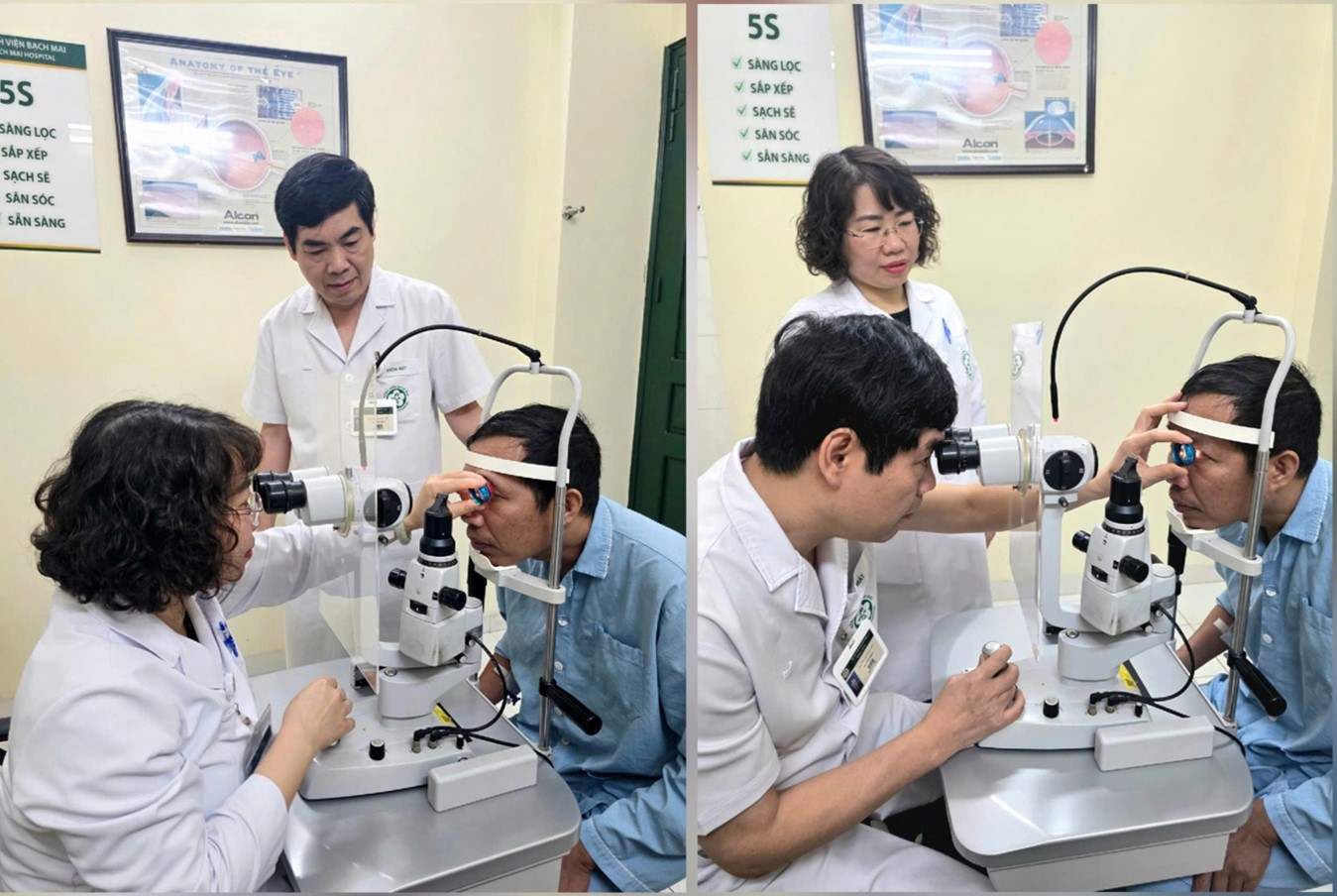
In just a short time, the right eye fell into endoglomeration, completely losing the ability to recognize light and darkness. The left eye lost deep vision, only 1/10, painful, red and light-fearing. CT images and magnetic resonance showed many scattered abscesses in the brain and lungs – a haunting picture of multiple organ damage.
At that time, the patient was almost unable to see, had headaches, eye pain, exhausted health, and lay in one place. At the age of 43 – the most energetic age, the main labor force in the family – the world before that man suddenly turned dark.
Decision to "bet" between the line of birth and death
The disease progression was not similar to a common purulent meningitis. Suspicion of meningococcal tuberculosis was raised. But in the emergency consultation, another hypothesis made the whole team think: Nocardia - a rare bacteria, causing multiple organ damage, difficult to culture and easy to mislead doctors.
If it was indeed Nocardia, the old regimen would not be able to control it. The decision was made quickly but bravely: stopping the TB treatment direction, switching to a combination of 4 strong antibiotics including Meropenem, Linezolid, intravenous Biseptol and Amikacin – a "bet" based on clinical experience and professional sensitivity to abnormal signs.
Faced with complicated developments, we are really confused. From determining the cause to choosing a regimen is a brain-wracking problem, while the time and cost pressure for the patient's family is very high," Dr. Do Van Thanh, Head of Viral Hepatitis Department, Institute of Tropical Medicine (Bach Mai Hospital) shared.
The race to keep the eyes
In parallel with whole-body treatment, the doctors of the Ophthalmology Department entered another battle – keeping the light for patients.
Antibiotics are injected directly into the intraocular lumen – a difficult decision when the eyeball is severely damaged. Ceftazidime, Vancomycin, corticosteroids... are used. However, the condition worsens, both eyes are severely damaged.
When the Nocardia treatment direction is determined, Amikacin – the systemic antibiotic – is also intraocularly injected.
After the second injection of Amikacin, vision began to improve. The right eye, which was previously almost blind, felt light again. Close coordination between departments helps control sepsis, control the infection site and create conditions for vision recovery," said BSCKII Phung Thi Thuy Hang, Deputy Head of the Ophthalmology Department.
Every hour, every day, the nurse persistently instilled medicine, infused fluids, and guided the patient to maintain absolute hygiene, not rubbing their eyes. Those seemingly small things are decisive.
Smile after a storm
After a week, the cerebrospinal fluid indicators decreased significantly, inflammatory cells decreased. On X-rays, the brain and lung abscesses gradually shrank, and many lesions disappeared.
From being almost blind on both sides, the patient began to see more clearly, stand up on his own, walk on his own, and live normally. Not only improved vision, but the overall condition also clearly recovered.
The family has prepared mentally to "celebrate Tet in the hospital", entrusting their children to both sides of the family. But after 41 days of treatment, that man not only recovered but also kept the light for his eyes - something that seemed impossible.
The success of the case is the result of multidisciplinary coordination: Tropical, Ophthalmology, Clinical Pharmacy, Microbiology, Photochemistry, Respiratory... But above all, it is the professional bravery and the heart of doctors who do not let go of developments that "do not follow books".
Medicine is not just a protocol. It is also an intuition trained over the years, a commitment to difficult cases, and the belief that – even in the darkest moments – light can still be regained.


