
On July 21, the National Institute of Hematology and Blood Transfusion opened the 16th "Giot Hong Tri An" blood donation festival. This is one of the largest blood donation events in the 14th Red Journey campaign in 2026.
In the atmosphere of the whole country looking towards War Invalids and Martyrs' Day July 27, thousands of people participated in the 16th "Giot Hong Tri An" blood donation day in 2026, giving meaningful blood drops as a practical way of gratitude to previous generations, while contributing to bringing life opportunities to patients.
More than 20,000 units of blood from the Red Journey
Speaking at the opening ceremony, Assoc. Prof. Dr. Nguyen Ha Thanh, Director of the National Institute of Hematology and Blood Transfusion, said that the Red Journey - Journey to Connect Vietnamese Bloodline has become the largest voluntary blood donation campaign in the country, connecting localities, organizations and tens of thousands of people to join hands to overcome the blood shortage for emergency and treatment every summer.
In 2026, Red Journey is organized in 32 provinces and cities with the goal of receiving about 120,000 units of blood. After nearly two months of implementation, the campaign has spread to 25 localities, receiving more than 20,000 units of blood at major festivals and tens of thousands of units of blood from response programs.
According to Assoc. Prof. Dr. Nguyen Ha Thanh, these results not only contribute to solving the blood shortage situation but also show that the community's awareness of voluntary blood donation has had many positive changes.
Blood donation from a special act has gradually become a habit, becoming a cultural beauty of the spirit of sharing and responsibility to the community. From a blood donor, more families, agencies, and units have participated, creating a widespread humanitarian movement in society," he said.
Highlights of the gratitude month
First organized in 2011 with the message "Each heart - A heroic flame", the program calls on the community to spread the spirit of compassion through blood donation to save people. After 15 years, the festival has mobilized and received more than 50,000 units of blood, becoming one of the blood donation programs with the largest spread in the country.
This year, the program takes place from July 18 to 26 at the National Institute of Hematology and Blood Transfusion and some blood donation points in Hanoi, aiming to receive at least 4,000 units of blood. In just the first three days, nearly 1,500 units of blood have been received.
Assoc. Prof. Dr. Nguyen Ha Thanh also acknowledged the silent contributions of volunteers - those who have been diligently preparing for the program for more than a month.
You are the first to arrive and also the last to leave after each blood donation day. Although you do not directly treat patients, you are the bridge to continue writing the journey of life for patients," he shared.
Each drop of blood is a word of gratitude
These days, the atmosphere at the National Institute of Hematology and Blood Transfusion is always bustling with people coming to register for blood donation. Each person carries a different story, a different reason but all share the desire to share with the community.
Among them is actor Phung Duc Hieu, a familiar face to audiences through the movies "Pho trong lang" (Calle in the village), "Gio ngang qua khuong troi xanh" (Wind passes through the blue sky). Despite his busy work schedule, he still takes time to participate in blood donation.
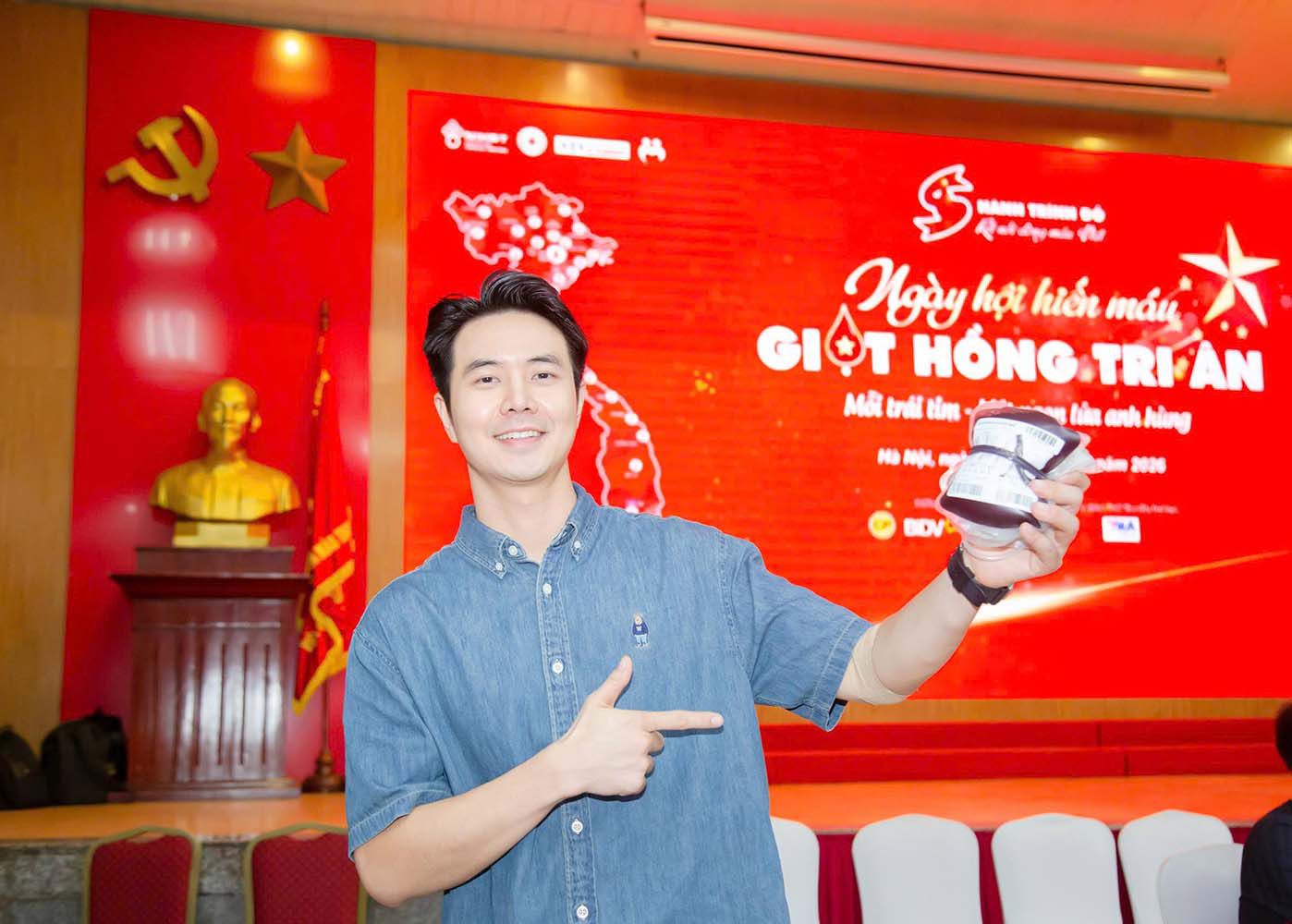
The actor said that July is a special time to commemorate and show gratitude to the generations of fathers and brothers who sacrificed for the independence and freedom of the nation.
This blood donation is even more meaningful to me. I also want to send my thanks to my parents for giving birth to and raising me to be healthy so that today I can contribute a small part to the community," he shared.
Not only artists or young people, the program also attracts a large number of people of different ages and professions. All contribute red blood to extend the life of patients and spread the humanistic message that gratitude is not only remembering the past, but also living beautifully, living responsibly with the community in the present.


