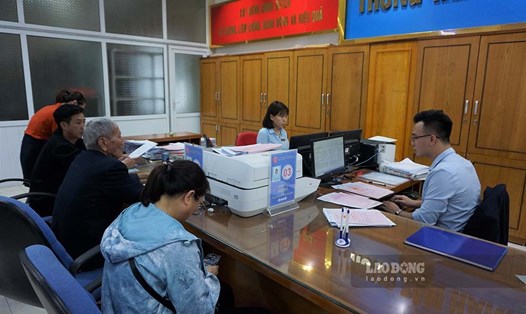
Mr. Pham Nguyen Ha Son - a resident of Bac Ninh Hoa commune (Khanh Hoa) - performs contract certification procedures at the Public Administrative Service Center of Bac Ninh Hoa commune. However, two days later, Mr. Son suddenly received a text message informing him that the dossier had been withdrawn as requested, although he did not withdraw it at all.
The reason was later determined to be that Ms. Nguyen Thi Tuong Oanh - a civil servant of the Public Administrative Service Center - mistakenly entered the type of procedure on the system, leading to the dossier being processed by the system not in accordance with the process and a notice of dossier withdrawal arose.
Mr. Tran Trinh Vu Trung - Chairman of Bac Ninh Hoa Commune People's Committee - signed an apology form sent to Mr. Pham Nguyen Ha Son, committing to rectify the dossier processing process, improve service quality to avoid similar cases in the coming time; and at the same time hope to receive sympathy from the people for the inconvenience that has occurred.
To be fair, what has just been mentioned is quite common in the process of interaction between cadres and civil servants and people in all Public Administration Service Centers across the country.
However, the fact that the Chairman of Bac Ninh Hoa Commune People's Committee signed an apology form sent to the people evokes many other very positive and thought-provoking aspects of the administrative apparatus's behavior towards the people in the current context.
In the current digital transformation and administrative reform process, processing dossiers through electronic systems is increasingly common. The large volume of procedures, multi-step technical processes, and complex electronic forms... make the possibility of errors in operation not too surprising.
The important thing is how the leadership of that administrative apparatus faces errors.
This shows a change in administrative management thinking, from focusing only on procedures to valuing the experience and rights of the people. These are specific manifestations of a serving and close to the people administration.
More positively, the fact that government leaders show a culture of apologizing to the people like in Khanh Hoa has become quite common in many localities across the country.
Even in places like Da Nang, recently, the Chairman of the City People's Committee issued a document, requesting the heads of departments, agencies, branches and People's Committees at all levels to be responsible for thoroughly handling administrative procedure dossiers that are delayed, and at the same time must publicly apologize if delays occur, causing trouble.
When the public apparatus is ready to admit mistakes, correct mistakes and serve better, it is also the time when the distance between the government and the people is getting closer.
An apology form may just be a small detail in an administrative process. But behind that small detail is a larger message: a culture of responsibility and a spirit of service are gradually becoming standards in the operation of the grassroots government apparatus.