Unbalanced diet, overuse of fried foods, and low consumption of fatty fish may be the main reasons why the body is not provided with enough omega-3.
Omega-3 fatty acids bring many practical benefits, contributing to protecting cardiovascular health, supporting brain development, improving vision and reducing inflammatory reactions. Experts say that if calculating the total amount of these fatty acids (including ALA from plants), on average, adult women need about 1.1 g and men 1.6 g per day. Below are 4 common habits that can lead to a deficiency of this beneficial fat.
| Eating habits | Effects on Omega-3 |
|---|---|
| Direct deficiency of easily absorbed EPA and DHA sources. | |
| Eating too many processed foods, fried foods | It is easy to cause fat imbalance in the diet. |
| A diet that is too skewed towards omega-6 can affect the balance of fat in the diet. | |
| Reducing the quality of meals and not beneficial for metabolism. |
Limit consumption of fatty fish and seafood
Fatty fish and seafood are rich sources of omega-3, especially containing EPA and DHA, two forms of fatty acids that the body can absorb and use directly. If you completely eliminate these foods, the amount of omega-3 intake may not meet the essential needs. Over time, this deficiency can affect cardiovascular function, brain health and the body's natural anti-inflammatory ability.
Drinking less water and fiber deficiency
Water and fiber play an important role in the digestive system. When dehydrated, bile and enzymes are secreted less, which can reduce omega-3 absorption efficiency. At the same time, fiber deficiency easily causes imbalance in the intestinal microbiome, increasing the risk of inflammation and fat metabolism disorders. Poor digestion also contributes to reducing the absorption of nutrients in general.
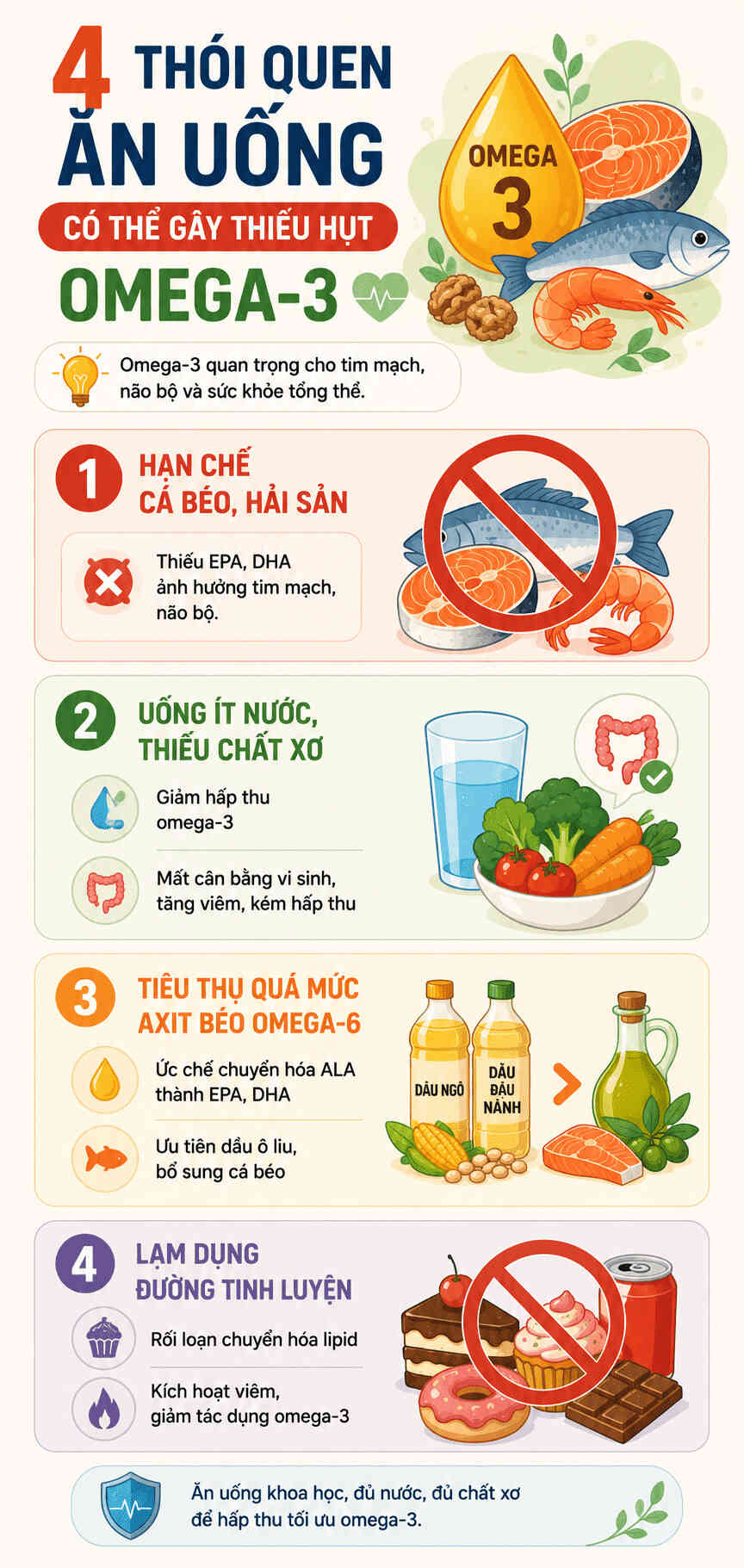
Over-consuming omega-6 fatty acids
Although both are essential fatty acids, the body always needs a balanced ratio between omega-6 and omega-3. A diet that is too high in omega-6 from processed foods or vegetable oils (corn oil, soybean oil) can inhibit the process of converting plant-based omega-3 (ALA) into active forms EPA and DHA. For improvement, experts recommend prioritizing olive oil and supplementing fatty fish about 2 times a week.
Abuse of refined sugar
Consuming a lot of confectionery and soft drinks can disrupt lipid metabolism, reducing the effectiveness of using beneficial fatty acids such as omega-3. Moreover, a high-sugar diet often triggers silent inflammatory reactions, significantly reducing the inherent anti-inflammatory effects of omega-3. Over time, this habit not only causes nutritional deficiencies but also hinders the maintenance of a healthy health foundation.
The information in the article is for reference only, not for medical diagnosis or treatment. You should talk directly to your doctor for accurate and appropriate advice to your health condition.
Q&A corner: Diet and omega-3
How much omega-3 does an adult need each day?
If calculated separately for ALA, the recommended recommended level is about 1.1 g/day for adult females and 1.6 g/day for adult males. EPA and DHA can be supplemented through fatty fish, seafood or other suitable sources in the diet. Specific needs may vary depending on health status.
Does eating too much corn oil or soybean oil cause omega-3 deficiency?
Do not say that eating a lot of corn oil or soybean oil directly causes omega-3 deficiency. The problem is that a diet that is too skewed towards fried foods, processed foods and less fish, less omega-3-rich seeds can imbalance fat in the diet. A better way is to diversify fat sources, prioritizing fish, seeds, nuts and suitable vegetable oils.