
Red Alert" about underexercise among young people
According to WHO, more than 87% of Vietnamese adolescents have not reached the recommended physical activity level. Of which, 91% of girls and 82% of boys in Vietnam have not reached the necessary daily physical activity level.
The information was released at the conference summarizing "Sports Cooperation Initiative for Community Health in Vietnam" held on May 16 with the participation of PATH, World Health Organization, Vietnam Olympic Committee and representatives of the Ministry of Health, Ministry of Education and Training, Vietnam Sports Administration and many schools and localities across the country.
In that context, the "Sports Cooperation Initiative for Community Health" is being implemented as a comprehensive intervention model to promote a dynamic lifestyle in schools and communities.
The initiative is implemented by PATH in coordination with the Department of Education and Training of Nghe An, the Vietnam Olympic Committee, the Vietnam Sports Administration and many domestic and international partners, within the Olympism365 strategy of the International Olympic Committee (IOC).
The goal of the program is not only to strengthen physical exercise, but also to build a sustainable community sports ecosystem, contributing to the national goal of reducing physical exercise deprivation by 15%.
After more than a year of implementation, the initiative has recorded many notable results.
According to the organizers, the program's communication activities have reached more than 1.2 million people on digital platforms and mass media. More than 229,000 students and people in the community maintain regular physical activity.
In particular, in 10 pilot schools in Nghe An, the rate of students achieving adequate and regular physical activity increased to 22.6%.
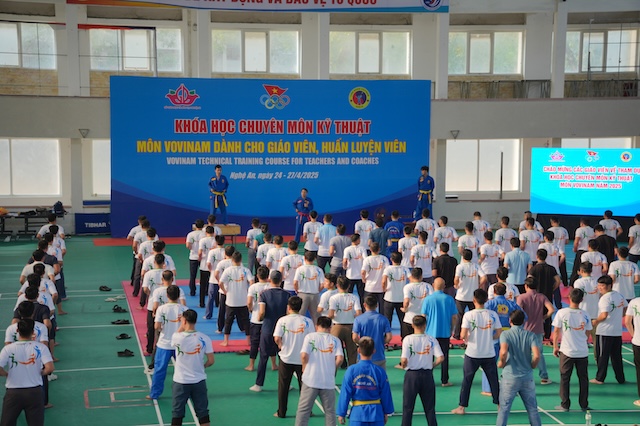
In addition, hundreds of teachers, schools and partners are also trained and improve their capacity to maintain long-term school sports activities.
One of the highlights of the initiative is the "School Sports Ambassador" model, where students are given the right to proactively organize and spread mobilization activities in schools and communities.
Le Khanh Thy - School Sports Ambassador of Cao Xuan Huy Secondary School shared: "Before, I was quite inactive and often reluctant to participate in sports activities. Through this initiative, I realized that students, especially girls, can also become leaders of sports activities, inspire people and create positive changes in their schools and communities.
Not stopping at school activities, the initiative also implemented a series of communication campaigns and competitions nationwide such as shuffle dance, folk dance, online exercise challenge or the competition "How Sports Have Changed Me".
According to experts, changing motor behavior is a difficult problem because it requires long-term maintenance, especially in the context that children are increasingly dependent on electronic devices and tend to participate less in outdoor activities.
Dr. Le Thi Thu Hien - Director of the Primary Health Care Program, PATH - said: "The Community Health Sports Cooperation Initiative has achieved many encouraging results, contributing to building and strengthening the foundation for a more sustainable physical activity ecosystem in schools and communities.
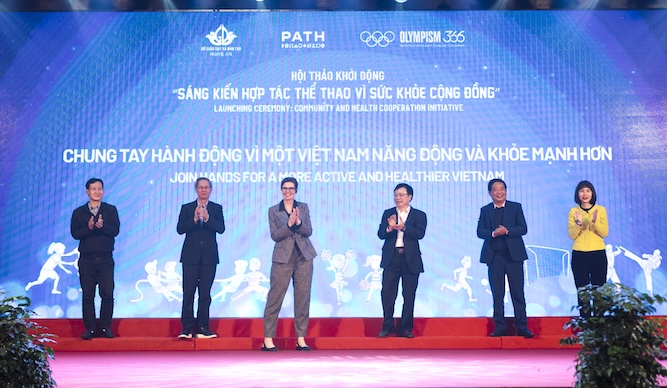
Towards a national sustainable model
Dr. Angela Pratt, WHO Representative in Vietnam, emphasized the positive results of the project, the role of empowering students to become leaders of physical activity movements, as well as the potential to create sustainable impact and replicate the model in Vietnam and many other countries.
The results that the project has achieved in Nghe An are extremely encouraging. Approaching hundreds of thousands of students and people, and supporting them to become more dynamic in their daily lives is a very meaningful achievement. I am particularly impressed with the way the project empowers students to become pioneers and spread the physical activity movement in their schools and communities.
Such a sustainable, community-based approach is a key factor in creating long-term impacts. Tools, models and lessons from this initiative will not only be valuable to other provinces and cities in Vietnam but can also be shared and applied in many countries around the world.


