
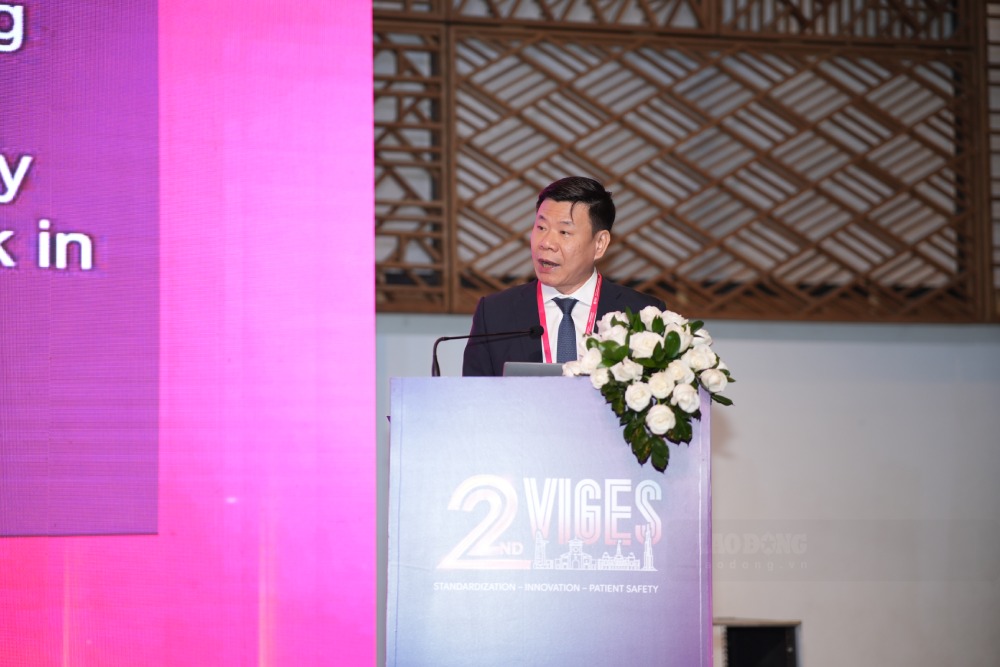
On September 19, at the 2nd National Interventional Gastrointestinal Endoscopy Conference - VIGES 2026 with the focus "Standardization - Innovation - Patient Safety", Assoc. Prof. Dr. Nguyen Cong Long, Chairman of the Vietnam Interventional Gastrointestinal Endoscopy Association, said: According to the International Agency for Cancer Research of the World Health Organization (GLOBOCAN), Vietnam records more than 200,000 new cancer cases each year, including more than 40,000 cases of stomach and colorectal cancer, belonging to the top 5 most common cancers. In the context of high prevalence of digestive cancer, the development of interventional endoscopy is not only of medical significance but also related to social security.
Causes of digestive cancer are related to genetics, age, environment, diet, alcohol and tobacco. Late detection makes treatment difficult, low survival rate. Worryingly, the disease tends to rejuvenate, with many cases diagnosed in the age group of 30–40, posing an urgent requirement for early screening, raising awareness and maintaining a healthy lifestyle.
Gastrointestinal endoscopy is rapidly shifting from a mainly diagnostic field to a minimally invasive treatment specialty with many specialized techniques.
Techniques such as submucosal dissection (ESD), endoscopic ultrasound (EUS), retrograde endoscope (ERCP), third-stage endoscopy, and applications of artificial intelligence and digital technology are expanding the ability to detect, assess and treat digestive diseases, especially cancer at an early stage," Assoc. Prof. Dr. Nguyen Cong Long emphasized.
However, according to Assoc. Prof. Dr. Nguyen Cong Long, the challenge is how to make technical advances not only concentrated in some large centers but become a common competence of the Vietnamese digestive endoscopy industry.
Standardize so that patients, wherever they undergo endoscopy, can access increasingly better quality procedures and standards. Innovate so that Vietnamese endoscopy not only accepts world techniques but also gradually masters technology, research and creativity. Patient safety must always be the foundation, the limit and also the highest measure of all technical advances.
According to this orientation, the Vietnam Society for Interventional Gastrointestinal Endoscopy (VIGES) aims to build a widespread digestive endoscopy network, connecting major centers with provincial hospitals, regional hospitals and facilities with limited resources. The Association also aims to promote continuous training, quality standardization, build multi-center research and Vietnamese databases, and create more opportunities for young doctors to access the international professional environment.
Right at the 2nd National Interventional Gastrointestinal Endoscopy Conference - VIGES 2026, experts from many countries participated in reporting, demonstrating techniques and discussing clinical cases, focusing on ESD, EUS, ERCP, interventional gastrointestinal endoscopy above and below, artificial intelligence as well as patient safety issues.


