
The tumor is painless but grows fast
Central Military Hospital 108 received patient N.X. L (born in 1942) after discovering a tumor in her right breast. The tumor was painless but increased in size rapidly.
Through examination and biopsy, the patient was diagnosed with invasive, non-specific (NST) breast carcinoma. The patient underwent preoperative chemotherapy and surgery at the Department of Obstetrics and Gynecology, Central Military Hospital 108.
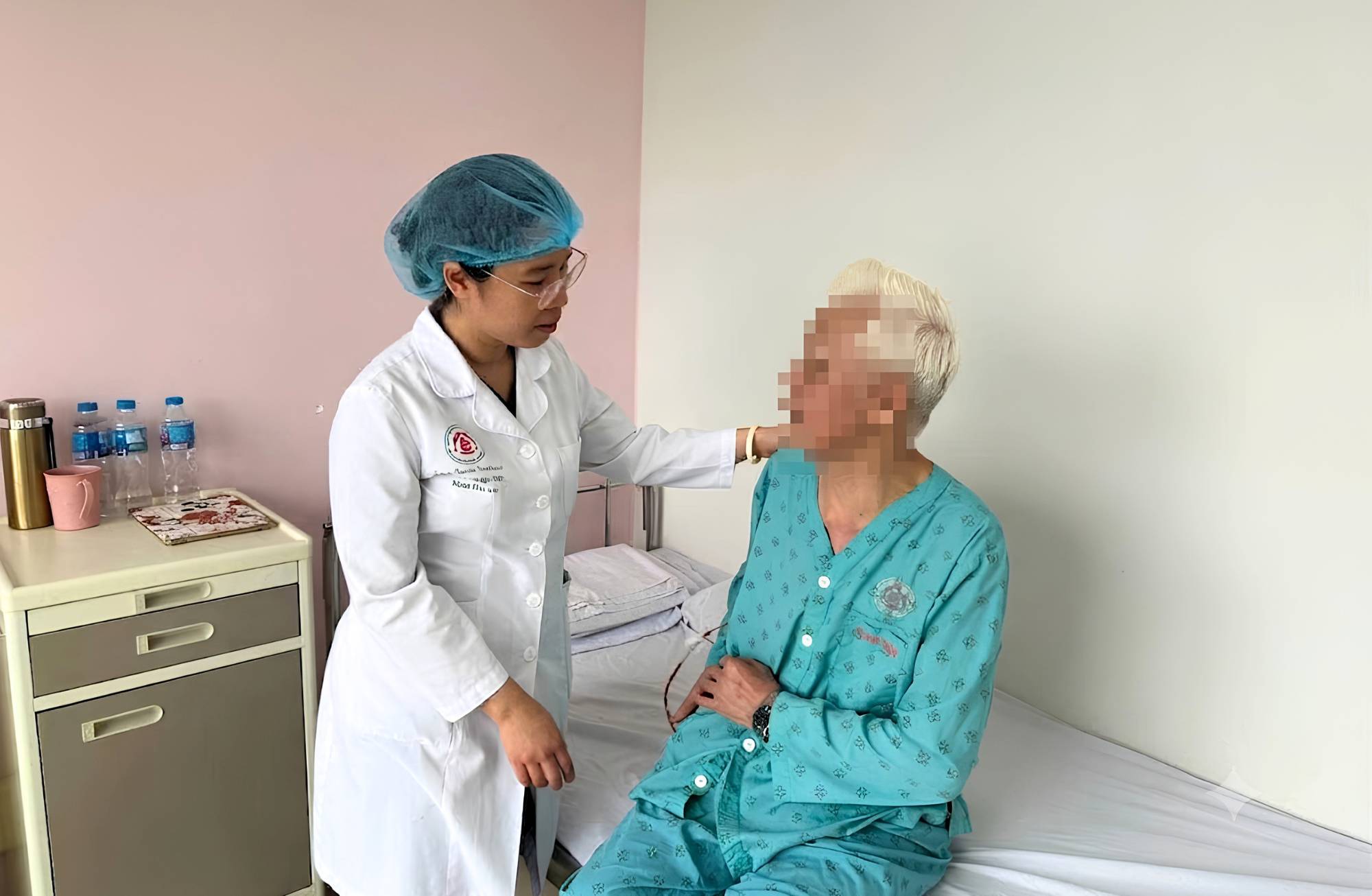
BSCKII Tran Thi Minh Trang, Department of Obstetrics and Gynecology, Central Military Hospital 108 said that this case is a warning to men not to be subjective when abnormalities appear in the chest area. Male breast cancer is very rare, the risk of disease in life is about 1/755-1/1,000 and increases significantly with age.
Signs to note
The most common sign is a tumor in the breast area, usually located behind or near the nipple. The tumor is usually painless but can grow larger. Men also need to pay attention when there are: Nipple retracting or deformed; Nipple secreting fluid, bleeding; Changed, ulcerated or "orange" skin in the breast area; Abnormal lymph nodes in the armpits.
These signs are not always cancer, but they need to be checked by a doctor to determine the cause.
When breast cancer is suspected, patients need to be examined, diagnosed with imaging and needle core biopsy. Treatment for male breast cancer is basically similar to female breast cancer, including surgery, radiation therapy and systemic treatments such as chemotherapy, endocrinology or targeted drugs, depending on the case.
Men with breast cancer should also be consulted and consider genetic testing, because the results can affect treatment and help assess the risk of the disease for the family.
Factors that increase the risk include old age, family history, BRCA1/BRCA2 mutations, Klinefelter syndrome, chest radiation therapy, and conditions that alter endocrine balance.
In which, men carrying BRCA2 mutations have a significantly higher risk of breast cancer than men in general.


