Returning to daily life after 3 months of cochlear electrode implantation
A 30-year-old female patient suddenly became deaf in both ears at a deep level, not responding to medical treatment and high-capacity hearing aids. Working at an fertilizer agency, hearing loss disrupted her life, from daily communication to answering phone calls, exchanging with customers and partners.
Examining at the University Medical Center Hospital of Ho Chi Minh City, the patient was diagnosed with irreversible deep deafness in both ears and was indicated for cochlear electrode implantation on the left side. The surgery was successful, the patient recovered well and was discharged after 3 days.
After 1 month, the patient was turned on and stimulated to listen for the first time. After 3 months of recovery, her left ear hearing improved almost normally, helping her return to work and daily life.
From this case, MSc. Dr. Le Van Vinh Quyen - Department of Otolaryngology, University Medical Center Hospital HCMC - said that cochlear electrode implantation is a modern treatment method for patients with severe to deep hearing loss, especially when conventional hearing aids are no longer effective. This method can be indicated for patients with congenital deafness or acquired deafness, depending on the degree of hearing damage and speech understanding ability.
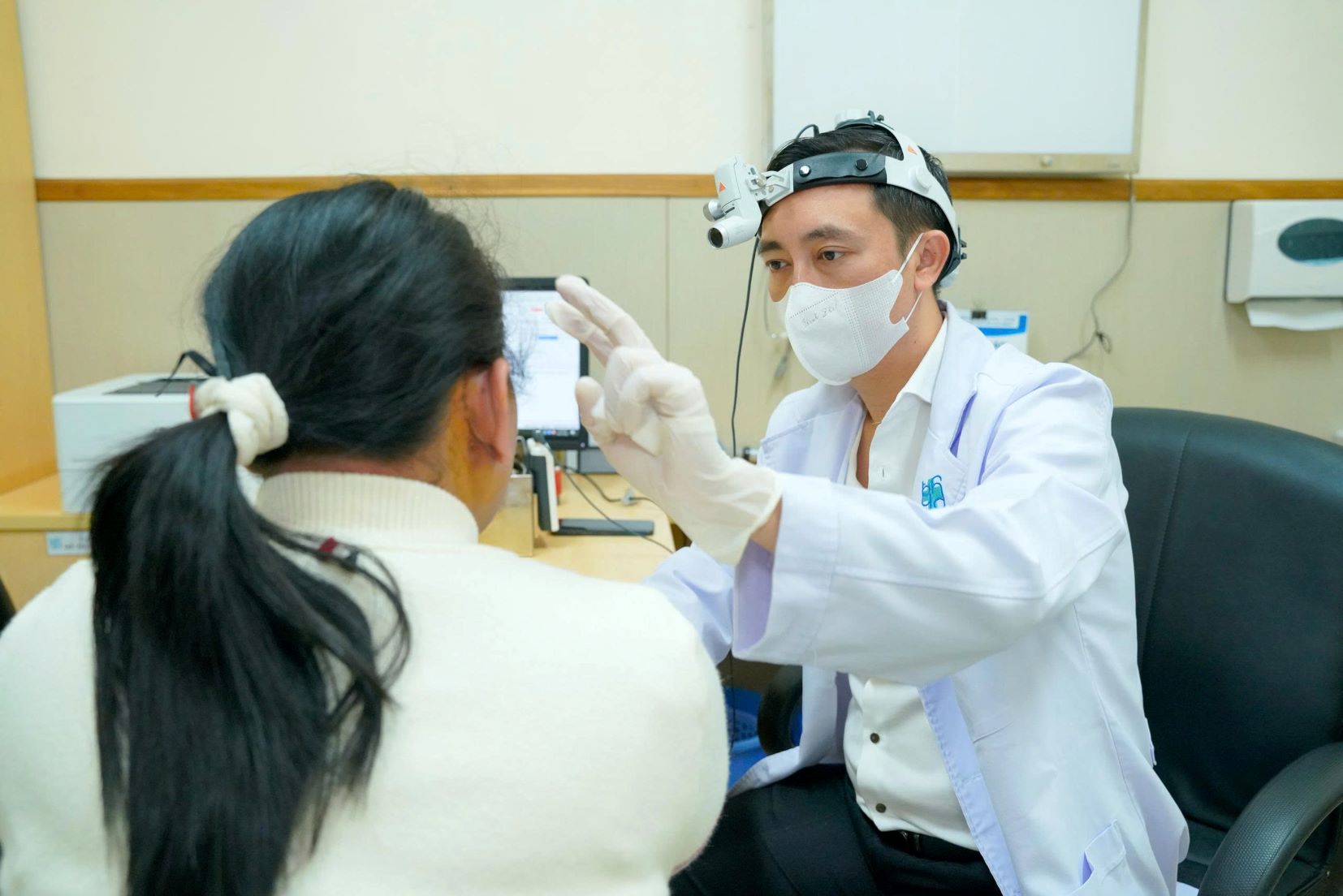
For adults with deafness, appropriate intervention can help restore sound reception, improve communication, and create conditions for patients to return to daily activities and work.
In young children, the meaning of cochlear implantation is even more important, because children learn to speak by listening. The early years of life, especially before 3 years old, are the stage when the brain develops strongly in cognition and language. If children with congenital deafness are not properly intervened, it will lead to deafness and muteness, and children will lose the opportunity to study and integrate into normal society.
Golden time for children with congenital deafness to regain sound
According to Dr. Quyen, the most important thing in treating hearing impairment in children is not to miss the golden time. The ideal time to implant cochlear electrodes for children with congenital deafness is before 2 years old, preferably between 12 and 18 months old. If detected and intervened late, especially after 5 years old, the auditory cortex of the child may have reduced the ability to receive and process sounds. At that time, even if the surgery is technically successful, the child still faces many difficulties in understanding sounds and language recovery.
Therefore, newborns need to be screened for hearing loss after birth. During care, if the child is not startled when there is a loud noise, does not turn around to find the direction of sound, calls their name without reaction, is slow to speak compared to their age or only uses gestures to express needs, parents should take the child to a specialized facility for hearing testing. Early detection helps doctors correctly assess the level of hearing loss, advise on appropriate intervention methods and do not miss the most important stage of language development of the child.
After cochlear implantation, the patient does not hear again immediately. Usually, after 2-4 weeks for the wound to recover, the auditory specialist will activate and program the device. In the early stages, the sound may still be different, the brain needs time to learn how to interpret these signals into meaningful sounds.
Treatment effectiveness not only depends on the surgery, but also requires a listening and speaking recovery process with the companionship of doctors, auditory experts, speech therapists and family.
Unlike hearing aids that amplify sound, cochlear electrodes are surgically placed in the cochlear to convert sound into electrical signals, directly stimulate the auditory nerve and transmit signals to the brain.