
Breathing is a continuous activity that most of us perform unconsciously. However, prolonged shallow breathing can affect posture, reduce the effectiveness of the respiratory system and make the lower abdomen prone to protrusion.
The breathing process does not take place thanks to lung self-expansion but is mainly performed by the diaphragm and respiratory muscle groups around the chest. These are also important muscle groups that help maintain body posture.
When you frequently bend over, bend over, or sit in the wrong posture, the respiratory muscles may work less effectively, making breathing shallower. According to sports medicine documents, the diaphragm not only participates in breathing but also contributes to stabilizing the body. Therefore, bad posture and improper breathing can form a vicious cycle, affecting the musculoskeletal system. The breathing process also mobilizes more than 15 different muscle groups in the body.
If the respiratory muscles are tense, the ventilation capacity of the lungs may decrease, causing less oxygen to be delivered into the body. This condition can cause neck and shoulder fatigue, feeling cold in hands and feet, reduced metabolic efficiency and make the lower abdomen prone to fat accumulation or bloating.
Conversely, maintaining the correct posture and practicing deep breathing helps the respiratory muscles work more effectively, contributing to improving posture, enhancing respiratory function and supporting the toned body muscles.
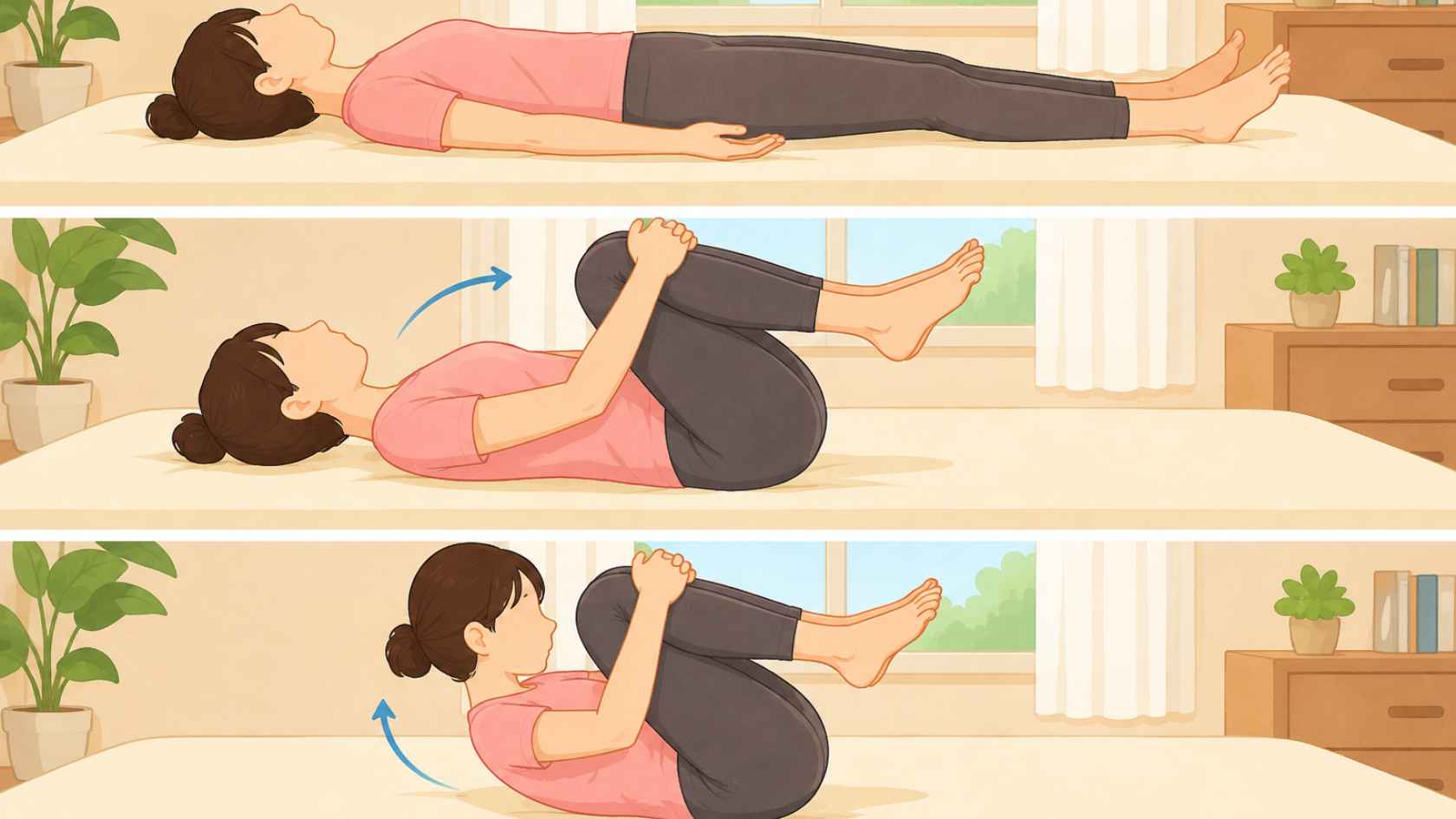
Knee-hugging exercise helps relax respiratory muscles
A simple exercise that can be done right in bed before bed is a knee-hugging position. This exercise helps relax the respiratory muscles, activate the body muscle group and supports improving posture. Some literature also suggests that the exercise can help reduce constipation, improve blood circulation and increase pelvic flexibility.
How to do it:
Step 1: Lie on your back, straighten your arms and legs, slightly open your legs, place your hands along your body, palms facing up. Take 2-3 deep breaths to relax your body.
Step 2: Bend your knees close to your chest, use both hands to hug your knees and inhale slowly through your nose.
Step 3: Continue to inhale, pull your knees closer to your chest if comfortable, and gently lift your upper body so that your back is slightly curved. Hold for a few seconds and then relax, return to the starting position and repeat as possible.
Note that the movement should be done gently, without trying to force the body if pain or discomfort appears. This is an exercise to support improving breathing and posture, not replacing the treatment of respiratory or musculoskeletal diseases.


