At just 7 months old, baby N.T.T (residing in Phu Nhuan District, Ho Chi Minh City) was diagnosed with Myasthenia gravis - an autoimmune disorder that affects the musculoskeletal system. From that time on, the child had to take medicine regularly every day to control the disease and prevent serious progression.
Ms. H.M.N (T.'s mother) shared: "Now the child is 3 years old, and still has to take medicine every day. I have studied a lot, this disease cannot be completely cured, so I have to regularly check and closely monitor my child. When your child has this disease, the family must have a strong mentality, because they cannot predict anything".
Currently, baby T. is still being monitored periodically at a specialized hospital, hoping to control the condition well in the first years of her life.
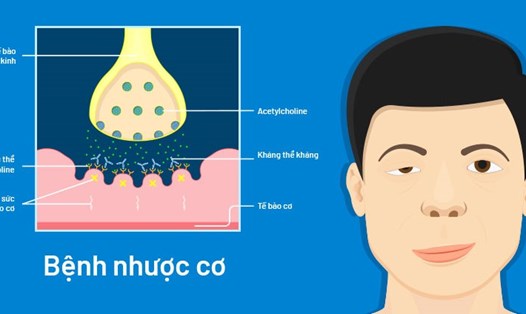
Doctor CKI Dao Duy Khoa, Department of Neurology, University of Medicine and Pharmacy Hospital, Ho Chi Minh City, said that Myasthenia gravis is an autoimmune disease that occurs when the body's immune system produces antibodies that attack the connecting points between nerves and muscles. As a result, the muscles become weak, especially after exercise.
The most common symptoms are eyelid collapse, double vision ( hyperopia).
However, more serious is when the disease affects the muscle groups in the pharyngeal and respiratory muscles - can be life -threatening. "When the muscles of the pharynx are weak, the patient will be difficult to swallow, easily choke food into the lungs, thereby leading to inhaled pneumonia or even cardiac arrest.
Myasthenia gravis can also weaken the muscles of the arms, legs or torso. A recognizable feature is that the disease is often weaker in the afternoon, while in the early morning the patient feels healthier. This is because neurotransmitters work more effectively after the body is rested.
The cause of myasthenia gravis is not yet determined. However, the disease often starts after a viral infection or immune disorders. The disease can also be accompanied by a number of other diseases such as hyperthyroidism or uterine tumor - a disease closely related to the immune system.
Regarding treatment, there is currently no complete cure for myasthenia gravis. However, symptoms can be controlled and the disease can be stabilized in the long term through drugs that enhance neurotransmitter transmission, immunosuppressants, or thoracic surgery. The choice of treatment drugs needs to be personalized according to each patient, because each person will have different levels of response and suffer different side effects, Dr. Khoa shared.
Although it is not absolutely prevention, people need to pay attention to initial signs such as ptosis, double vision, muscle weakness after exercise... and should go to the doctor early for timely diagnosis and treatment.
Once the body begins to alarm with unusual signs in the eyes or muscles, dont be subjective. Myasthenia gravis can silently degrade health and threaten life if detected late, the doctor emphasized.